
Summary
When people talk about education in ancient India, many assume that learning was reserved only for men. This belief has become common over time, but it does not fully match what ancient texts actually show. In the Vedic age, education was not limited strictly by gender. Women studied sacred texts, composed hymns, participated in philosophical debates, and followed disciplined lives of learning. This article explores evidence of Vedic education for girls, the role of women in ancient Indian learning traditions, and how Vedic women contributed to spiritual, intellectual, and social life. Written in a warm and friendly tone, this piece brings forward a forgotten chapter of women education in ancient India.
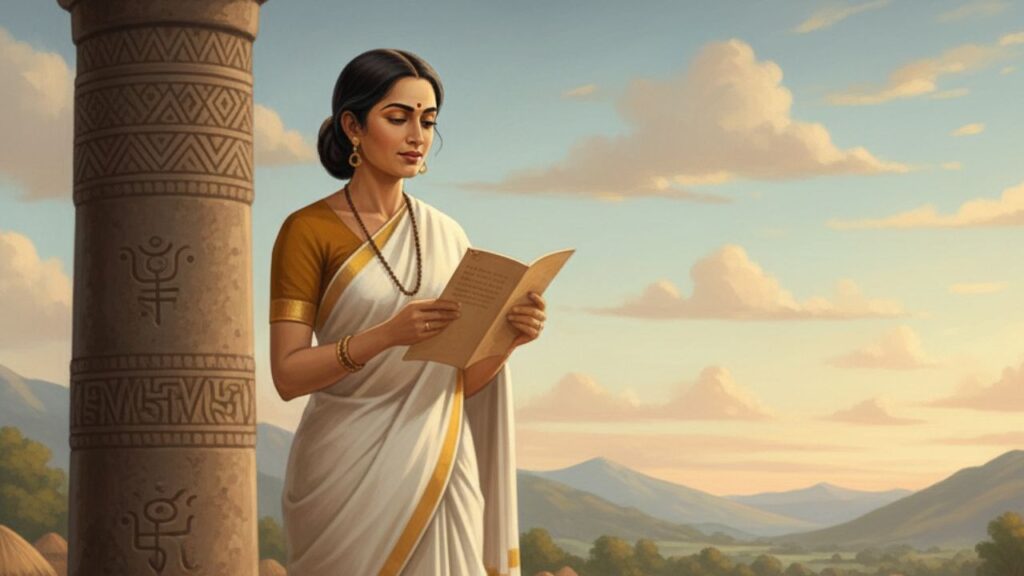
Table of Contents
Why the Idea of Educated Vedic Women Feels Surprising Today
Many modern readers are surprised when they hear that women were educated in the Vedic age. This surprise itself tells us something important. Our understanding of history is often shaped by later social practices, not by the earliest sources.
Over centuries, social conditions changed. Restrictions grew. Opportunities narrowed. As a result, people began assuming that women were always excluded from learning. But when we go back to the Vedic texts themselves, we find a very different picture.
Women were present in the world of learning. Women asked questions about life and truth. Women composed hymns that are still recited today. Education in the Vedic age was not mass education in the modern sense. It was selective and disciplined. But it was not closed to women by default.
What Education Meant in the Vedic Age
To understand Vedic education for girls, we must first understand what education meant at that time. Education was not about degrees or careers. It was about shaping the mind and character.
Learning included:
- Memorization of sacred texts
- Understanding meaning and symbolism
- Training in logic and debate
- Discipline of conduct
- Observation of nature
- Ethical living
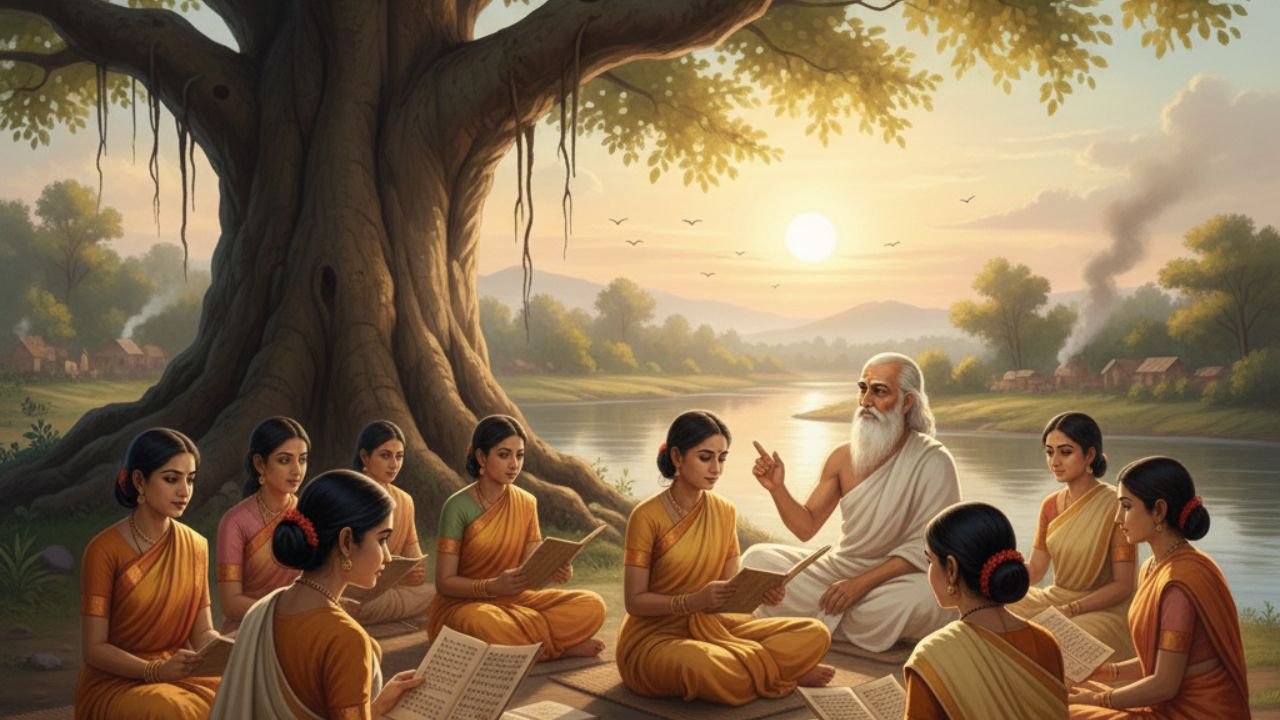
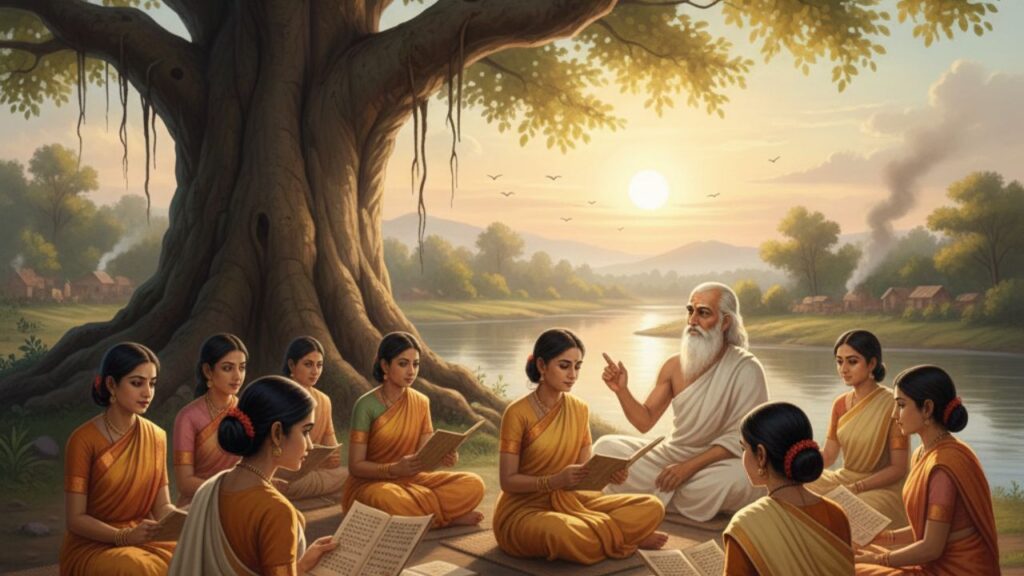
Education happened in gurukulas. Students lived with teachers. Learning was oral, personal, and immersive. Both boys and girls who entered this path followed strict discipline and dedication.
Women Education in Ancient India Was Not Uniform
It is important to be honest and balanced. Not every woman in ancient India was educated. Not every girl attended a gurukula. Social roles varied widely based on region, family, and period. But the key point is this. Education was possible for women. It was respected when women pursued it. It was recognized when women excelled in it. The existence of educated women in sacred texts proves that learning was not forbidden to them.
Brahmavadinis and Sadyovadhus in Vedic Tradition
Ancient Indian texts describe two broad paths for women. One group was known as Brahmavadinis. These women devoted their lives to learning, spiritual inquiry, and teaching. They remained unmarried or married later in life after completing education. The other group was known as Sadyovadhus. These women married earlier and focused on household life but still received basic education. This classification itself shows that education for women was acknowledged and organized, not ignored.
Vedic Women Who Composed Hymns
One of the strongest pieces of evidence for Vedic education for girls comes from the Rigveda itself. Several hymns are attributed to women seers.These women were not passive listeners. They were composers. They expressed deep philosophical insight, devotion, and clarity.
Some well known Vedic women include:
- Ghosha
- Lopamudra
- Apala
- Maitreyi
- Gargi
Their presence in sacred literature proves that women had access to learning and spiritual training.
Gargi and the Courage to Question
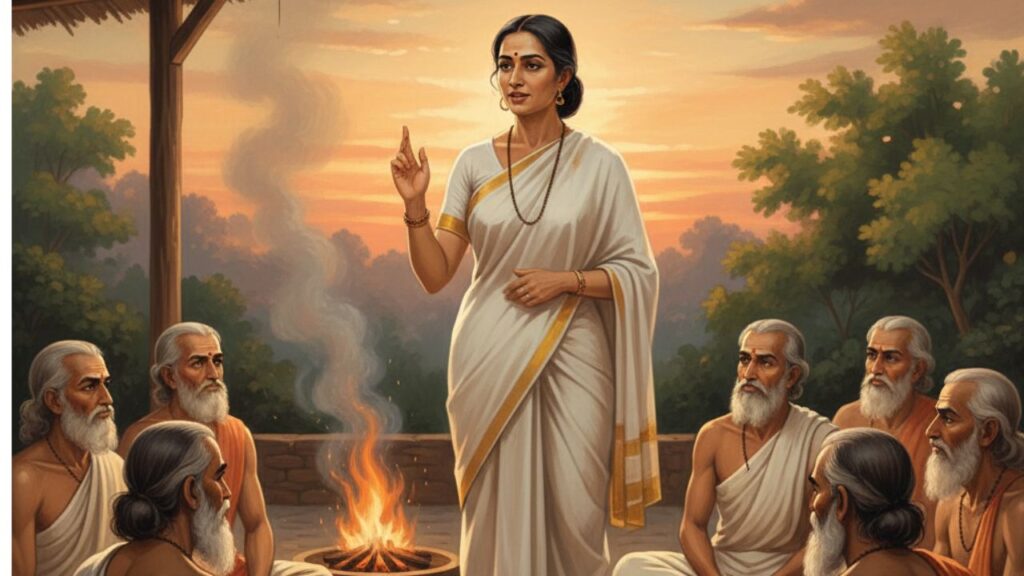
Gargi is one of the most inspiring figures in ancient Indian intellectual history. She appears in philosophical discussions where she questions learned scholars on the nature of reality. Her questions are sharp, logical, and fearless. She asks about the foundation of the universe. She challenges assumptions. She does not hesitate because of her gender. The fact that her dialogue is preserved in respected texts tells us something powerful. A woman questioning scholars was not seen as improper. It was seen as intellectual engagement.
Maitreyi and the Meaning of Knowledge
Maitreyi represents another dimension of women education in ancient India. She is remembered not just for learning, but for wisdom. In one famous dialogue, she questions whether wealth can give immortality. She seeks deeper understanding rather than material comfort. This shows that education for women was not only technical or ritual. It was philosophical and reflective. Maitreyi’s questions continue to inspire seekers even today.
Education Within the Household
Education for women was not limited to gurukulas alone. Many women learned within the household. They learned from fathers, husbands, brothers, and teachers who visited the home.
Household learning included:
- Sacred chants
- Ritual knowledge
- Ethical teachings
- Medicine and herbs
- Storytelling and history
This form of education was practical and deeply integrated into daily life.
Women as Teachers and Preservers of Knowledge
Vedic women were not only students. They were also teachers and preservers of knowledge. In an oral tradition, memory was crucial. Women played an important role in passing down hymns, rituals, and stories. Mothers were often the first teachers. They taught language, values, chants, and discipline. Without educated women, the oral tradition could not have survived as effectively as it did.
Spiritual Equality in Vedic Thought
One of the most important ideas in Vedic philosophy is that the inner self has no gender. Knowledge was connected to consciousness, not the body. This idea allowed women to participate in spiritual inquiry without contradiction. If truth is universal, then the seeker can be anyone. This philosophical foundation supported women education in the Vedic age.
How Later Periods Changed Women Education
Over time, social conditions changed. Political instability, invasions, economic pressures, and social insecurity altered many institutions. Education became restricted. Learning spaces shrank. Gradually, women’s access to formal education reduced. This later decline should not be projected backward onto the Vedic age. Doing so creates a distorted understanding of ancient India.
Why Vedic Education for Girls Matters Today
Understanding that women were educated in ancient India changes how we see history. It reminds us that progress is not always linear. Societies can move forward and backward. It also challenges the idea that women education is a modern gift. In India, it is a revival of an older tradition. When modern India promotes girls’ education, it is not breaking from tradition. It is reconnecting with it.
Respecting the Balance of Roles
It is also important to note that ancient India respected both learning and household life. A woman who chose learning was respected. A woman who chose family life was also respected. The Vedic worldview valued balance, not uniformity. Education was a path, not an obligation.
Key Takeaways
- Vedic education for girls existed and is supported by ancient texts
- Women education in ancient India included philosophy, ritual, and ethics
- Vedic women composed hymns and participated in debates
- Figures like Gargi and Maitreyi show intellectual freedom for women
- Education was available through gurukulas and households
- Not all women were educated, but education was not forbidden
- Later social changes reduced women’s access to learning
- The Vedic age viewed knowledge as gender neutral
- Modern women education reconnects with an ancient legacy
Citations
- Rigveda Hymns Attributed to Women Seers
- Brihadaranyaka Upanishad Dialogues of Gargi and Maitreyi
- Encyclopedia Britannica. Women in Ancient Indian Education
- Oxford Handbook of Hindu Studies. Gender and Learning
- Indian History Congress. Education Systems in Vedic Age
- Radhakrishnan. Indian Philosophy
- Journal of Ancient Indian History. Women and Knowledge Traditions