

Summary
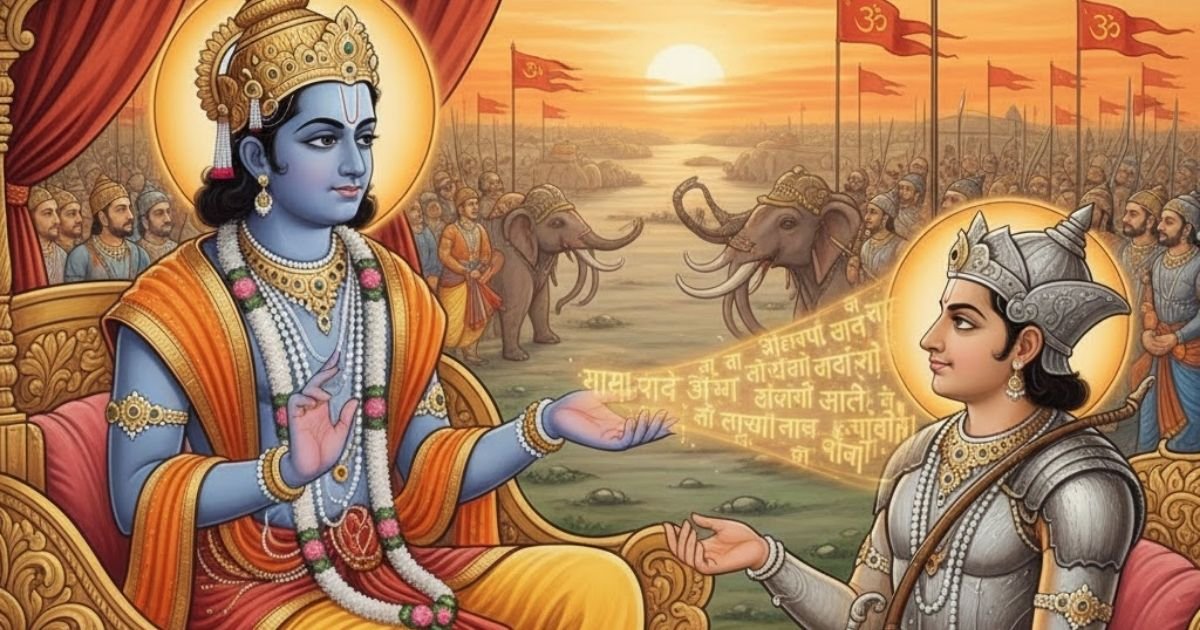
Gita Jayanti remembers a moment when words reshaped the way life was understood. On this day, the Bhagavad Gita was spoken on the open land of Kurukshetra, not in a place of retreat or learning, but on a battlefield where doubt, fear, and duty stood face to face. Lord Krishna spoke to Arjuna at a moment when action felt unbearable, and silence seemed easier. What emerged was not a command, but a way of seeing life clearly.
Observed each year on Shukla Ekadashi in the month of Margashirsha, Gita Jayanti is not marked by spectacle. It is a pause in the calendar. A day that invites listening. A reminder that dharma does not announce itself loudly. It speaks quietly, asking us to act with awareness even when the way forward feels uncertain.
Table of Contents
What is Gita Jayanti
Gita Jayanti is regarded as the birth day of the Bhagavad Gita, one of the most enduring texts of Hindu thought. It falls on Shukla Ekadashi, the eleventh day of the waxing moon in Margashirsha, a time traditionally linked with restraint and inward reflection. The day is also known as Mokshada Ekadashi, associated with release through understanding.
Tradition holds that it was on this day that Krishna revealed the teachings of the Gita to Arjuna on the battlefield of Kurukshetra, in present-day Haryana. These words were spoken in the stillness before war, when choices carried weight, and the future was unclear. The Gita did not arrive as philosophy alone. It arrived as guidance meant for a moment of deep human confusion.
Kurukshetra: Where the Question Arose
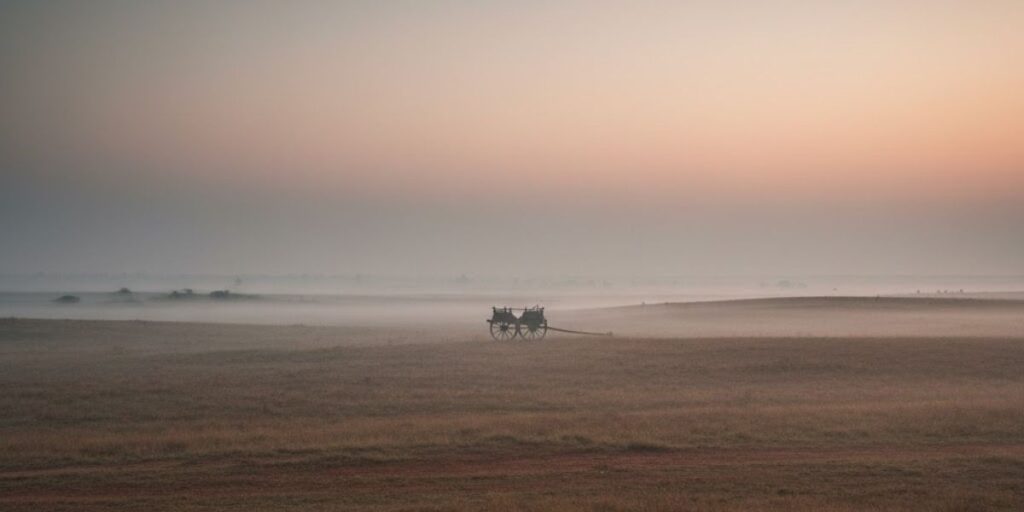
Kurukshetra has long been remembered as sacred ground. Long before armies gathered here, it was a land of learning, ritual, and contemplation. Yet it is the moment before the Mahabharata war that shaped its memory most deeply.
As the conches sounded and the armies stood ready, Arjuna asked to be placed between the two sides. What he saw unsettled him. Teachers who had guided him, elders he respected, relatives he loved, all stood prepared for battle. His bow slipped from his hand. His strength left him. The battlefield became a space of inner conflict.
Krishna, standing beside him as a charioteer, did not remove the dilemma. He spoke to it. The dialogue that followed did not offer escape from action, but understanding of it.
The Gita as a Living Dialogue
The Bhagavad Gita reaches us as a conversation between Krishna and Arjuna, yet it is narrated through the voice of Sanjaya. Speaking to the blind King Dhritarashtra, Sanjaya describes the exchange as it unfolds on the battlefield. Blessed by Sage Vyasadev with divine sight, he becomes a witness across distance.
This layered telling gives the Gita its depth. It is intimate, yet observed. A personal struggle, yet a shared lesson.
Across its 18 chapters and 700 verses, the Gita speaks of action, knowledge, devotion, and self-restraint. Krishna does not deny emotion, nor does he praise withdrawal. He speaks of acting without attachment, of fulfilling one’s duty without being consumed by fear or reward. The Gita does not simplify life. It teaches how to stand steady within it.
Why Gita Jayanti Matters
Gita Jayanti is observed not because the Gita belongs to the past, but because it continues to speak. For over two millennia, the Srimad Bhagavad Gita has guided individuals through moments of doubt, responsibility, and moral choice.
The words Krishna speaks to Arjuna are not limited to war. They speak to anyone standing at a crossroads—between duty and desire, fear and courage, hesitation and action. Gita Jayanti reminds us that clarity does not come from avoiding life’s demands, but from meeting them with understanding.
When Gita Jayanti Began to Be Celebrated Publicly
For centuries, Gita Jayanti was observed quietly. Families read the Gita at home. Sages reflected on its verses in ashrams. Temples marked the day through recitation and fasting. The focus remained on listening rather than display.
A shift took place in the late twentieth century. In 1999, the Government of Haryana initiated the Gita Jayanti Samaroh in Kurukshetra. For the first time, the observance took a public form, bringing scholars, devotees, and visitors together on the land where the Gita was spoken.
Over time, the gathering grew in scale and reach. As interest in the Gita extended beyond regional and national boundaries, the celebration came to be known as the International Gita Mahotsav. The change reflected a widening circle of listeners drawn to the Gita’s questions rather than its authority.
How Gita Jayanti Is Observed
Gita Jayanti continues to be marked with simplicity and reverence. Across India, devotees observe Ekadashi by fasting, reading the Bhagavad Gita, or listening to its verses. Some read the entire text in a single sitting. Others return to one shloka that speaks to their present moment. The form varies, but the intention remains steady.
In Kurukshetra, the observance takes on deeper resonance. During the Gita Jayanti Samaroh, pilgrims arrive from across the country. One of the central rituals is bathing in the sacred waters of Brahma Sarovar and Sannihit Sarovar. These acts are not ceremonial alone. They are moments of preparation, meant to quiet the mind before turning to the words of the Gita.
International Gita Mahotsav: When the Land Remembers
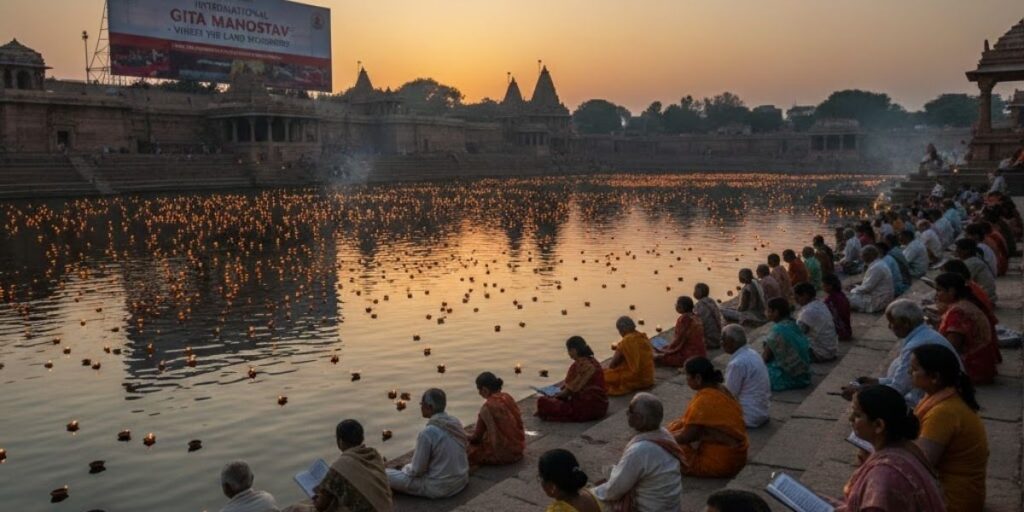
The International Gita Mahotsav unfolds mainly in Kurukshetra, allowing the land itself to take part in remembrance. Kurukshetra is remembered not only for the Gita, but for its layered spiritual past.
Tradition holds that Sage Manu composed the Manusmriti here. The region is also linked to the Rig Veda and Sama Veda. Over centuries, the land has welcomed many seekers—Gautama Buddha, revered Sikh Gurus, scholars, and travellers—each adding to its shared memory.
During the Mahotsav, this past becomes visible through shloka recitations, Bhagavad Gita readings, bhajans, dance and theatre performances, book exhibitions, and community efforts such as free medical camps. The gathering is organised by the Kurukshetra Development Board, Haryana Tourism, the District Administration, and the Department of Art and Cultural Affairs, Haryana. Yet beyond structure, what defines the Mahotsav is attention—people listening together.
Cultural Meaning of Gita Jayanti
The Bhagavad Gita presents dharma not as a rigid rule, but as a living responsibility. It asks each person to understand their place in the world and to act with awareness and restraint. This way of thinking has shaped Indian life for centuries, influencing philosophy, ethics, and daily conduct.
The Gita does not promise freedom from struggle. It teaches steadiness within struggle. Gita Jayanti renews this understanding each year, reminding us that wisdom must be practised, not preserved.
Kurukshetra: A Place That Still Speaks
Kurukshetra today is wide and still. Fields stretch beneath open skies. Sacred waters reflect passing light. Yet the memory of that ancient dialogue remains present.
During Gita Jayanti, Kurukshetra becomes more than a location. It becomes a reminder that even in moments of doubt, dharma can speak. And when it does, it speaks softly, asking us to listen.
Key Takeaways
- Gita Jayanti marks the day the Bhagavad Gita was revealed at Kurukshetra
- The Gita emerged from a moment of moral struggle, not comfort
- It teaches action guided by awareness rather than attachment
- Kurukshetra remains a living space of shared spiritual memory
- Gita Jayanti invites reflection rather than celebration alone
Citations
- Bhagavad Gita, traditional Sanskrit text attributed to Vyasa
- Traditional accounts of Gita Jayanti Samaroh and International Gita Mahotsav, Kurukshetra
- Government of Haryana (Art & Cultural Affairs Department) and Ministry of Tourism, Government of India (Utsav.gov.in).