
Summary
The Cochin Carnival is Fort Kochi’s way of welcoming the New Year—through shared celebration, history, and community spirit. Rooted in Portuguese era traditions and revived in 1984 by local youth, the carnival reflects the city’s multicultural character and openness. With music, games, cultural performances, and the symbolic burning of Pappanji, the festival brings people together beyond differences, marking both an ending and a hopeful beginning.
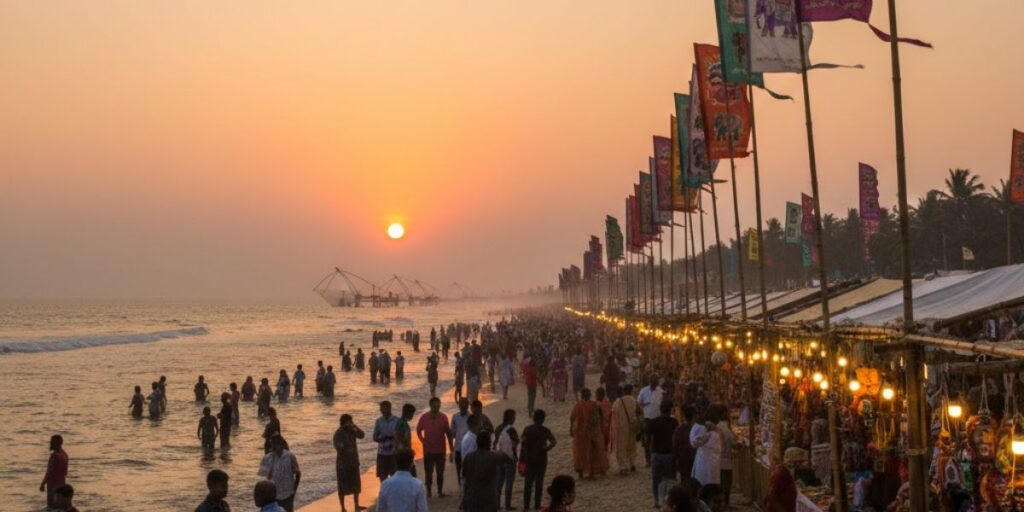
Every December, Fort Kochi begins to transform. The beach grows livelier. Streets seem brighter. Strangers smile, talk, and greet one another like old friends. This change does not come suddenly. It follows a rhythm the city has known for generations. The Cochin Carnival marks a pause in everyday life. For a brief time, the city opens itself fully to music, laughter, colour, and shared joy. Though it is celebrated as a New Year festival, the carnival is also a reflection of Fort Kochi itself: layered by history, shaped by many cultures, and welcoming by nature.
Table of Contents
Roots in an Older World
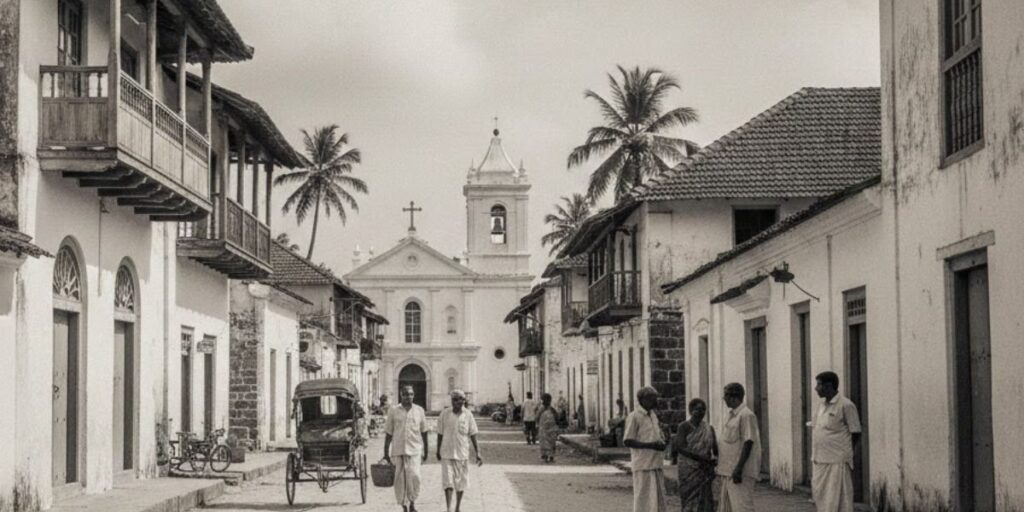
The origins of the Cochin Carnival can be traced back several centuries, to the period of Portuguese presence in Cochin between 1503 and 1663. The Portuguese brought with them European carnival traditions associated with the days of celebration before Lent. These were times of public festivity, music, open streets, and collective freedom before the arrival of a quieter season. Over time, these traditions blended with local customs and coastal life. They absorbed the rhythms of a port city—its fishermen, traders, sailors, and residents who were already used to living among influences from faraway lands. What emerged was not a European carnival placed onto Indian soil, but a shared celebration shaped by Cochin’s people and spirit. As colonial powers changed and political control shifted, formal carnival practices slowly faded. Yet the idea of welcoming the New Year together, in public spaces and with open hearts, never disappeared. It remained quietly within the city, waiting to return.
The Revival: Youth and a Simple Idea
The modern Cochin Carnival was revived in 1984, not through government planning or commercial vision, but through youthful energy and a simple intention. Three young men from Kochi—Ananda Felix Scaria, George Augustine Thundiparambil, and Antony Anup Scaria—decided to organise a beach festival at Fort Kochi. Their inspiration came from the United Nations proclamation declaring 1985 as the International Youth Year. They wanted to create a space where young people could come together peacefully and creatively. What began as a small effort soon grew larger. Nearly 150 youth groups and local clubs came forward to support the idea. Individuals such as Nirmal John Augustine and Radha Gomathi contributed organisational support, while photographer Abul Kalam Azad documented the early moments of the carnival. His photographs now serve as an important visual record, preserved by the Ekalokam Trust for Photography. From the very beginning, the revived carnival was peaceful, non-commercial, and inclusive. There were no entry fees, no fixed organisers claiming ownership. The carnival belonged to the people of Fort Kochi.
Why Fort Kochi Matters
Cochin has always been a meeting place. For centuries, ships from Arabia, China, and later Europe docked at its harbour. Trade brought people, and people brought languages, beliefs, food, music, and ways of living. Jewish traders, Christian missionaries, Muslim merchants, Hindu communities, traders from western India, and sailors from distant coasts all found space here. Fort Kochi still carries this history quietly. It shows in its streets, its old buildings, its places of worship standing close together, and in the ease with which difference exists without explanation. This character makes Fort Kochi the natural home of the carnival. A celebration that welcomes everyone could only belong to a city that has always done the same.
A Carnival for People, Not Communities
India celebrates countless festivals, many rooted in religion, caste, or region. The Cochin Carnival stands apart. It does not ask who you are or where you come from. It asks only that you participate. Like carnivals across the world—in Europe, Latin America, and Goa—the Cochin Carnival turns public spaces into shared ground. For nearly two weeks, Fort Kochi becomes a place of collective joy. People do not gather as audiences alone; they become part of the celebration itself. The carnival is guided by five simple values:
Participation – Everyone is encouraged to take part, not as spectators, but as active contributors to the celebration. Development – The carnival strengthens community bonds and supports cultural growth through shared effort. Peace – Harmony and mutual respect guide the festivities, creating a space free from division or conflict.
Environment – Care for the beach, the sea, and public spaces is treated as a shared responsibility. Adventure – The carnival celebrates curiosity, creativity, and the spirit of openness that defines Fort Kochi. These values are not displayed as slogans. They live through action through open events, volunteer efforts, and shared responsibility.
How the Carnival Unfolds
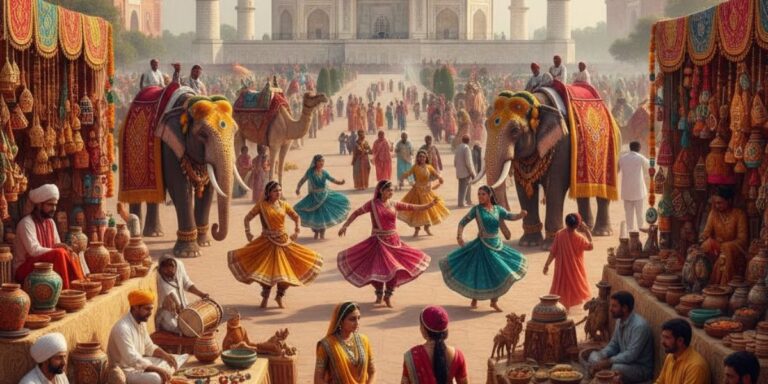
The carnival begins with the hoisting of the Carnival flag at Fort Kochi beach. Flags from participating clubs are raised, and a message of unity is read aloud. With this simple act, the city steps into celebration. Days are filled with games and friendly competitions. Cycle races, sack races, tug-of-war, kite flying, laughing contests, and traditional games like kabaddi bring people together. These events are open to all ages and backgrounds. Barriers dissolve naturally, without effort. As the sun sets over the Arabian Sea, evenings take on a cultural rhythm. Performances begin, reflecting the many influences that shape Cochin. Gujarati Garba, Punjabi Bhangra, Karagattam from Tamil Nadu, local folk forms, and contemporary expressions share the same space. No single art form dominates. Each finds room.
Pappanji and the Turning of the Year
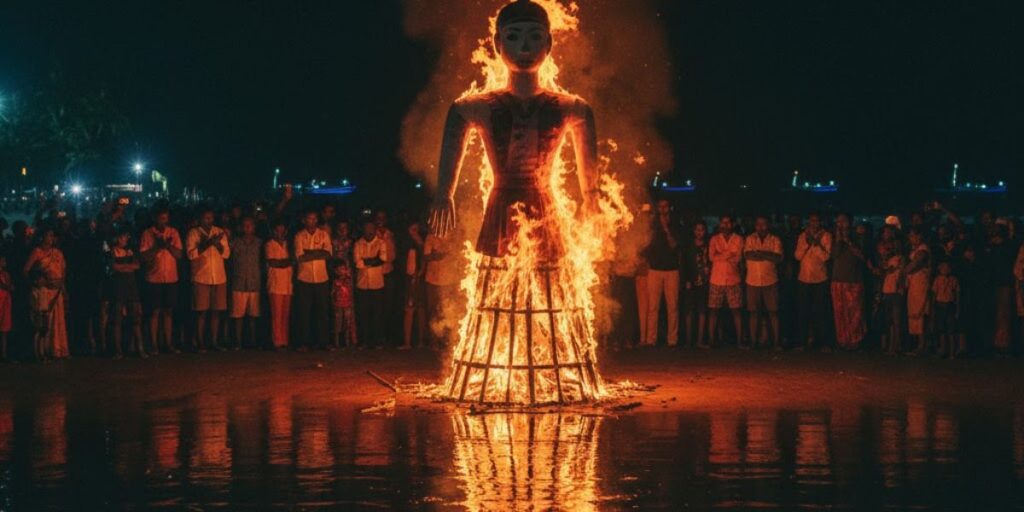
The most powerful moment of the Cochin Carnival arrives at midnight on December 31st. On the beach stands Pappanji, a large symbolic figure representing the old year. As the clock strikes twelve, Pappanji is set on fire. Flames rise into the night sky, carrying with them the weight of the past year—its disappointments, unfinished hopes, and quiet burdens. When the fire fades, a new year begins. The ritual is simple, yet deeply meaningful. It marks closure, release, and renewal. It reminds people that time moves forward, and that beginnings are always possible.
The Final Day
On New Year’s Day, the carnival concludes with the Carnival Rally. Floats and processions move through Fort Kochi, reflecting everyday life, humour, social concerns, history, and shared dreams. The rally does not lecture or instruct. It mirrors the city and its people. By evening, the celebration slowly settles. Streets grow quieter. Decorations are taken down. People return home. But something stays.
What the Carnival Leaves Behind
For two weeks, Fort Kochi lives as it perhaps always has—open, collective, and generous. The Cochin Carnival does not create this spirit. It reveals it. That is why the carnival continues year after year. Not because it is grand, but because it is honest. It belongs to no institution and no single community. It belongs to the city itself. Every December, when the year draws to a close, Fort Kochi does not simply welcome a new calendar. It welcomes one another.
Key Takeaways
- The Cochin Carnival traces its roots to Portuguese-era New Year traditions
- It was revived in 1984 by local youth as a peaceful, inclusive celebration
- Fort Kochi’s multicultural history shapes the carnival’s open character
- The burning of Pappanji symbolises closure and renewal
- The carnival brings people together beyond caste, creed, or community
References
Kerala Tourism Department – Cochin Carnival
United Nations (1984). International Youth Year Proclamation
Ekalokam Trust for Photography Archives
Menon, A. Sreedhara. A Survey of Kerala History