
Summary
Dadasaheb Phalke, widely known as the father of Indian cinema, created Raja Harishchandra in 1913, the first full-length feature film made in India. At a time when cinema was unfamiliar to Indian audiences, he imagined local stories on the screen. Through personal sacrifice, steady effort, and strong belief, Phalke turned this vision into reality. His work marked the beginning of Indian filmmaking and shaped the future of the country’s film industry.
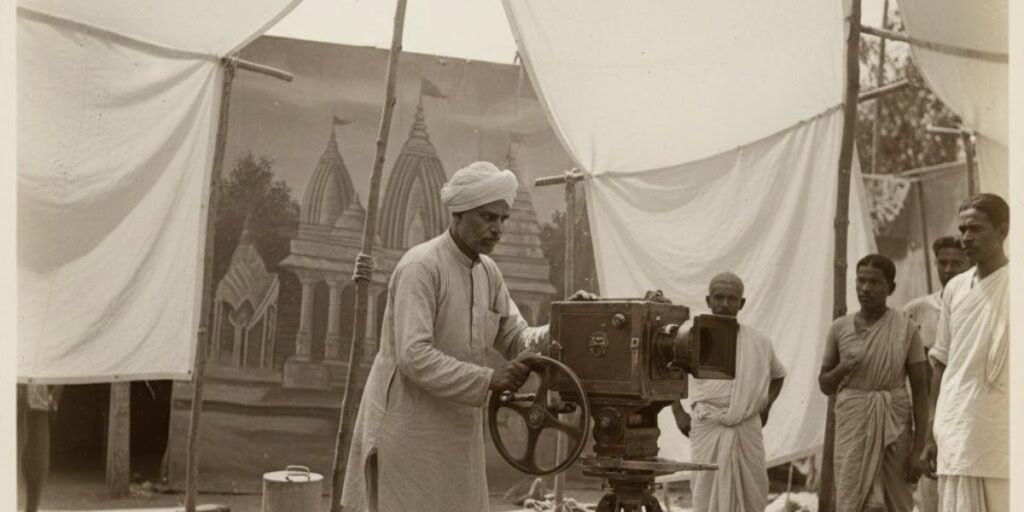
Table of Contents
History of Dadasaheb Phalke and Raja Harishchandra
Early Life of Dadasaheb Phalke
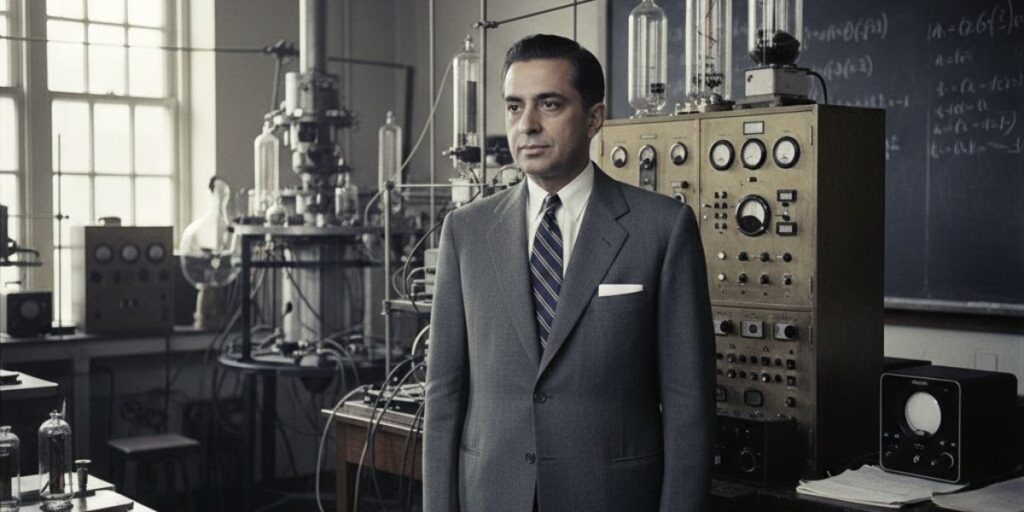
Dhundiraj Govind Phalke was born on 30 April 1870 in Trimbak, Maharashtra. From a young age, he showed a deep interest in art and creative work. He studied painting at the Sir J.J. School of Art in Bombay and later at Kala Bhavan in Baroda. During these years, he also learned photography, lithography, and stage design.
Before entering the cinema, Phalke worked as a painter and designer. His understanding of visuals, composition, and detail later helped him shape scenes on screen. These early experiences quietly prepared him for a medium that was yet to arrive in India.
How He Got the Idea to Make a Film
On 14 April 1911, Phalke visited the America India Picture Palace in Girgaon with his son Bhalchandra to watch Amazing Animals. His son was deeply impressed by the moving images, though the family found it hard to believe what they were seeing.
The next day, Phalke returned with his family to watch The Life of Christ (1906), directed by Alice Guy-Blaché. As the film played, Phalke imagined Indian gods such as Rama and Krishna appearing on screen in the same way. At that moment, he understood that Indian stories could be told through cinema. This thought stayed with him and became the starting point of India’s first feature film.
Learning Filmmaking and Preparing
India had no film industry at the time, so Phalke decided to learn filmmaking from its source. In 1912, he travelled to London, where he met British filmmaker Cecil Hepworth and observed the basics of film production. He studied how cameras worked, how scenes were shot, and how films were edited.
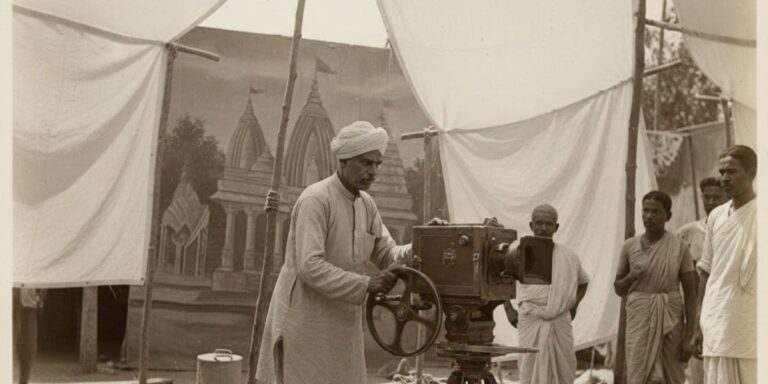
During this visit, Phalke purchased a film camera and raw film stock. After returning to India, he set up a small darkroom at home and began experimenting with lighting, camera movement, and film development. He watched foreign films closely to understand how stories were told without spoken words.
Struggles During Production
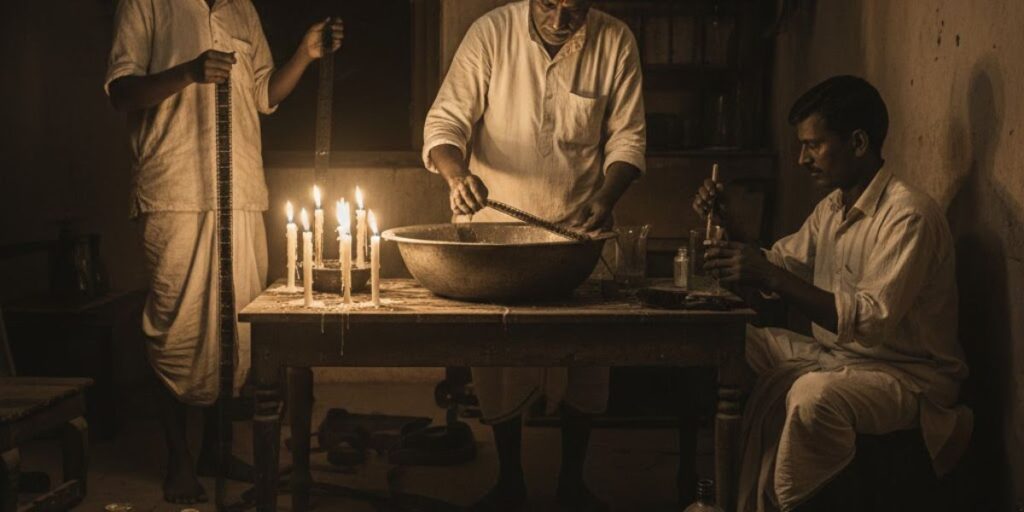
The making of Raja Harishchandra was very challenging, as India had no film studios, trained workers, or clear guidance at that time. Phalke had to build sets himself, train helpers, and learn filmmaking through repeated practice. Finding actors was also hard, since acting was not widely accepted, especially for women, so male performers played female roles.
Money was always limited, and film reels were expensive. Any mistake meant financial loss. In the long hours of filming and processing, Phalke spent many nights watching film frames and working with developing chemicals. This strain affected his eyes, and he nearly lost his eyesight from overexposure, including stress on his corneas, due to continuous film work and poor lighting conditions. A doctor treated him and advised rest, but Phalke kept working with quiet resolve, driven by his belief that Indian stories needed to be told through cinema.
The Woman Behind the Film
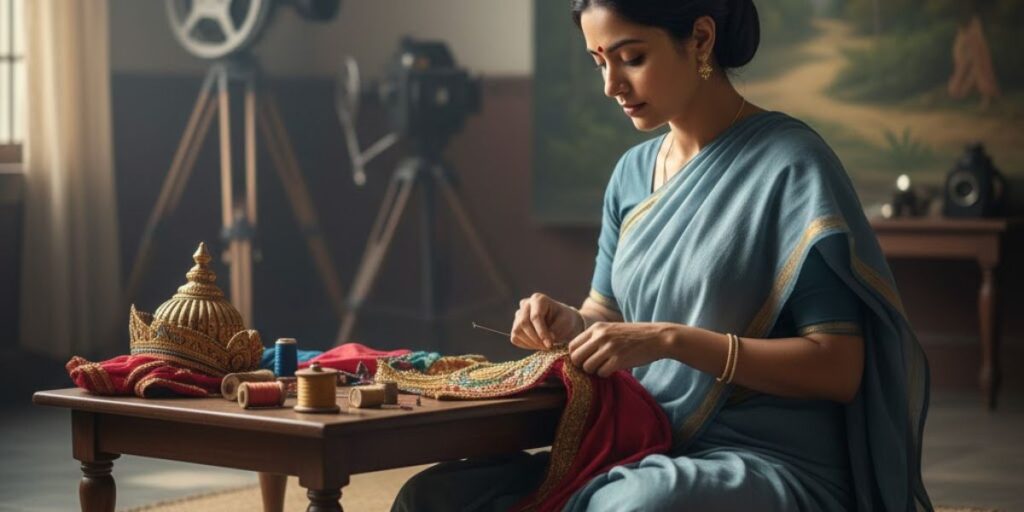
Saraswatibai Phalke, Dadasaheb Phalke’s wife, played a vital role in the making of Raja Harishchandra. She was only 20 years old at the time, yet she carried many responsibilities. With limited resources, she became the film’s financier, editor, developer, and a quiet production manager.
She sold her jewellery to support her husband’s dream. With this money, Phalke bought film equipment from Germany and travelled to London to learn filmmaking. During production, Saraswatibai managed the household, raised two children, and cooked daily for a film unit of nearly 60 to 70 people.
She also helped during shoots by holding white bed sheets under the sun to reflect light. At night, under her husband’s guidance, she mixed film-developing chemicals and perforated raw film sheets by candlelight. Punching holes in a single 200 mm film reel could take up to four hours. Her effort was quiet, steady, and essential to the film’s completion.
Why Raja Harishchandra Was Chosen
Phalke chose the story of Raja Harishchandra because it was already familiar to Indian audiences. The tale of a king known for truth and sacrifice had been told for generations through folklore and theatre.
The story’s clear emotions and moral strength made it suitable for a silent film. Audiences could understand the message without dialogue, making it easier for the cinema to connect with people seeing moving images for the first time.
Making Raja Harishchandra
In 1912, Phalke established the Phalke Films Company and began work on the film. He handled almost every aspect himself—writing, directing, editing, and production. His son Bhalchandra appeared in the film, and male actors played female characters.
Filming took place in and around Bombay and lasted over six months. The finished film ran for about 40 minutes and included title cards in Marathi, Hindi, and English to guide viewers. When completed, Raja Harishchandra became the first Indian feature film made and released in the country.
Cultural Significance of Raja Harishchandra
A New Beginning for Indian Cinema
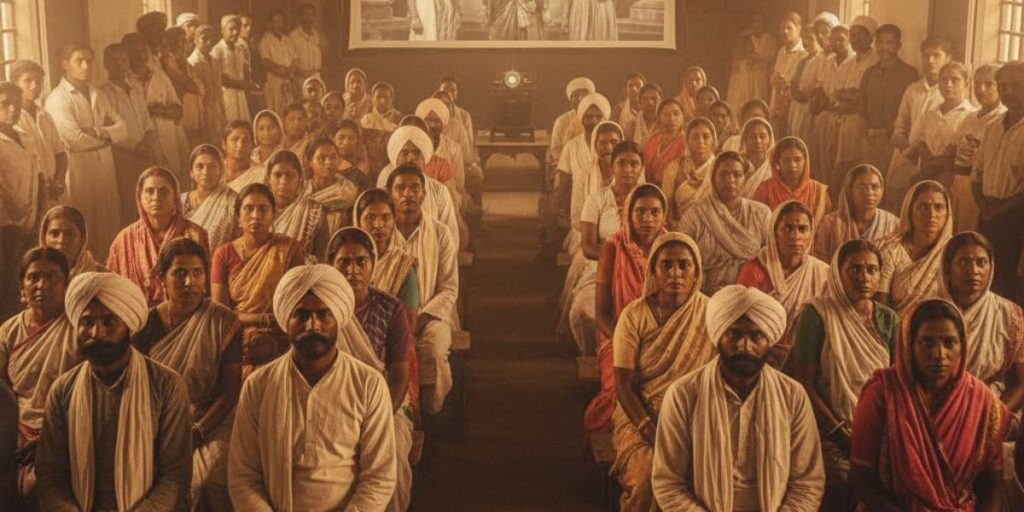
The film premiered on 3 May 1913 at the Coronation Cinema in Girgaon. For the first time, Indian audiences watched a full-length film made by an Indian filmmaker. The response was encouraging and proved that local stories could hold public interest.
This success gave confidence to others who wished to explore filmmaking. Cinema slowly began to grow as a form of storytelling rooted in Indian culture.
Influence on Society and Storytelling
Raja Harishchandra helped cinema become more than just a visual novelty. It allowed people to see their traditions and values reflected on screen. Following its release, filmmakers began exploring mythological, historical, and social themes.
Cinema soon reached different parts of the country and became part of everyday life. It opened a new way for stories to travel beyond books and stage performances.
Technical and Creative Impact
Phalke introduced simple but thoughtful techniques in lighting, scene arrangement, and editing. His experiments showed how emotions could be expressed visually. These early efforts encouraged others to learn the technical side of filmmaking and develop their own styles.
His work laid the base for future growth, both creative and technical, within Indian cinema.
Recognition and Honors
In 1969, the Government of India introduced the Dadasaheb Phalke Award, the highest honour in Indian cinema. It is given each year to individuals for their lifetime contribution to filmmaking. The award carries Phalke’s name as a mark of respect for the man who laid the foundation of Indian cinema and opened the path for generations of filmmakers to follow.
Indian Film Industry Today
From a single 40-minute silent film, Indian cinema has grown into one of the largest film industries in the world. Films are now made in many languages and across regions, reaching audiences both within the country and abroad.
This growth traces back to Phalke’s early belief that Indian stories belonged on screen. His work made space for countless voices and continues to influence filmmakers even today.
Key Takeaways
- Dadasaheb Phalke created Raja Harishchandra in 1913, the first Indian feature film
- The film marked the beginning of Indian cinema made in the country
- Saraswatibai Phalke played a crucial role through financial and practical support
- The story was chosen for its familiarity and moral clarity
- Raja Harishchandra proved Indian stories could succeed on screen
- Today’s Indian film industry stands on the foundation laid by Phalke
Citations
- Encyclopaedia Britannica – Dadasaheb Phalke
- Filmfare – History of Raja Harishchandra
- Wikipedia – Raja Harishchandra