
Summary:
Guru Gobind Singh Jayanti is observed to honour the birth of Guru Gobind Singh Ji, the Tenth Sikh Guru and a guiding light in Sikh history. Celebrated as a revered Sikh Gurupurab, the day reflects the life of a leader who combined courage, faith, and strong moral values. Born at a time of fear and oppression, he inspired people to stand firm in their beliefs and act with integrity. Through discipline, equality, and service, Guru Gobind Singh Ji shaped Sikh identity. Today, Guru Gobind Singh Jayanti reminds people that true faith grows with courage, compassion, and responsibility.
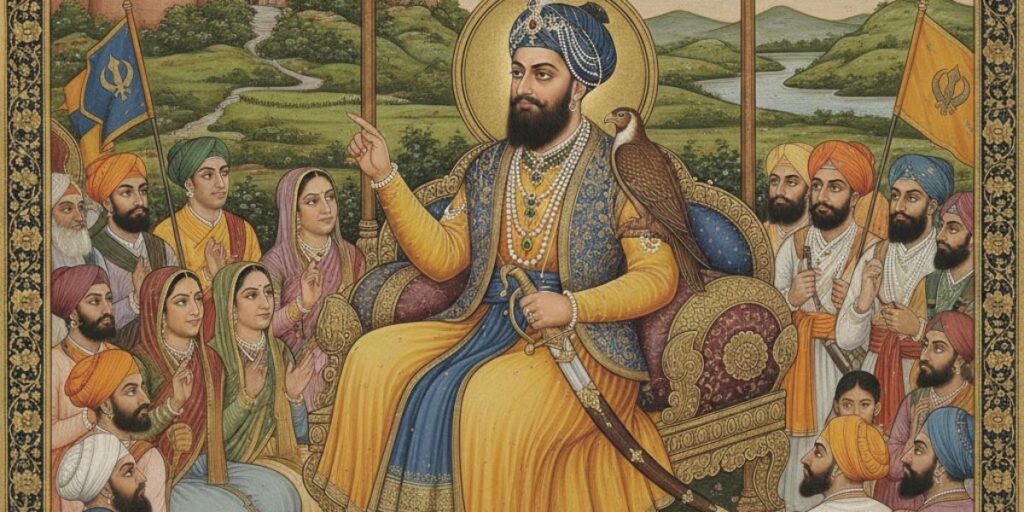
Table of Contents
Birth in a Time of Challenge
Guru Gobind Singh Ji was born on 22 December 1666 at Patna Sahib, Bihar. The world he was born into was full of challenges. Religious freedoms were limited, and many people faced pressure to give up their faith. In such a time, the birth of a child who would grow into a leader was a source of hope.
He was the only son of Guru Tegh Bahadur Ji, the Ninth Sikh Guru, and Mata Gujri Ji. His home was filled with devotion, learning, and stories of courage. Even as a young child, he learned honesty, discipline, and responsibility. These early lessons prepared him for the important role he would later take on.
Early Childhood and Education
Guru Gobind Singh Ji grew up learning both spiritual and practical skills. He studied scriptures, poetry, and languages like Persian and Sanskrit. This helped him think clearly and express his ideas well.
At the same time, he learned martial skills. Archery, swordsmanship, and horseback riding were part of his daily routine. His father believed faith should not be weak or passive. Spirituality must be combined with courage. This balance prepared him to become the Tenth Sikh Guru.
Even as a child, he showed calmness, intelligence, and a strong sense of justice. People around him noticed his focus and discipline.
Becoming the Tenth Sikh Guru
After the martyrdom of Guru Tegh Bahadur Ji, Guru Gobind Singh Ji became the Tenth Sikh Guru at a very young age. His father had given his life to protect the freedom of others to follow their faith. This act left a deep mark on the young Guru.
He understood that leadership was not about power, but about service. Guiding people meant protecting their dignity and teaching them to face challenges with courage. This moment shaped Sikh history and strengthened the community’s faith.
The World Around Him
During his youth, society was filled with intolerance and fear. Many people were forced to give up their beliefs. Silence and submission were common.
Guru Gobind Singh Ji taught that courage and responsibility were essential. Faith should guide action, not hide from danger. His leadership gave hope to the Sikh community and helped them stay united.
Even in difficult times, he remained calm and gave clear guidance to those who followed him.
The Formation of the Khalsa and the 5 Ks
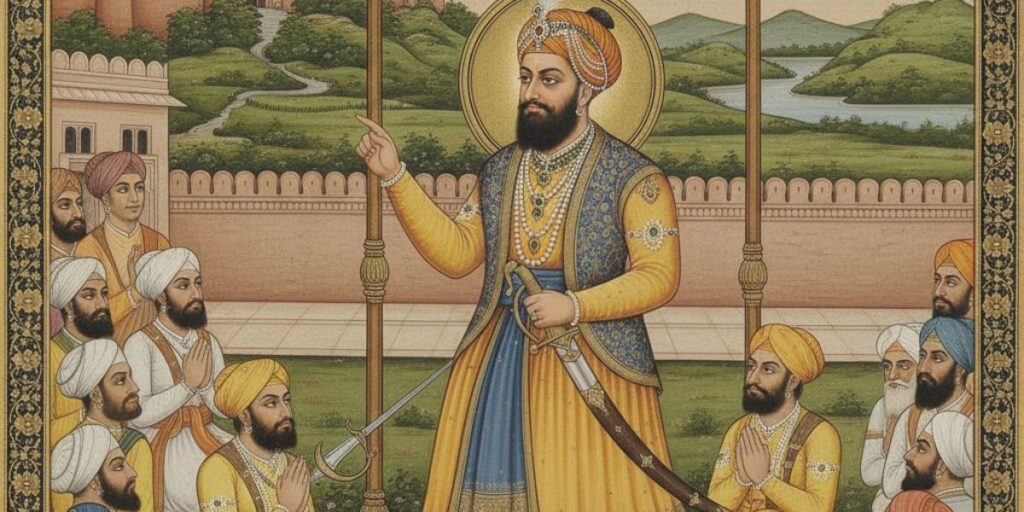
In 1699, at Anandpur Sahib, Guru Gobind Singh Ji created the Khalsa, a community of devoted and disciplined Sikhs. This was a turning point in Sikh history.
He called for volunteers willing to dedicate themselves fully to truth, courage, and service. Five men stepped forward and became the Panj Pyare. They represented selfless devotion and bravery.
To strengthen their identity, Guru Gobind Singh Ji introduced the Five Ks, which every member of the Khalsa wears:
- Kesh (Uncut Hair): Shows respect for God’s creation and acceptance of divine will.
- Kangha (Wooden Comb): Symbolises cleanliness and discipline.
- Kara (Iron Bracelet): Reminds Sikhs to act morally and responsibly.
- Kachera (Cotton Undergarment): Represents self-control, modesty, and readiness to act courageously.
- Kirpan (Sword): Stands for courage and protection of truth.
These symbols are both physical and spiritual reminders. They guide Sikhs in how to live with honesty, bravery, and humility. The 5 Ks remain central to Sikh life and are an important part of Guru Gobind Singh Jayanti.
Guru Gobind Singh Ji: The Saint-Warrior
Guru Gobind Singh Ji is known as a Saint-Warrior. He combined spiritual devotion with the courage to fight injustice. Prayer, meditation, and study were always paired with action and responsibility.
He never supported violence for personal gain. Strength was meant to protect truth and human dignity. Compassion and bravery, he taught, must always go together. This ideal continues to guide Sikhs today.
Literary Contributions and Teachings
Guru Gobind Singh Ji was also a poet and teacher. His poems and writings expressed devotion, courage, and duty. They encouraged people to face fear with faith and live honourably.
He used simple language that everyone could understand. His words inspired warriors, scholars, and ordinary people alike. Today, his writings remain central to Sikh worship and are studied for guidance in life.
The Sacrifices of the Sahibzadas
The sacrifices of Guru Gobind Singh Ji’s four sons are remembered as some of the most moving events in Sikh history. His two younger sons were executed for refusing to give up their faith. His elder sons died in battle defending righteousness.
Even after these personal tragedies, Guru Gobind Singh Ji stayed strong. His faith and leadership never wavered. These sacrifices are remembered every year during Guru Gobind Singh Jayanti as examples of courage, devotion, and resilience.
The Eternal Guru: Guru Granth Sahib
Before leaving the world, Guru Gobind Singh Ji declared the Guru Granth Sahib as the eternal Guru. This ended the line of human Gurus and ensured unity in Sikh teachings.
The Guru Granth Sahib became the ultimate guide for faith, moral conduct, and spiritual life. This decision remains one of the most important contributions of the Tenth Sikh Guru.
Death of Guru Gobind Singh Ji
Guru Gobind Singh Ji passed away on 7 October 1708 at Nanded in present-day Maharashtra. Even in his final days, he remained calm and focused on guiding the Sikh community. He reminded his followers to remain devoted to the Guru Granth Sahib and to live with courage, honesty, and compassion.
His passing marked the end of the era of human Gurus but reinforced the eternal guidance of the scriptures. Sikhs continue to honour his life, teachings, and sacrifices, especially on Guru Gobind Singh Jayanti.
Observing Guru Gobind Singh Jayanti
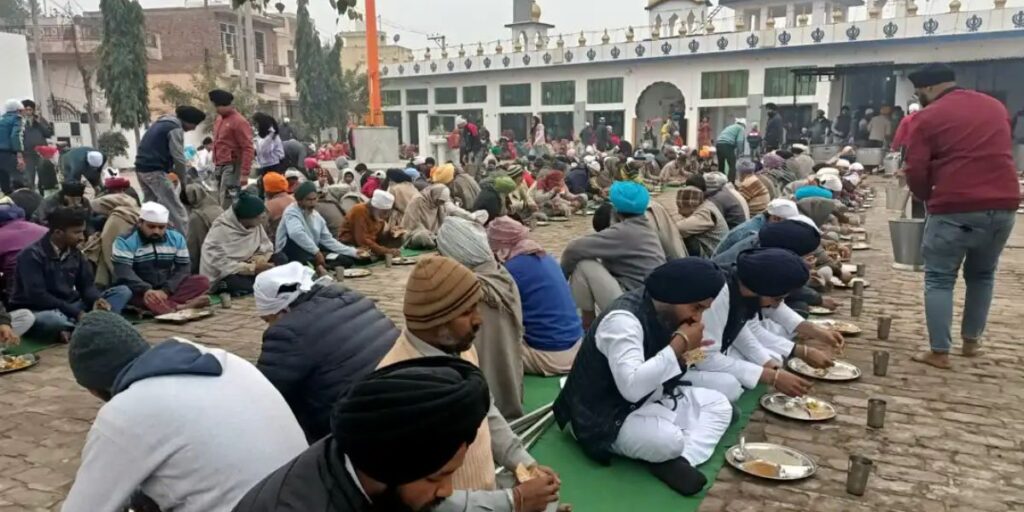
Guru Gobind Singh Jayanti is observed with prayers, devotional singing, and readings from the Guru Granth Sahib. Gurdwaras become places of calm reflection and learning.
Community kitchens, called Langars, serve meals to all. This shows equality and selfless service. Many places also hold processions, called Nagar Kirtans. These practices highlight the values Guru Gobind Singh Ji taught: courage, service, and unity.
The day focuses on reflection and remembrance rather than celebration, creating a meaningful atmosphere for all.
Global Observance
Guru Gobind Singh Jayanti is celebrated by Sikhs around the world. In countries like Canada, the UK, the US, and Australia, communities hold prayers, discussions, and educational events.
Schools and cultural programs teach children about the life and values of the Tenth Sikh Guru. These observances help keep his teachings alive for future generations.
Why Guru Gobind Singh Jayanti Matters Today
The teachings of Guru Gobind Singh Ji remain relevant today. Courage, fairness, and responsibility are timeless. His life shows that faith should lead to action. Belief should make people stronger and inspire them to do good.
Guru Gobind Singh Jayanti is a day to reflect, learn, and draw inspiration from his life of service, bravery, and moral integrity.
Key Takeaways
- Guru Gobind Singh Jayanti honours the birth of Guru Gobind Singh Ji
- It is observed as a revered Sikh Gurupurab
- Guru Gobind Singh Ji was the Tenth Sikh Guru
- He founded the Khalsa and introduced the 5 Ks
- His teachings balance faith, courage, and compassion
- The Guru Granth Sahib was declared the eternal Guru
Citation
The Ministry of Culture recognises Sikh heritage, including Guru Gobind Singh Ji and the Khalsa Panth.
Encyclopaedia Britannica notes Guru Gobind Singh Ji as the Tenth Sikh Guru and founder of the Khalsa.
Read More About Indian Festivals
Pongal Festival: An Ultimate Gratitude to Nature Through Rice and Rituals