
Summary
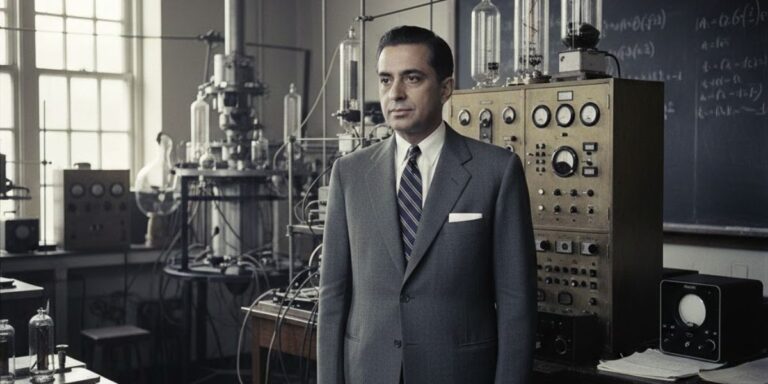
Homi Bhabha was one of India’s greatest scientists and physicists. He helped build the country’s scientific strength from the ground up. His journey began with research in cosmic rays and particle physics. Later, he founded major institutions like TIFR and shaped India’s atomic energy programme. Curiosity and long-term vision guided his life. He believed science must serve society and help India grow with confidence and independence. Even today, his ideas and institutions continue to influence research and technology in the country.
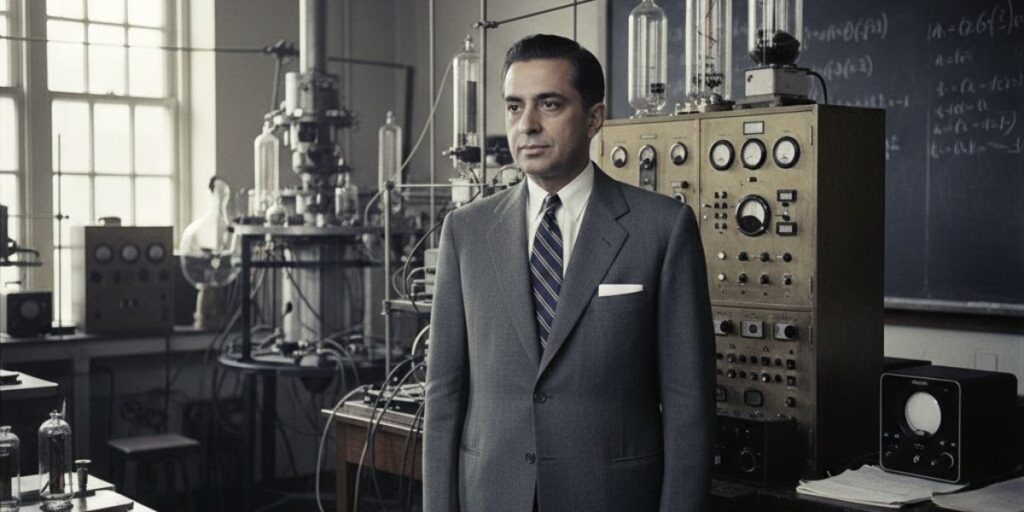
Table of Contents
Homi Bhabha’s Early Life and Education
Homi Jehangir Bhabha was born on 30 October 1909 in Bombay, now Mumbai. He belonged to a well-educated Parsi family. His home encouraged learning, discussion, and cultural awareness. From a young age, he showed interest in science, music, and art.
He studied at Cathedral and John Connon School. He later joined Elphinstone College and the Royal Institute of Science in Bombay. In 1927, he went to Cambridge University in England to study mechanical engineering, following his family’s wishes. However, his true interest was physics. Great scientists like Paul Dirac inspired him to move toward theoretical physics.
Bhabha performed exceptionally well in his studies. He later earned a doctorate in nuclear physics at Cambridge. This marked the beginning of his rise as a promising young physicist.
Early Scientific Work: Exploring Cosmic Rays and Particle Physics
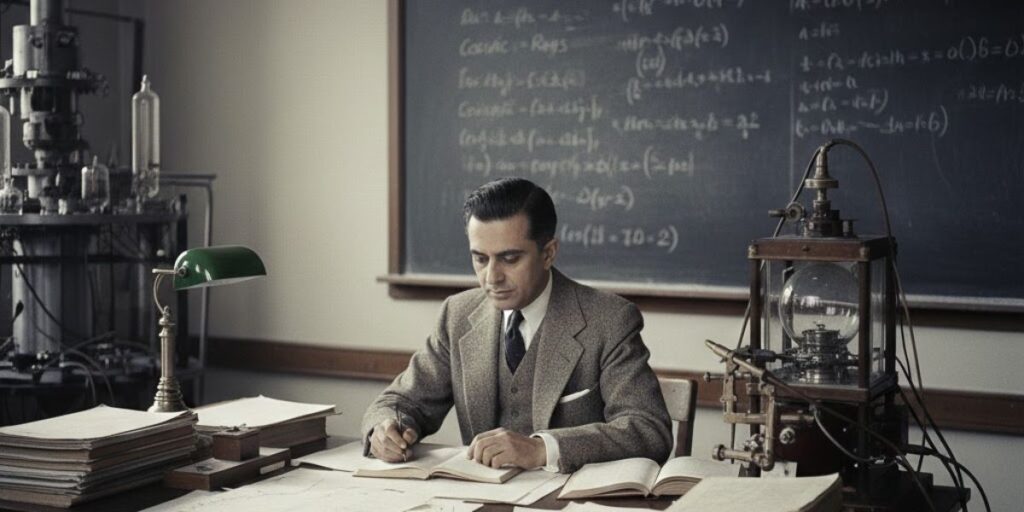
Bhabha’s early research focused on cosmic rays. These are high-energy particles that come from outer space. He studied them using detectors carried by balloons. His work explained how these particles interact with Earth’s atmosphere and create showers of smaller particles.
During this period, Bhabha made an important theoretical contribution known as Bhabha scattering. It explains the interaction between electrons and positrons. This work remains significant in modern particle physics experiments. It established his international reputation at a young age.
Return to India and Early Career
When World War II began in 1939, Bhabha was in India. He could not return to England. He joined the Indian Institute of Science in Bangalore as a reader in physics. There, he continued his research on cosmic rays.
This period changed his thinking. Bhabha realised that India lacked strong research institutions. The country depended heavily on foreign scientific centres. He began to imagine a future where Indian scientists could work at the highest level within India. He believed science should be guided by scientists and supported by long-term planning.
Founding the Tata Institute of Fundamental Research (TIFR)
In 1945, Bhabha founded the Tata Institute of Fundamental Research in Bombay with support from the Tata Trust. His aim was clear. He wanted a centre for world-class research in physics and mathematics. Over time, other scientific fields were added.
Bhabha carefully selected young scientists. He encouraged independent thinking and original research. He built a culture of discipline and excellence. He also took an interest in the institute’s architecture and planning. He believed a beautiful and inspiring environment supported creative work.
TIFR soon gained international recognition. It became a training ground for many future leaders of Indian science.
Building India’s Atomic Energy Programme
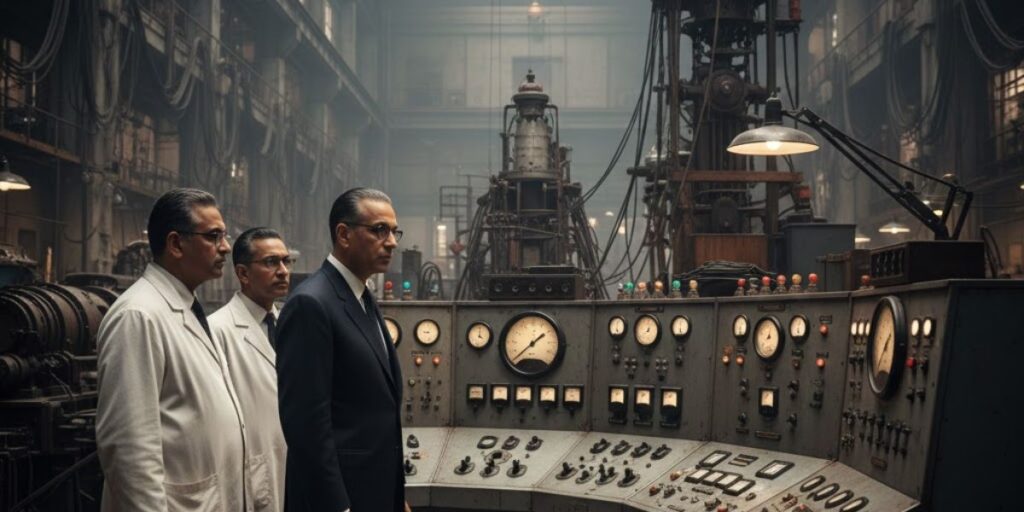
Bhabha believed atomic energy was essential for India’s future. Prime Minister Jawaharlal Nehru supported him and trusted his judgment. This allowed important scientific decisions to move forward quickly.
In 1948, Bhabha helped establish the Atomic Energy Commission and became its first chairman. He shaped India’s early nuclear policy. He argued that advanced science was necessary for true independence. Soon after, the Department of Atomic Energy was formed under scientific leadership.
Bhabha led the creation of the Atomic Energy Establishment at Trombay. This centre later became the Bhabha Atomic Research Centre (BARC). It formed the backbone of India’s nuclear research.
One early success was APSARA, India’s first nuclear research reactor. It began operating in 1956. APSARA trained scientists and supported peaceful nuclear research.
Bhabha also planned a long-term nuclear energy strategy based on India’s natural resources, especially thorium. This showed his ability to connect science with national needs.
Scientific Contributions and Vision for Nation Building
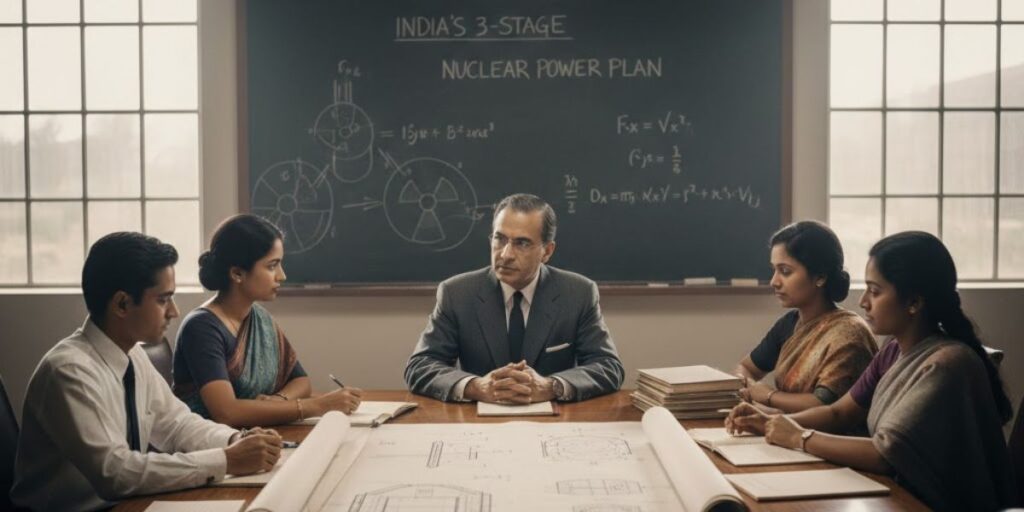
Bhabha believed science was vital for national self-reliance. He argued that developing nations must master advanced technologies. Dependence on others, he felt, would limit growth.
His vision connected basic research with practical use. It stressed strong institutions and steady funding. Through TIFR, BARC, and related organisations, he created a scientific system that could grow independently.
As a leader, Bhabha was firm and focused. He believed long-term progress required clear goals and capable leadership.
International Leadership and Recognition
Homi Bhabha’s scientific achievements brought him early recognition. In 1943, Cambridge University awarded him the Adams Prize for his work in theoretical physics.
He later earned wide international respect. In 1955, he chaired the United Nations Conference on the Peaceful Uses of Atomic Energy in Geneva. He strongly supported responsible and peaceful nuclear development.
He served as president of the International Union of Pure and Applied Physics. He represented India in several global scientific bodies. He was elected a Fellow of the Royal Society of London. In 1954, he received the Padma Bhushan.
Supporting Space and Electronics Research
His vision extended beyond nuclear science. He encouraged early research in space science and electronics. He supported specialised committees and research groups in these areas. These early efforts later contributed to India’s space and electronics programmes.
Personal Interests and Personality
Bhabha believed science and culture belonged together. He loved music, especially Western classical compositions. Beethoven’s Ninth Symphony was one of his favourites. He also enjoyed painting and sketching and actively supported Indian artists.
Colleagues described him as disciplined and imaginative. He demanded high standards but guided young scientists closely. Many future leaders of Indian science grew under his mentorship.
Tragic Death and Legacy
On 24 January 1966, Bhabha died in an airplane crash near Mont Blanc in the Alps while travelling to an international scientific meeting. His death shocked India and the global scientific community.
After his death, the Trombay establishment was renamed the Bhabha Atomic Research Centre. Scientists trained under him later led major national institutions. In this way, his vision continued.
Why His Work Matters Today
His vision continues to shape India’s scientific landscape in many ways:
- TIFR leads advanced research in physics and mathematics
- BARC supports nuclear research and peaceful applications
- Nuclear science contributes to energy, medicine, and industry
- His institution-building model trains new generations of scientists
His dream for India’s scientific growth still lives on in the institutions he built and the scientists he inspired.
Key Takeaways
- Homi Jehangir Bhabha was a leading Indian physicist known for his work in cosmic rays and particle physics.
- He made an important contribution to physics through Bhabha scattering.
- He played a central role in building India’s atomic energy programme
- He promoted long-term nuclear planning based on India’s thorium resources.
- He supported early research in space science and electronics.
- He believed science was essential for national self-reliance and development.
- His institutions continue to shape India’s scientific progress today.
Citation
Information compiled from:
- Vajiram & Ravi. Homi Bhabha – Biography and Contributions.
- Bhabha Atomic Research Centre (BARC) official publications.
- Tata Institute of Fundamental Research (TIFR) historical records.
- Government of India archives on the Atomic Energy Commission.
Read More About Indian Legends:
Vikram Sarabhai’s Rocket Roots: Space Pioneer Who Planted Thumba’s Coconut Launchpad
C.V. Raman’s Nobel Blue: Scientist Proved Sky’s Color with River Light