
Hornbill Festival arrives in December in Nagaland, when hills stir with memory and homes prepare for return. From December 1 to 10, the Naga Heritage Village at Kisama becomes a living village, not a stage. Tribes gather with ancestral songs, forest-born dances, and inherited crafts. Here, culture is not displayed for applause—it is lived, remembered, and shared, breathing through every day of the festival.
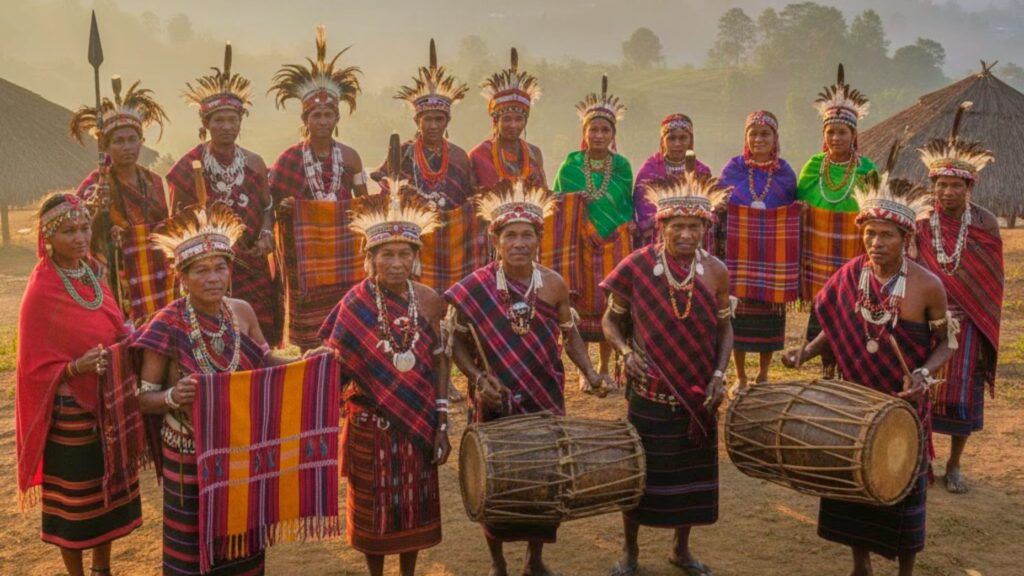
Table of Contents
The Hills Before Hornbill Festival
Before the festival existed, culture lived quietly inside villages. Every season carried meaning. Songs were sung during harvest. Dances marked victory, mourning, and renewal. Children did not learn traditions in classrooms. They absorbed them while helping elders, watching hands move, listening to voices by the fire.
Among the Ao Nagas, elders recall evenings when boys learned war dances by observing shadows cast by firelight. Among the Angami, women passed weaving patterns by memory, not instruction. Among the Konyak, headgear was prepared with ritual care, not decoration.
But time changed the hills.
By the late twentieth century, young people were leaving villages for education and work. Many returned only occasionally. Community spaces grew quieter. Some dances were performed once a year, some not at all. Elders began to notice something painful. Knowledge was still alive, but listeners were fewer.
One Angami elder later recalled, “Our songs were not forgotten. They were waiting. But no one came to hear them.”
The Idea That Became a Festival
The idea of Hornbill did not come from tourism boards alone. It came from concern.
Village councils, cultural bodies, and elders recognised a shared truth. Traditions survive only when practised together. Separate village festivals were no longer enough. There needed to be a common space where tribes could gather without losing their individuality.
December was chosen for a reason. The harvest had ended. Families were free. The land was at rest. Hornbill was envisioned as a meeting ground, not a replacement. Village festivals would continue. Hornbill would act as a bridge.
Building Kisama: A Village to Remember
Kisama was built to feel familiar, not grand. Traditional morungs were constructed for each tribe. Open spaces were left raw for dances and games. Cooking areas reflected village kitchens. No tribe was placed above another.
During the early preparations, elders from different tribes walked the grounds together. Some pointed out how community houses should face. Others corrected the placement of symbols. Youth listened more than they spoke. An elder from the Sumi tribe once said during early festivals, “This place is not for showing. It is for remembering.”
Why the Hornbill Was Chosen
The hornbill bird appears across Naga folklore. It symbolises dignity, courage, and continuity. Its feathers were worn by warriors not for decoration, but for honour earned through life.
Naming the festival after the hornbill tied modern gathering to ancient meaning. It reminded people that culture can move forward without losing its soul.
Stories from the Early Hornbill Festivals
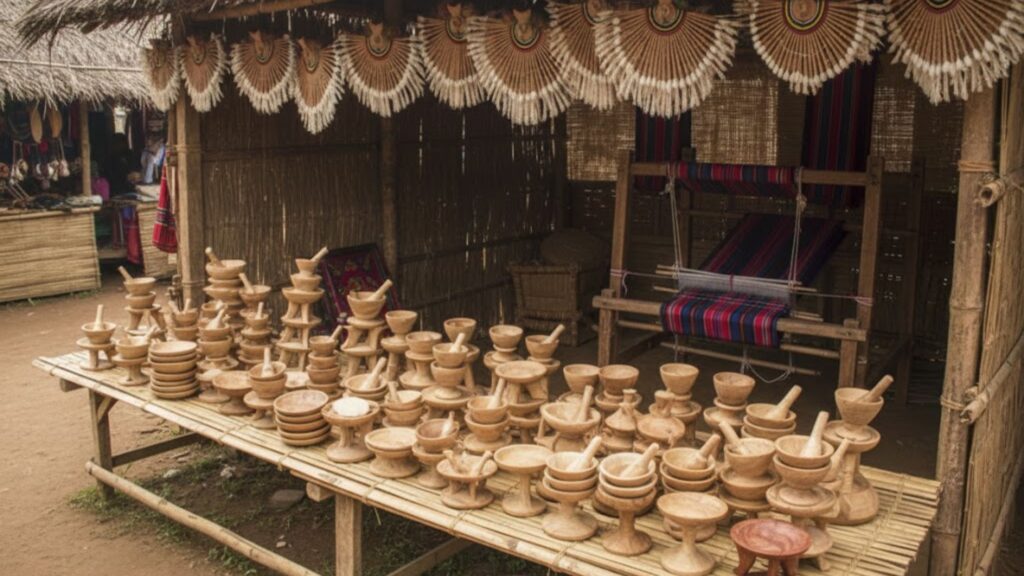
In the first few years, the festival was small. But the moments were powerful. On one early morning, an Ao elder stopped a performance mid-song. He gently corrected the pitch. Younger singers adjusted immediately. No announcement was made. The song continued, now true.
During another festival, a Konyak craftsman demonstrated wood carving. A child watched silently for hours. On the final day, the child tried carving for the first time. The elder did not correct him. He smiled and said, “Now you have begun.” There were no trophies then. No loud applause. Only recognition through presence.
Living Traditions at Hornbill Today
Today, Hornbill is larger. Visitors arrive from across Bharat and beyond. But at its heart, the festival remains unchanged. Dances follow ancestral steps. Songs are sung in original languages. Food is prepared slowly, as it always was. Elders sit among youth, not above them.
A grandmother adjusts a shawl on her granddaughter. A father teaches drum rhythm by tapping fingers on wood. An elder corrects posture in silence. Culture moves from body to body.
Why Hornbill Matters Deeply
Hornbill reassures elders that their knowledge is not ending. It reassures youth that their identity is not outdated. It reminds tribes that unity does not mean sameness. Many young Nagas return home specifically for Hornbill. Some say it is the first time they truly understood their tribe. The festival does not freeze culture. It strengthens it.
Moments That Keep Hornbill Alive
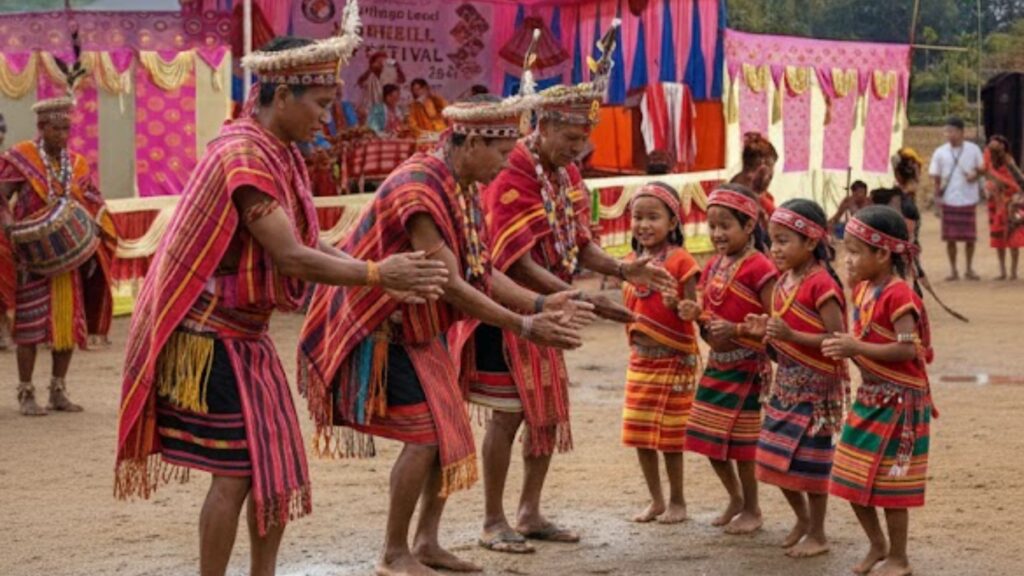
A child learning a dance step for the first time.
A singer remembering lyrics taught decades ago.
An elder recognising a forgotten tune.
Smoke rising from traditional kitchens.
Drums echoing against hills that have heard them for centuries.
These moments are not planned. They happen naturally.
Hornbill is not staged. It is lived.
Identity, Continuity, and Unity
At Hornbill, tribes meet without merging. Each voice remains distinct. Each rhythm keeps its pace. One drum answers another. One song pauses as another begins. No one competes. This coexistence is the festival’s greatest achievement.
The Heartbeat That Continues
When December ends, Kisama grows quiet again. Shawls are folded. Drums are wrapped. Fires fade. But culture has moved forward. Songs are remembered. Steps return to villages. Children carry stories home.
Hornbill is not a spectacle. It is a promise. A promise that traditions will not fade quietly. That identity will survive not through display, but through care, practice, and return. For Nagaland, Hornbill is not an event. It is homecoming.
Key Takeaways
- Hornbill Festival reunites tribes after harvest season
- Traditions are practised, not preserved behind glass
- Elders pass knowledge directly to youth
- Unity exists without loss of tribal identity
- Culture survives through participation, not performance
Citations
- Government of Nagaland. (2023). Hornbill Festival. Government of Nagaland. https://nagaland.gov.in
- Baruah, S. (2017). Tribes of Northeast India: Culture and festivals. Academic Press.
- Ao, J. (2020). Living traditions of Nagaland. Naga Heritage Publications.
- Dutta, R. (2019). Hornbill Festival: A celebration of Naga culture. Journal of Indian Cultural Studies, 12(3), 45–58.
Read More About Indian Festivals
Rann Utsav: When the White Desert Becomes a Living Festival of Bharat