
Summary
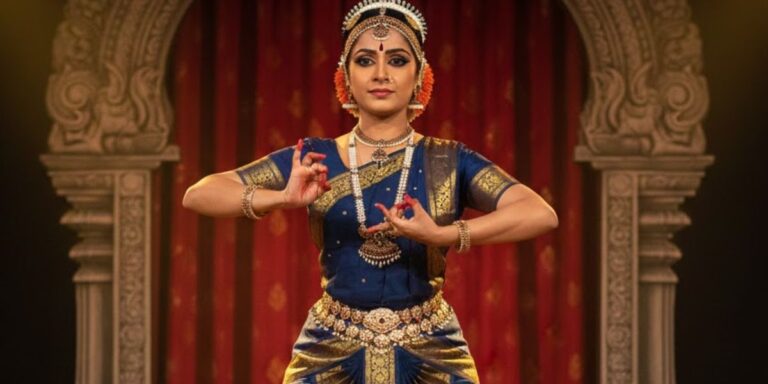
Rukmini Devi Arundale was one of India’s most important cultural figures. At a time when Bharatanatyam had lost public respect, she worked quietly and steadily to restore its place. She did not challenge society through protest. Instead, she chose learning, teaching, and creation. Through her work, Bharatanatyam returned to the stage with dignity and care. Her journey was not only about dance. It was about protecting a cultural inheritance and passing it on with honesty. The Bharatanatyam seen today on Indian stages and across the world carries her vision, discipline, and sense of beauty.
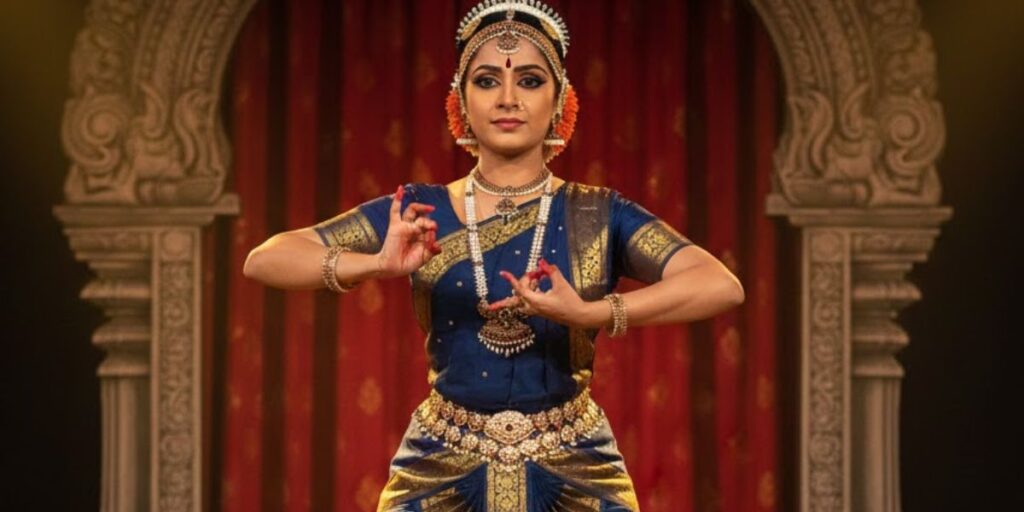
Table of Contents
Rukmini Devi’s: Early Life and Family
Birth and Childhood
Rukmini Devi was born on 29 February 1904 in Madurai, Tamil Nadu. She was the sixth child of Nilakanta Sastry, a Sanskrit scholar and a retired government engineer. Her early years were shaped by books, discussion, and a deep respect for learning.
Growing Up and Family Influence
Because of her father’s transferable work, the family moved often. This allowed Rukmini Devi to experience different places and ways of life. In the early years of the twentieth century, her father became associated with the Theosophical Society and later settled the family in Adyar, Chennai, close to its headquarters.
This environment played an important role in shaping her thinking. Her brother, Nilakanta Sri Ram, later became President of the Theosophical Society. Surrounded by ideas of culture, service, and inner growth, Rukmini Devi developed a quiet confidence that guided her choices.
Spiritual Influence and Marriage
Meeting Dr. George Arundale
Living near the Theosophical Society brought Rukmini Devi into contact with Dr. George Arundale, a British theosophist and educationist. He shared her interest in art, education, and Indian culture. Their conversations grew into a close bond built on shared values and trust.
Marriage and Early Work Together
In 1920, Rukmini Devi married Dr. Arundale. She was 16, and he was 42. The age difference surprised many, but their marriage became a partnership rooted in mutual respect. Together, they travelled widely and met poets, educators, and thinkers, including James Cousins and Maria Montessori.
During these years, Rukmini Devi took on leadership roles within the Theosophical movement. She became President of the All-India Federation of Young Theosophists in 1923 and later led the World Federation of Young Theosophists in 1925. These experiences strengthened her belief that culture and education were essential to a nation’s growth.
Discovering Bharatanatyam
Influence of Ballet
In 1928, the Russian ballerina Anna Pavlova visited Bombay. Rukmini Devi met her and later travelled on the same ship to Australia. During the journey, she learned ballet from Pavlova’s leading dancer, Cleo Nordi. Ballet introduced her to discipline, form, and balance.
Turning to Indian Dance
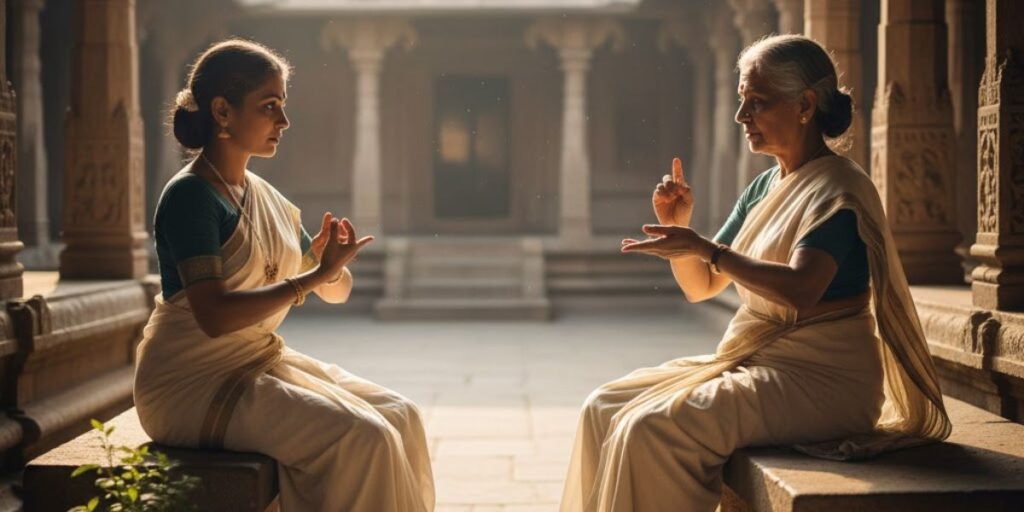
Anna Pavlova encouraged her to explore Indian classical dance. Rukmini Devi began learning Bharatanatyam at a time when the dance was surrounded by social stigma. Many families avoided it, as it was linked to temple traditions and the devdasi system.
She trained seriously under traditional teachers, learning not only steps but also meaning. Slowly, the dance became central to her life.
Facing Society and Public Performance
First Performance and Challenges
In 1935, Rukmini Devi gave her first major public performance at the Diamond Jubilee celebrations of the Theosophical Society in Adyar. Some conservative sections of Madras society opposed her appearance and threatened a boycott.
She chose not to withdraw. With quiet resolve, she went on stage and performed.
A Memorable Evening
The audience was deeply moved. Many spoke of the calm and spiritual quality of her dance. Nobel laureate Sir C. V. Raman described it as grace brought gently onto the stage. Dr. Arundale spoke between the performances, explaining the deeper meaning of the art. That evening marked a turning point. Bharatanatyam was seen, once again, as something worthy of respect.
Kalakshetra Foundation

A Vision for Students
Rukmini Devi believed it was not enough to perform alone. She wanted young people to learn and carry the art forward. She felt that cultural renewal was as important as political freedom.
Kalakshetra Takes Shape
This belief led to the founding of Kalakshetra. She once wrote that she did not search for the dance; it found her. She devoted her life to the institution, supporting it through her own resources and the help of friends. Dr. Arundale worked closely with her, sharing responsibility and vision.
People Who Shaped the Institution
Kalakshetra drew musicians, dancers, and scholars who believed in her work. Teachers such as Tiger Varadachariar, Mysore Vasudevachariar, Budalur Krishnamurthy Sastri, and Papanasam Sivan shaped its musical training. Dancers like Ambu Panikar and Mylapore Gowriammal guided students. Her family stood firmly beside her.
A Living Space for Art
Rukmini Devi cared deeply about the environment and detail. Every classroom, tree, and pathway reflected her belief that beauty supports learning. After Dr. Arundale’s death in 1945, she continued alone. In the 1960s, Kalakshetra moved to its present campus, growing steadily despite limited resources.
Returning Dignity to Bharatanatyam
Rukmini Devi changed how Bharatanatyam was viewed. She removed the negative labels placed on it during colonial times and presented it as a disciplined and meaningful art rooted in tradition.
Families began encouraging their children to learn the dance. Performances returned to respected spaces. Through careful training and thoughtful presentation, she ensured Bharatanatyam would survive with dignity.
Why Bharatanatyam Matters in Our Culture
Bharatanatyam is more than movement. It is a form of storytelling, prayer, and memory. Through gesture and expression, it carries ideas from ancient texts and lived experience.
The dance teaches balance, patience, and focus. Even today, when performed on modern stages, it remains connected to tradition. Preserving Bharatanatyam has always meant preserving a cultural language.
Struggle, Strength, and Quiet Resolve
Rukmini Devi faced resistance at every step. She was criticised for learning Bharatanatyam, for performing publicly, and for challenging social boundaries.
She responded with consistency rather than confrontation. Each class she taught and each student she trained became her answer. Her life shows that lasting change often comes through steady belief.
Why Rukmini Devi’s Life Matters to Today’s Learners
For today’s Bharatanatyam students, her life offers important lessons. Dance is not only about skill, but also about values.
Her journey teaches that:
- Art needs patience and commitment
- Tradition can grow without losing meaning
- Learning demands respect and humility
Understanding her struggles helps young dancers value the freedom they have today.
Beyond Dance: Public Life and Values
Rukmini Devi also served the nation in public life. As a member of the Rajya Sabha, she worked for animal welfare and helped pass the Prevention of Cruelty to Animals Act. She later chaired the Animal Welfare Board, remaining active until the end of her life.
In 1977, Prime Minister Morarji Desai nominated her for the post of President of India. She declined, choosing to remain with Kalakshetra. For her, service mattered more than position.
She lived by compassion in every choice, including her refusal to use medicines tested on animals.
Bharatanatyam Today and Her Legacy
Today, Bharatanatyam is performed across the world. Kalakshetra’s style remains a benchmark. Her dance dramas continue to be performed with care, following her original vision.
Rukmini Devi’s life reflected grace, compassion, and discipline. The art she protected continues to speak quietly, clearly, and with dignity.
Key Takeaways
- Rukmini Devi Arundale played a central role in restoring respect to Bharatanatyam at a time when the dance faced social rejection.
- Her upbringing within the Theosophical Society shaped her belief that culture and spiritual values are deeply connected.
- Despite strong opposition, she chose to perform Bharatanatyam publicly and helped change how society viewed the dance.
- The founding of Kalakshetra created a structured and disciplined space for learning classical arts.
- Her work ensured that Bharatanatyam was taught with care, dignity, and cultural understanding.
- Rukmini Devi’s struggles remind today’s Bharatanatyam learners that the art survives through commitment, patience, and respect for tradition.
- Beyond dance, her work in animal welfare and public service reflected the same values of compassion and responsibility.
- Bharatanatyam today stands as a global classical form largely because of her lifelong dedication.
Citations
- Kalakshetra Foundation. The Founder – Rukmini Devi Arundale. Kalakshetra, Chennai.
- Arundale, Rukmini Devi. Speeches and Writings on Art, Culture, and Education.
- Theosophical Society Archives, Adyar, Chennai.
- Government of India Records on the Prevention of Cruelty to Animals Act and Rajya Sabha Proceedings.
- Britannica- Rukmini Devi Revival of Bharatnatyam
Read More About Indian Legend
Dadasaheb Phalke’s Raja Harishchandra: Father of Indian Cinema’s First Reel