
The Birth of Manu
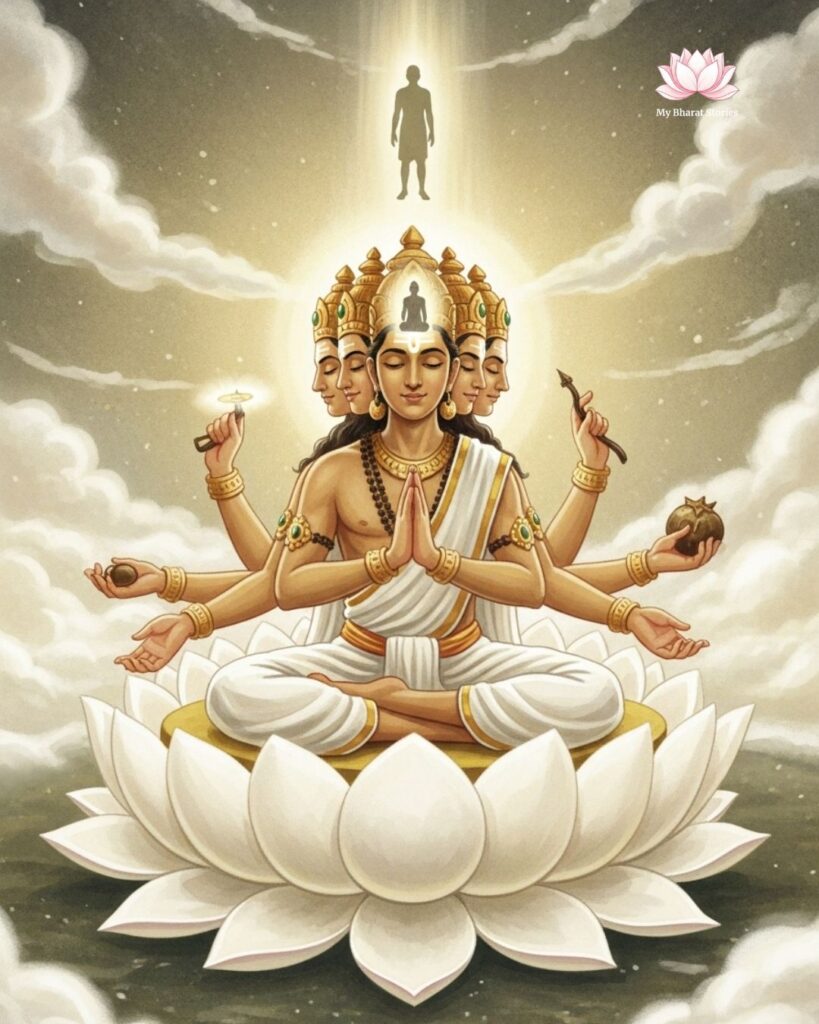
In the stillness before the world had fully awakened, Lord Brahma sat in meditation. From his divine thought the heavens stretched wide, rivers found their beds, mountains rose from the waters, and the earth took shape. But though the world was vast and beautiful, it was empty.
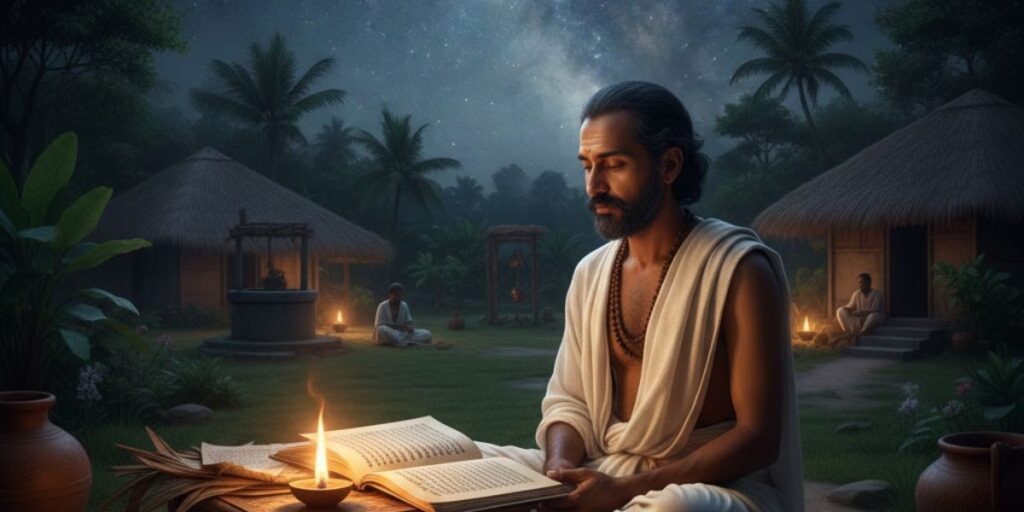
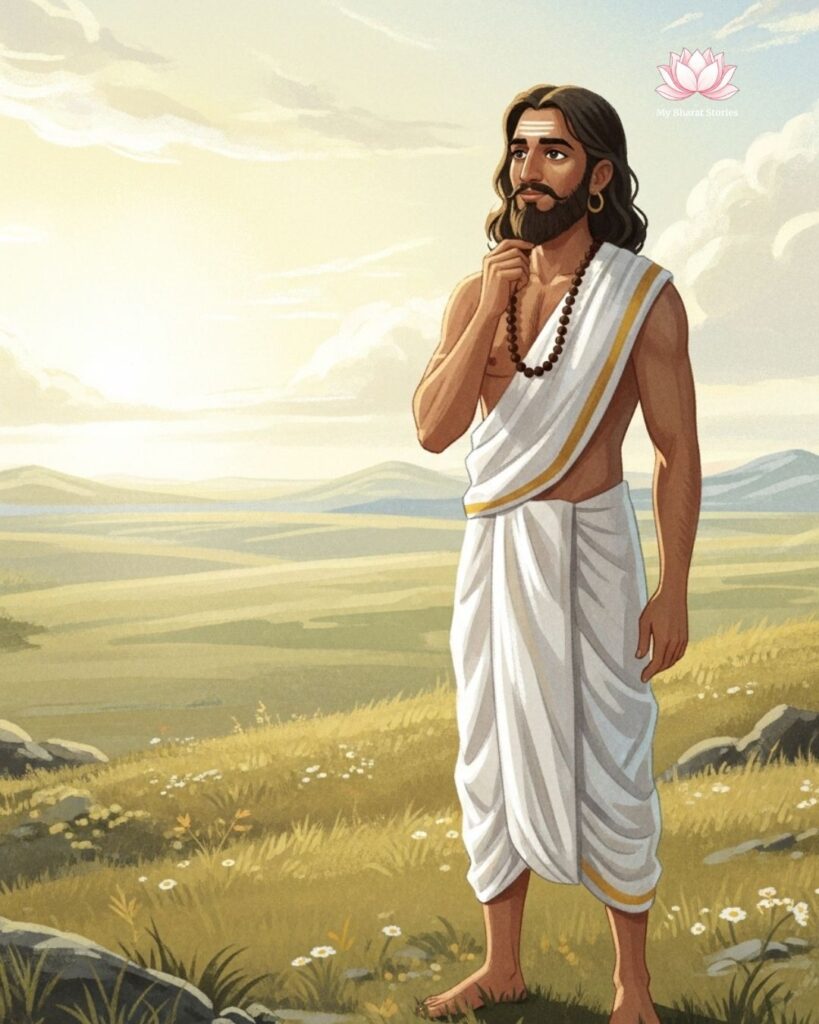
From Brahma’s will, a radiant being emerged. He was neither god nor beast, but the first of humankind. His name was Manu, meaning “the thinker.” He carried within him the power of reflection, the gift of choice, and the responsibility of Dharma.
Brahma looked upon him with affection. “You shall be the father of mankind,” the Creator declared, “and from you shall flow the generations of men and women who will walk this earth.”
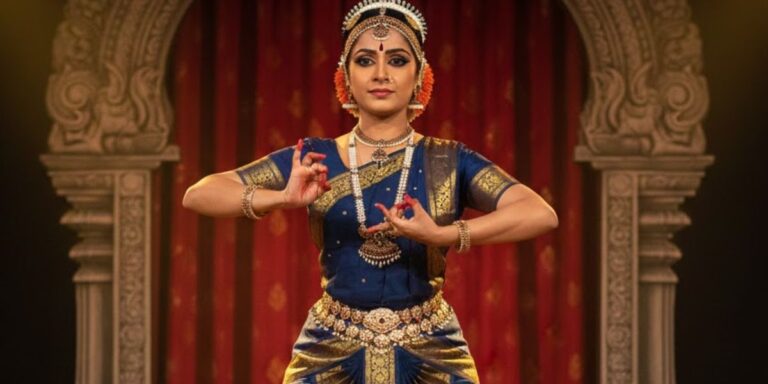
Yet, Manu was not destined to walk alone. From Brahma’s thought arose a companion, a woman of grace and luminous beauty. Her name was Shatarupa, meaning “the one with a hundred forms.” She was the essence of nature itself—ever-changing, nurturing, and filled with the power of creation.
Together, Manu and Shatarupa became the first couple, the seed of human life, destined to carry forward the story of all mankin
Shatarupa, the Mother of Mankind
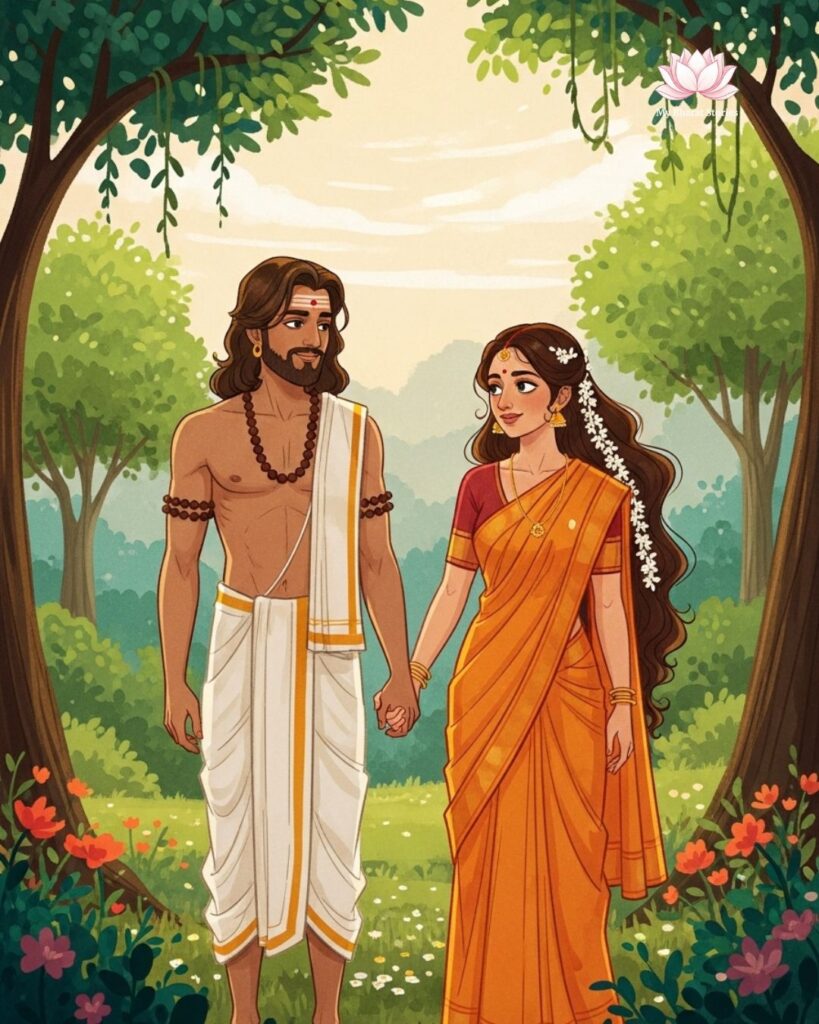
Manu and Shatarupa dwelt in the sacred land created for them. The earth was rich and fertile, rivers flowed with sweetness, and the air carried the fragrance of flowers that never faded.
They became parents to children who would shape the destiny of humankind. Among their daughters were Akuti, Devahuti, and Prasuti. Each one was destined to continue the work of creation.
- Akuti was given in marriage to Ruchi Prajapati. From their union came noble children who carried forward wisdom and discipline.
- Devahuti, married to the sage Kardama, gave birth to Kapila Muni, the teacher of the Sankhya philosophy, whose words would guide seekers for ages.
- Prasuti was married to Daksha Prajapati and became the mother of many daughters. Through her, the line of gods, sages, and divine beings continued.
Thus, from Manu and Shatarupa, the roots of mankind spread. Their children were not only parents of men and women but also of philosophies, rituals, and traditions. The family of Manu was the living link between the human and the divine.
The Yajna of Manu
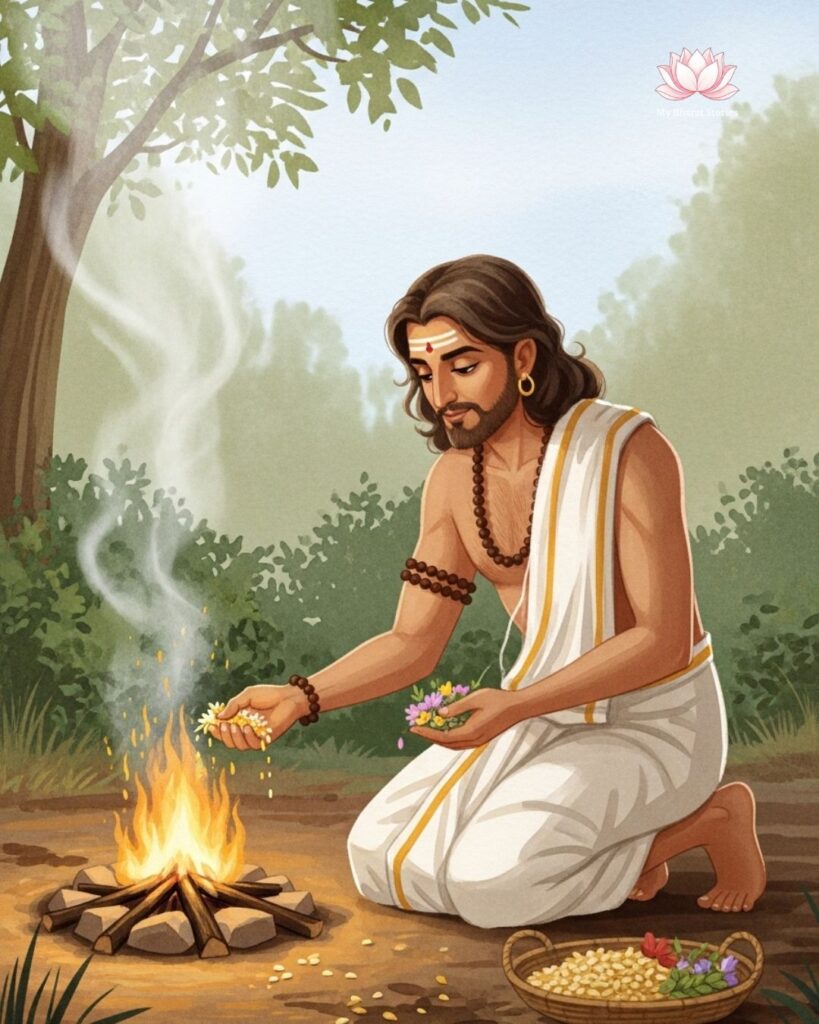
Manu was not only a father but also the first to seek communion with the divine. The Rigveda remembers him as the one who performed the earliest yajna.
One dawn, he built an altar of stone and wood, kindled the sacred fire, and stood before it with reverence. He poured clarified butter into the flames, chanting words of gratitude. He offered grains, fruits, and herbs, whispering prayers not for his own gain but for all living beings.
The smoke rose skyward, carrying his devotion to the gods. The devas, pleased with his offering, blessed him with prosperity and protection. Through this act, Manu became the bridge between mortals and the divine. His sacrifice was the first thread that bound humankind to the heavens.
The Fish in Manu’s Hands
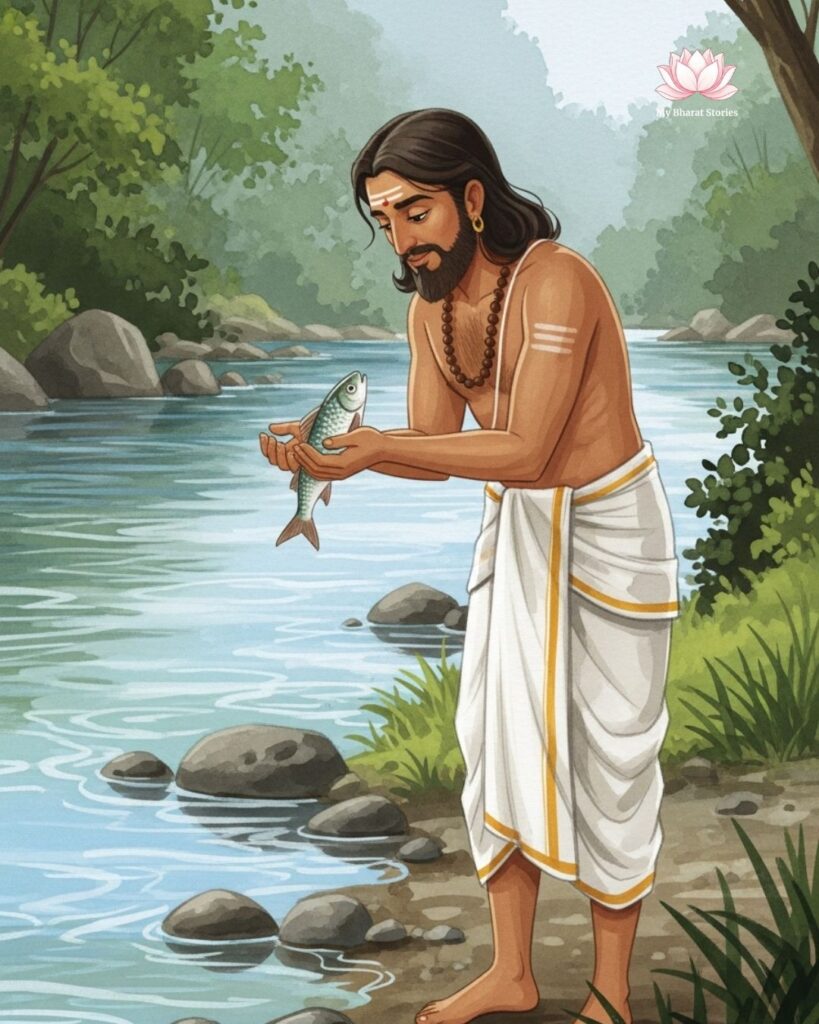
Time flowed, and Manu remained steadfast in his daily rituals. One morning, while performing his ablutions in the river, a tiny fish slipped into his cupped palms. It glistened in the sun and spoke with a soft voice, “Protect me, O Manu, and I shall protect you.”
Manu, moved by compassion, placed the fish in a small vessel of water. But the next day, it had grown larger, too big for the pot. He transferred it to a bigger container. Soon it outgrew that as well. Manu carried it to a pond, then to a lake. Still the fish grew, until it was vast and shining.
At last, Manu released it into the ocean. There, the fish revealed its true form—it was Lord Vishnu as Matsya, the divine preserver.
Vishnu spoke with a voice like thunder and yet filled with kindness. “Soon, a great flood will rise to cover the earth. All that lives will perish. Build a strong boat, O Manu. Take with you the seeds of every plant, the Vedas, the seven sages, and creatures of the earth. When the waters come, I will guide you.”
Manu bowed in reverence, his heart steady with faith
The Great Flood
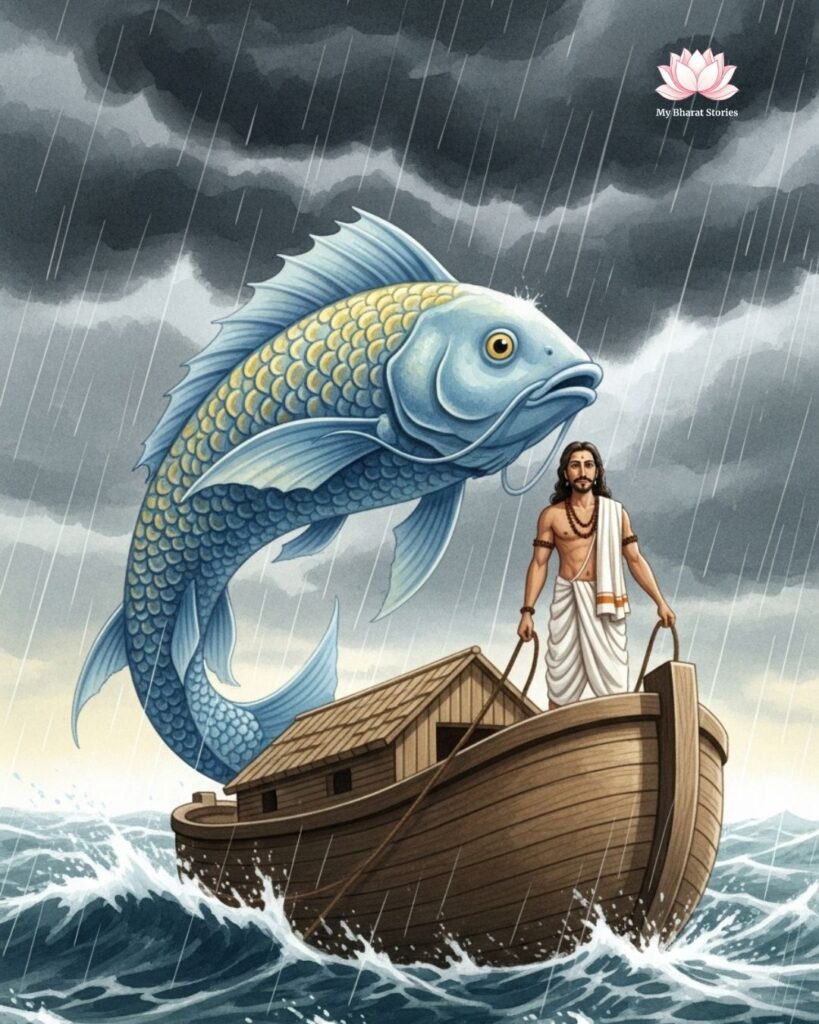
The days passed, and the warning of the Lord came true. Dark clouds covered the sky. Lightning split the heavens, and rain fell without ceasing. Rivers overflowed, oceans swallowed the shores, and mountains disappeared beneath the rising waters.
Manu’s boat, strong and vast, floated upon the stormy waves. With him were the seven sages, the seeds of plants, the sacred scriptures, and the creatures of the earth. The world had become an endless ocean, with no land in sight.
Then the great fish appeared, shining like a mountain of gold. From its head grew a single horn, to which Manu tied the boat with a serpent rope. The Matsya avatar pulled the ark through the raging waters, guiding it safely across the cosmic sea.
Days and nights passed. The waters roared, but Manu prayed without fear. His faith never wavered, for he knew the Lord guided his vessel.
At last, when the storm ceased, the floodwaters slowly receded. The ark came to rest upon the slopes of a mountain. From there, Manu and the sages stepped onto the reborn earth.
Life after the Waters
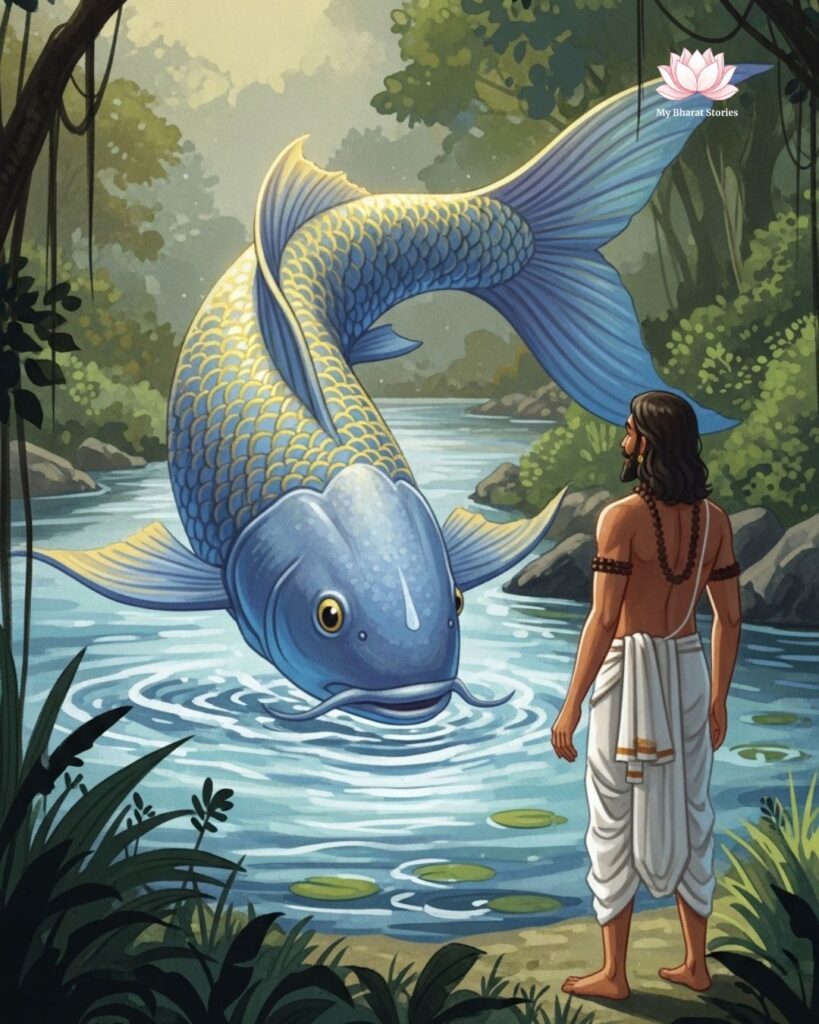
When the world dried and the rivers returned to their beds, Manu stood upon the fresh earth. The land was empty, waiting for life once more.
Manu planted the seeds he had carried, and green shoots rose from the soil. Grains, fruits, and herbs spread across the land. The animals released from the ark found their homes again. The world, once drowned, began to breathe anew.
Manu offered prayers of gratitude to the Lord who had preserved life. He performed yajna once more, pouring ghee into the sacred fire. From his offering arose prosperity, rain, and fertility. The earth flourished, and Dharma was restored.
Manu the Lawgiver
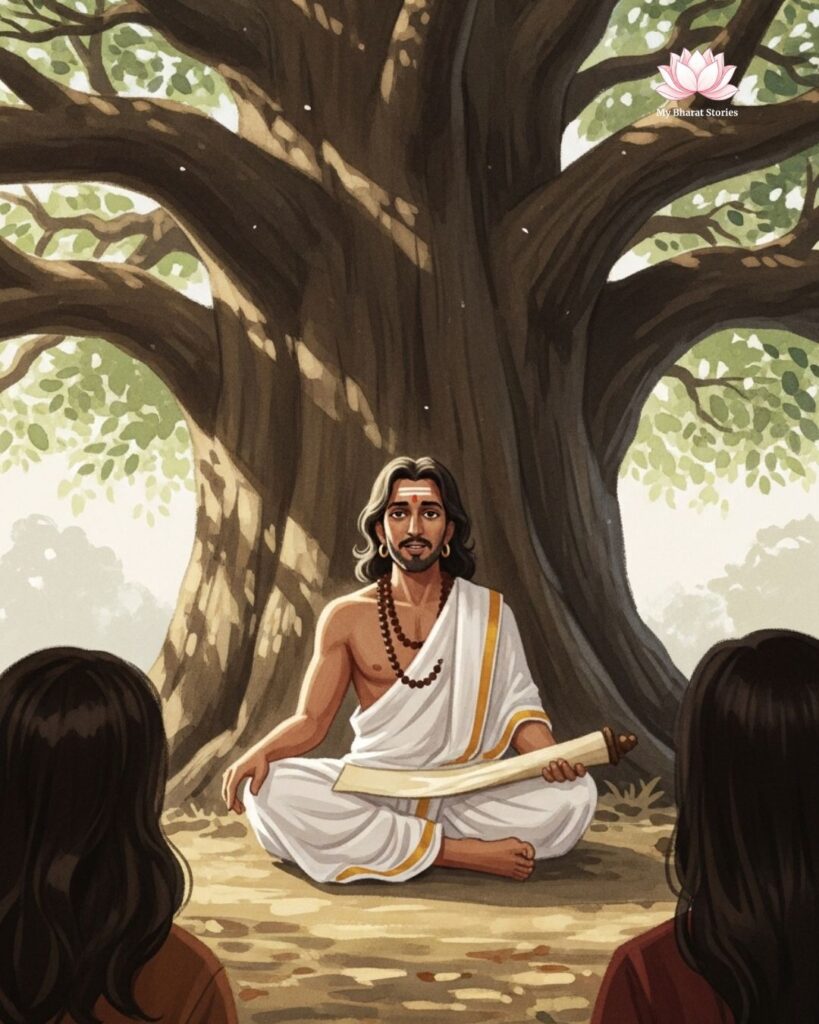
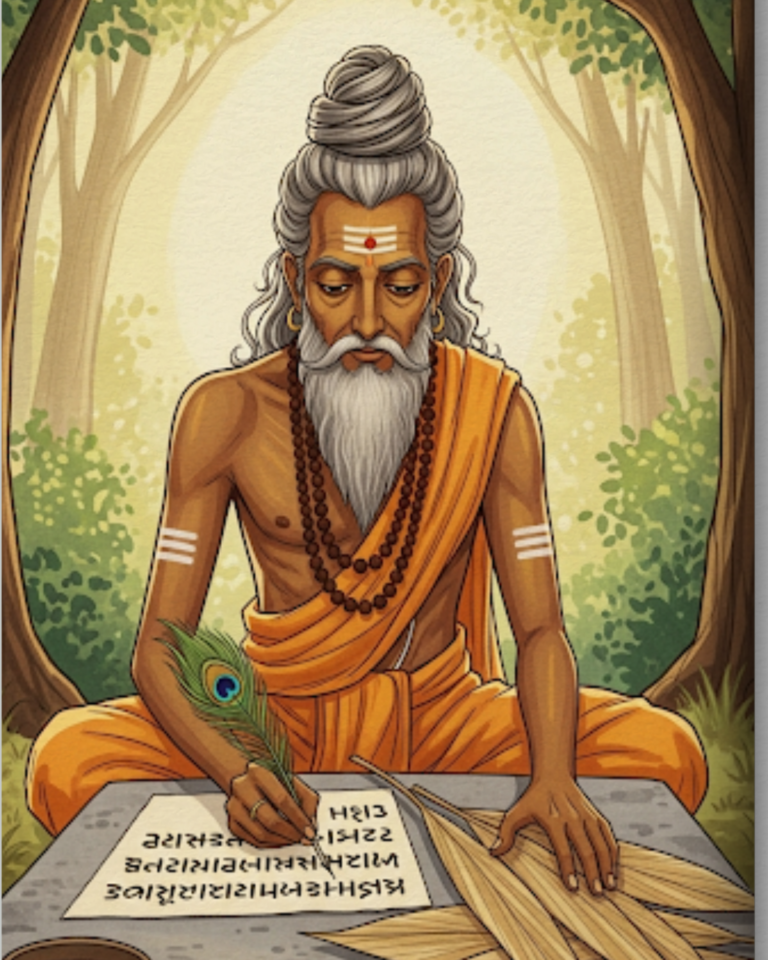
Manu was not only the preserver of life but also its guide. The wisdom he carried was later recorded in the Manusmriti, one of the most ancient codes of law.
He gathered his children and their descendants and spoke to them of Dharma—of truth, duty, and justice. His words were not commands but teachings born from the balance of the cosmos.
He taught rulers to be protectors, not oppressors. He taught families to honor respect and duty. He taught individuals to live with discipline, kindness, and reverence for life.
Manu’s laws guided every part of life: education, marriage, inheritance, care for the earth, and devotion to the divine. They were not mere human rules but reflections of the eternal order.
Children of Manu and the Human Lineage
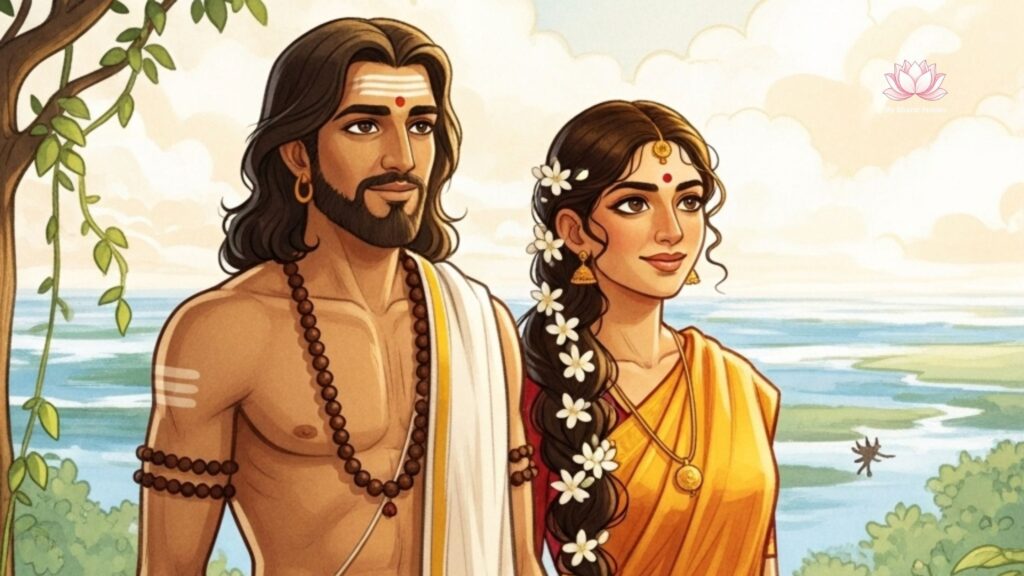
From Manu and Shatarupa, mankind spread across the earth. Their daughters became mothers of dynasties, their sons carried forward wisdom and rule.
Akuti’s children gave rise to noble lines. Devahuti’s son Kapila became a sage whose philosophy shaped spiritual thought for millennia. Prasuti’s children filled the world with divine and human beings who carried the torch of creation.
Thus, from one couple, all humanity flowed. Each child carried not only flesh and blood but also fragments of Dharma, ensuring that the path of truth continued across ages.
Eternal Story
So the story of Manu is told—
The thinker, the father of mankind.
The one who saved life from the flood.
The one who offered the first yajna.
The one who gave laws to guide the world.
From him, we are all called Manava, children of Manu. And in his journey lies the beginning of our own.