
Summary
The birth of the Ramayana traces back to a moment of profound compassion experienced by Sage Valmiki in forest exile. Witnessing a hunter kill a bird awakened grief that transformed into the first Sanskrit shloka. This spiritual epiphany reshaped Valmiki’s life and gave rise to the Ramayana, an epic rooted in empathy, dharma, and moral consciousness.
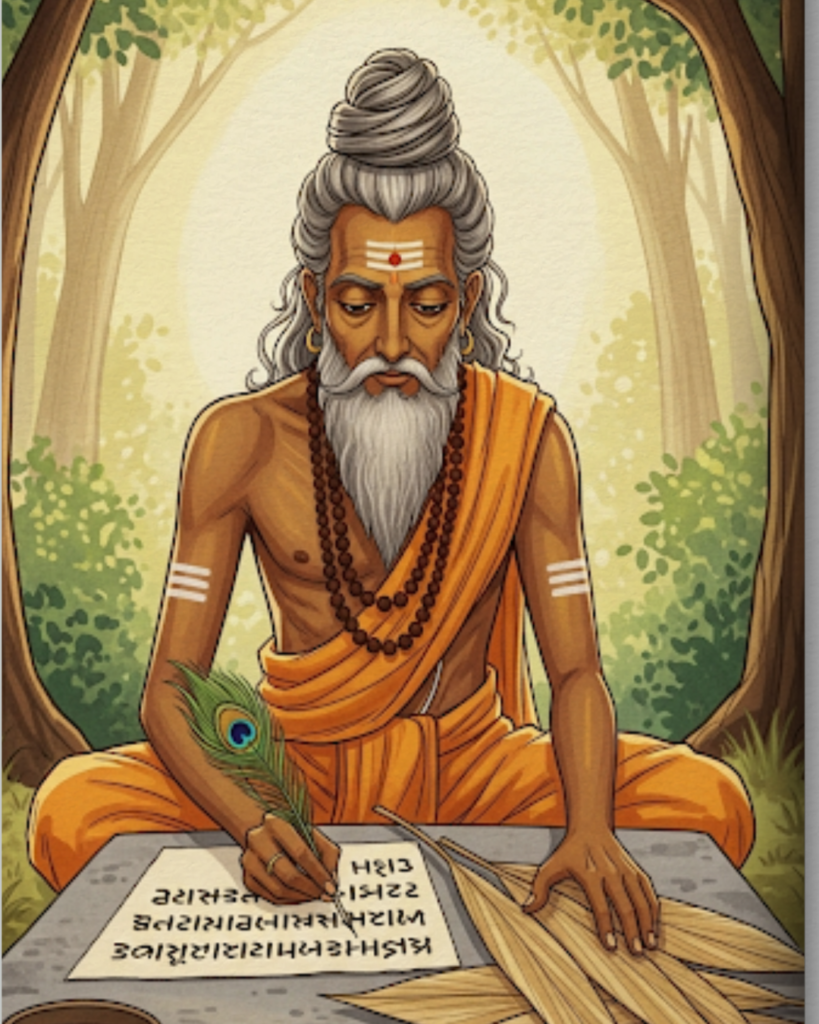
Table of Contents
Who Was Valmiki Before the Ramayana?
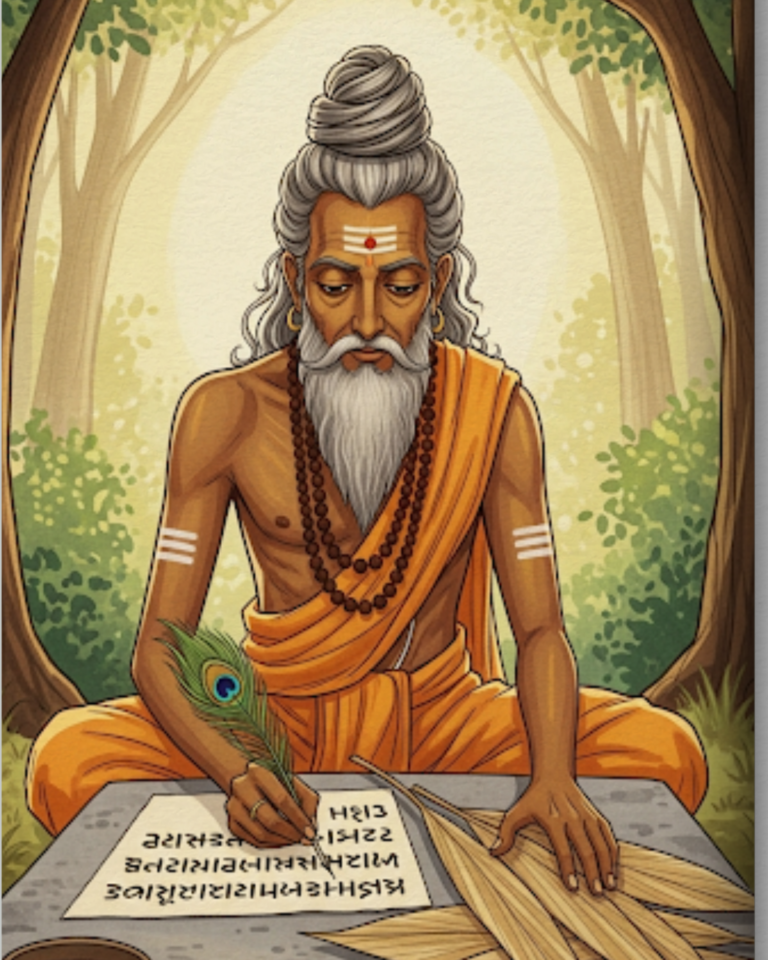
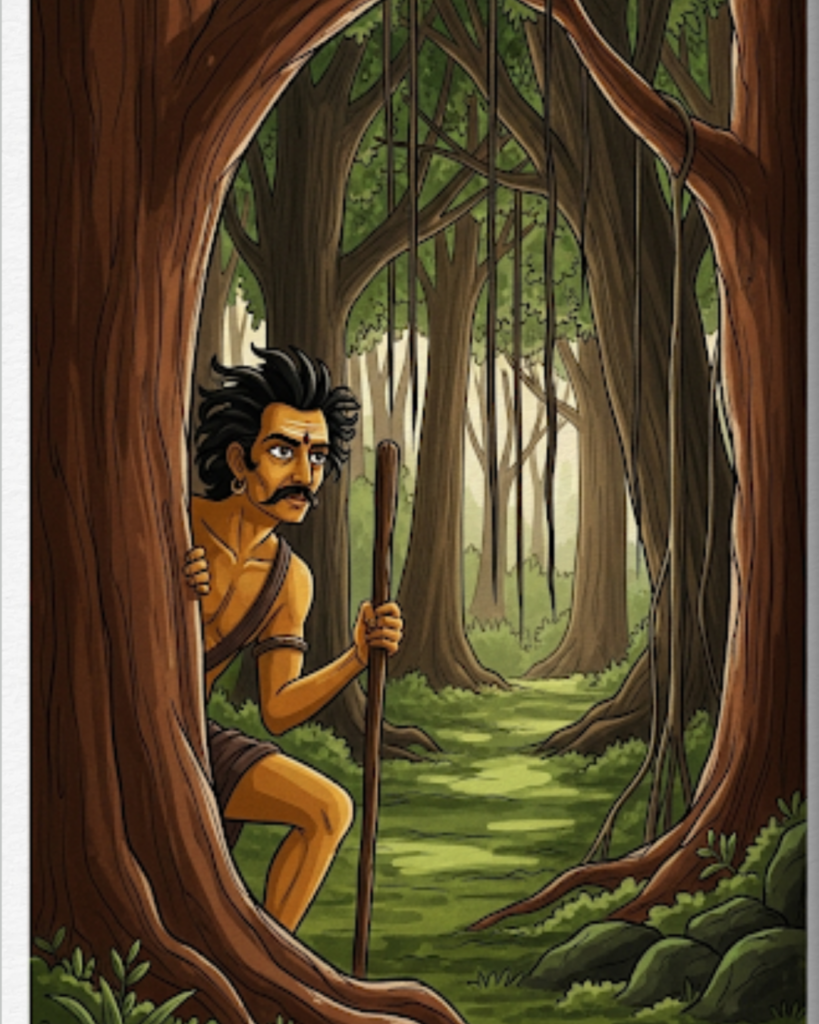
The story of Valmiki is, at its core, a story of transformation. According to ancient tradition, Valmiki was not born a sage. He is often described as a former highway robber who survived by harming travelers. His life was driven by ignorance rather than malice, shaped by survival instincts and moral blindness.
A turning point came when he encountered enlightened sages who forced him to confront a simple but devastating question: Would those he harmed truly share his sins? The answer shattered his illusions. Overcome with remorse, Valmiki withdrew from worldly life and immersed himself in deep penance.
Years of meditation transformed him. Ants built anthills around his motionless body, earning him the name “Valmiki,” derived from valmika (anthill). This rebirth marked the beginning of a new consciousness.
The Exile That Prepared a Poet
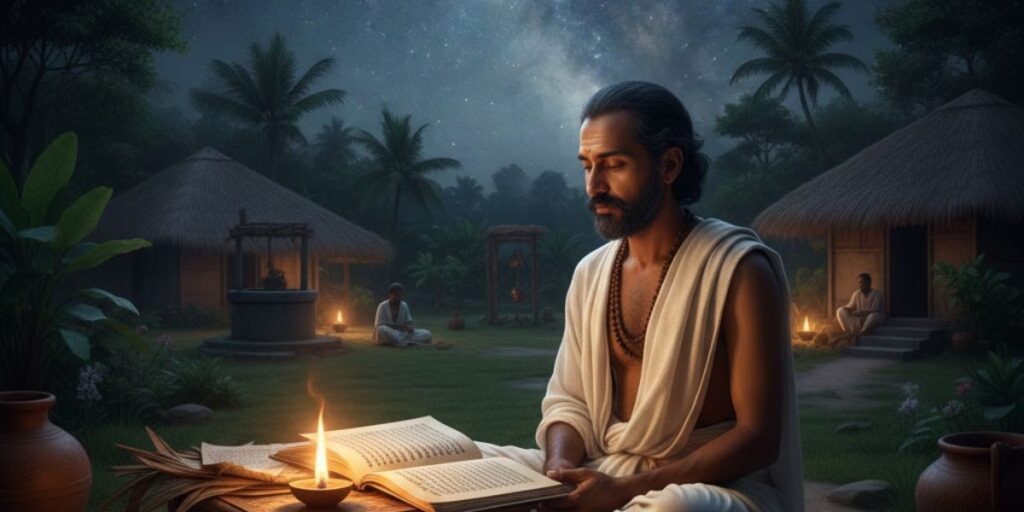
Valmiki’s forest exile was not a punishment but a preparation. Removed from society, he became deeply attuned to the rhythms of nature—its harmony, fragility, and interconnectedness.
In Hindu philosophy, the forest is not a place of escape but of awakening. It strips away ego and status, leaving only awareness. Valmiki’s years in solitude sharpened his sensitivity, allowing him to perceive suffering not as spectacle, but as shared experience.
This heightened awareness set the stage for the moment that would give birth to the Ramayana.
The Hunter’s Arrow: A Moment That Changed History
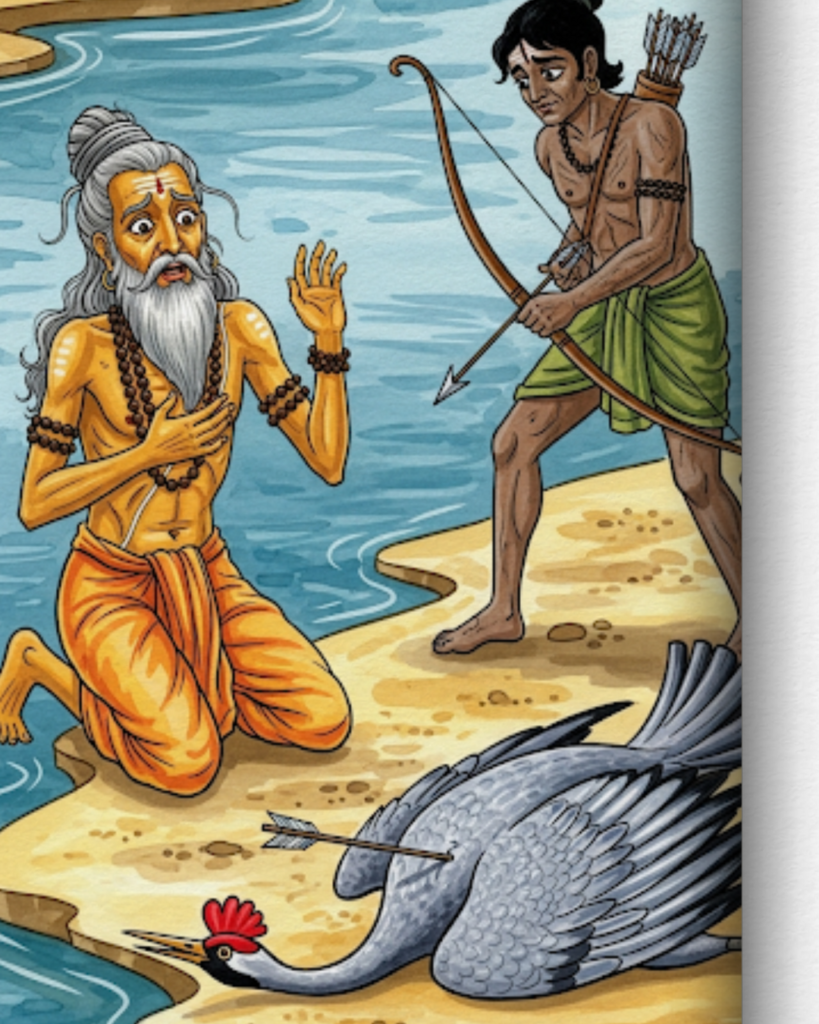
One day, while walking along the banks of the Tamasa River, Valmiki witnessed a scene of innocence. A pair of krauncha birds were engaged in playful union, their calls filling the forest with joy.
Suddenly, a hunter’s arrow struck the male bird, killing it instantly.
The female bird cried out in unbearable grief. Her lament pierced the stillness of the forest—and Valmiki’s heart. This was not just an act of violence; it was a rupture of harmony.
Valmiki felt sorrow, anger, and compassion simultaneously. His response was spontaneous and unfiltered.
The Birth of the First Shloka
From Valmiki’s grief emerged words, rhythmic, structured, and profound. Without conscious intent, he uttered a curse against the hunter in poetic meter.
This utterance became the first shloka in Sanskrit literature.
What makes this moment extraordinary is that poetry was born not from celebration or command, but from empathy. The Ramayana did not begin with heroism—it began with compassion.
From Grief to Divine Inspiration
Valmiki was astonished by what had emerged from him. The words carried rhythm, emotion, and moral force. They transformed raw grief into structured expression.
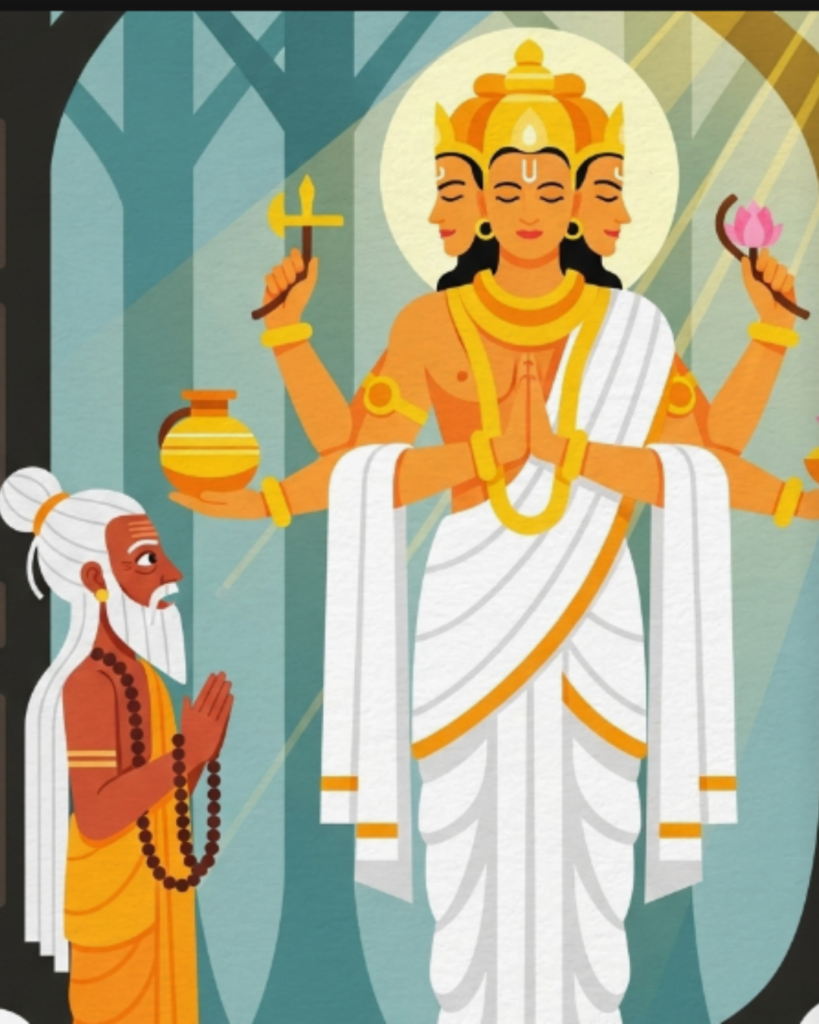
According to tradition, Lord Brahma appeared before Valmiki, explaining that this spontaneous verse was divinely inspired. Brahma instructed him to compose the Ramayana, the life story of Rama as a moral guide for humanity.
This moment marked the union of human suffering and divine purpose. Valmiki’s empathy became the vessel for cosmic wisdom.
Valmiki’s Transformation Story
Valmiki’s transformation is one of the most powerful in Hindu literature. He did not achieve greatness through lineage or power, but through self-realization.
From robber to sage, from silence to song, his journey affirms a core Hindu belief: no soul is beyond redemption.
The Ramayana reflects this belief throughout—characters fall, suffer, repent, and rise again. This moral depth originates from Valmiki’s own lived experience of inner change.
The Ramayana Origin Story and Its Deeper Meaning
The Ramayana is often read as an epic of righteousness, duty, and devotion. But its origin reveals something more intimate: it is an epic born from compassion.
Rama’s exile, Sita’s endurance, Lakshmana’s loyalty, and even Ravana’s downfall are portrayed with emotional complexity rather than simple judgment. This empathy traces back to Valmiki’s moment by the river.
The epic teaches that dharma is not rigid law, it is living awareness shaped by human suffering.
Symbolism Behind the Hunter and the Birds
The hunter represents unthinking violence, action without awareness. The birds symbolize harmony, love, and innocence.
Valmiki stands between them, embodying awakened consciousness. His response does not erase suffering, but transforms it into wisdom.
This symbolism reinforces a central idea of Hindu philosophy: suffering, when understood deeply, becomes a path to enlightenment.
Why Valmiki’s Epiphany Still Matters
In a world numbed by constant conflict, Valmiki’s epiphany feels urgent. It reminds us that creativity, morality, and transformation begin with empathy.
The Ramayana’s relevance lies not only in its heroes, but in its origin—a moment when one man allowed himself to feel another’s pain deeply enough to change history.
Key Takeaways
- Valmiki’s life proves redemption is always possible
- The Ramayana was born from compassion, not ambition
- The first shloka emerged from empathy and grief
- True creativity arises from moral awareness
- Dharma begins with understanding suffering
Citations
- Valmiki Ramayana – Bala Kanda, traditional account of the first shloka
- Ancient Hindu literary tradition on the origin of Sanskrit poetry
- Sage Valmiki life narratives preserved in Itihasa and Purana literature
| Also Read Vashistha’s Kamadhenu Wish: How One Sage’s Cow Shaped Cosmic Order The Kamadhenu cow story reveals how spiritual wisdom triumphs over ego and brute force. When King Vishwamitra attempts to seize the divine cow from Sage Vashistha, cosmic balance is restored through dharma. The episode reshapes destinies, highlighting humility, restraint, and the true nature of power in Hindu mythology. Varna System Meaning: What Chaturvarna Really Meant in the Vedic Age The Varna system is one of the most misunderstood ideas in Indian history. Today, it is often confused with rigid caste divisions, discrimination, and social inequality. But the original Varna system, as described in the Vedic age, was very different. It was not based on birth, but on qualities, abilities, and actions. This article explains the true meaning of the Varna system, what Chaturvarna really meant in the Vedic period, and how the later caste system evolved from a flexible social framework into a rigid hierarchy. |