
Summary
The Kamadhenu cow story reveals how spiritual wisdom triumphs over ego and brute force. When King Vishwamitra attempts to seize the divine cow from Sage Vashistha, cosmic balance is restored through dharma. The episode reshapes destinies, highlighting humility, restraint, and the true nature of power in Hindu mythology.
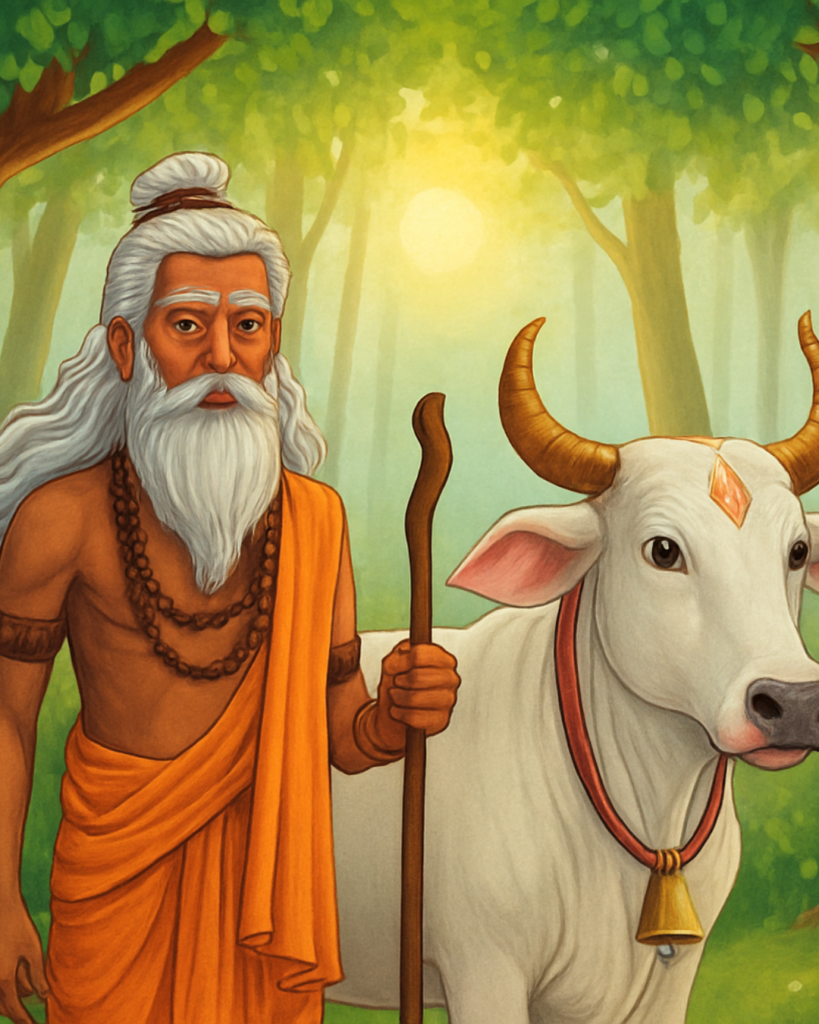
Table of Contents
In Hindu mythology, power is not always measured by armies, weapons, or kingdoms. Sometimes, it flows quietly from wisdom, restraint, and divine grace. One such story, timeless and deeply symbolic, is the tale of Sage Vashistha and the divine cow Kamadhenu. At first glance, it may seem like a simple myth about a miraculous cow. But beneath the surface, it is a profound lesson on dharma, ego, spiritual authority, and the cosmic balance between force and wisdom.
Kamadhenu: The Cow of Infinite Abundance
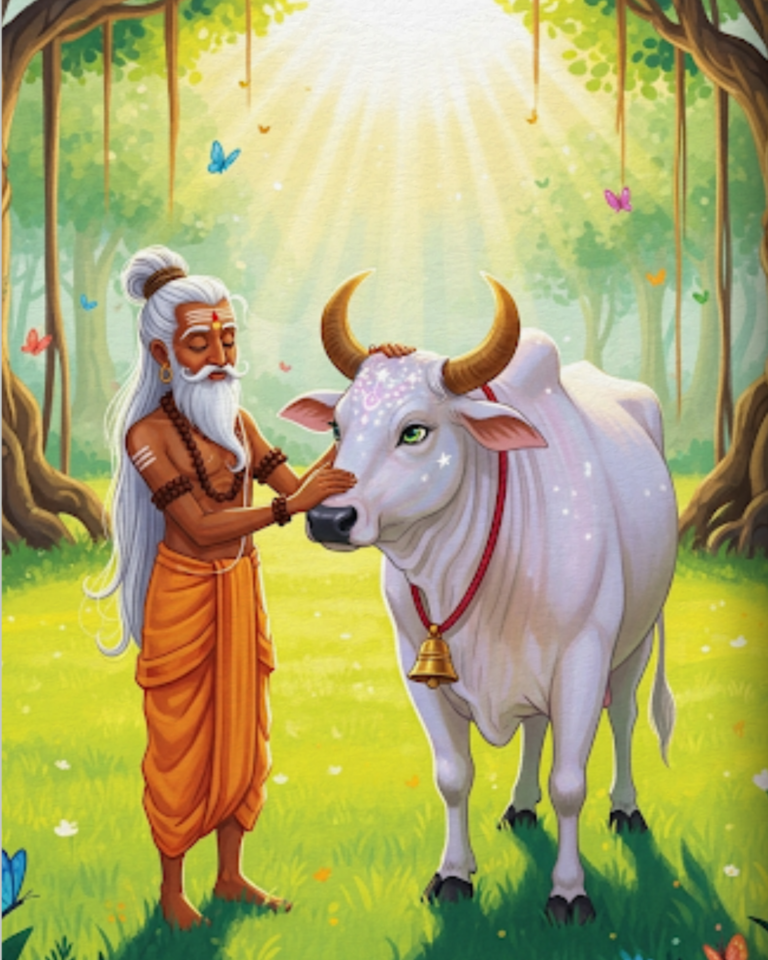
Kamadhenu, also known as Surabhi, is no ordinary cow. In Hindu mythology, she is the mother of all cows and the embodiment of abundance. Born during the churning of the cosmic ocean (Samudra Manthan), Kamadhenu possesses the divine power to fulfill wishes, providing food, wealth, and resources without exploitation or harm.
To sages and ascetics, Kamadhenu symbolized more than material prosperity. She represented nature in harmony with spirituality, a reminder that true abundance arises when humans live in alignment with cosmic law rather than domination.
Sage Vashistha and His Hermitage
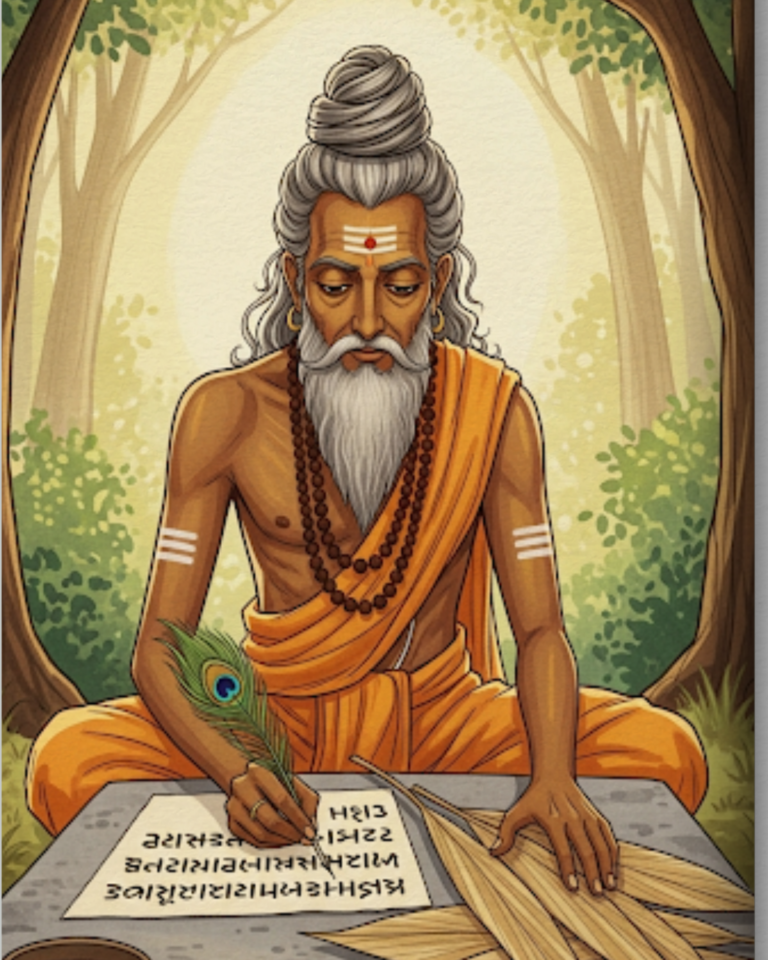
Sage Vashistha was one of the most revered sages of ancient India, a Brahmarishi known for his wisdom, humility, and spiritual discipline. He lived in a modest hermitage, far removed from royal luxury. Yet, despite his simple life, his ashram never lacked anything.
The reason was Kamadhenu.
With her presence, Vashistha could effortlessly host guests, perform rituals, and sustain students. Food appeared in abundance, hospitality was limitless, and harmony prevailed. Importantly, Vashistha never used Kamadhenu for personal gain. She existed to support dharma, not ego.
The Arrival of King Vishwamitra
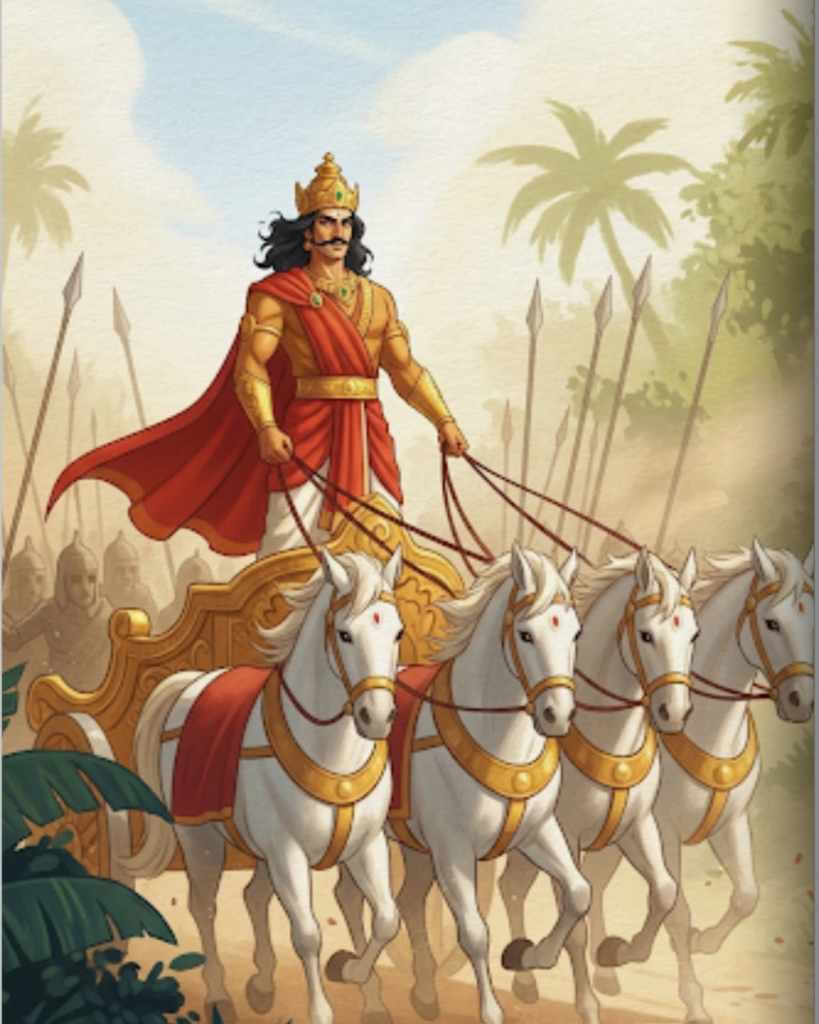
The story takes a dramatic turn with the arrival of King Vishwamitra, a powerful ruler and conqueror. While on a hunting expedition, Vishwamitra and his army stumbled upon Vashistha’s hermitage. Expecting only austerity, the king was astonished when the sage welcomed him with a grand feast fit for royalty.
Curious and soon envious Vishwamitra asked how a forest-dwelling ascetic could provide such luxury.
When he learned of Kamadhenu, the king’s admiration turned into desire.
Power Meets Ego
Accustomed to acquiring everything through authority, Vishwamitra demanded that Vashistha hand over Kamadhenu. In his eyes, such a powerful asset belonged in a royal palace, not with a hermit.
Vashistha refused.
Calmly, he explained that Kamadhenu was not property, nor a tool of power. She was sacred, bound to spiritual purpose, and could not be owned or taken by force.
For Vishwamitra, this refusal was intolerable. A king who ruled lands and armies could not accept denial from a sage living in the forest.
The Battle of Force vs Dharma
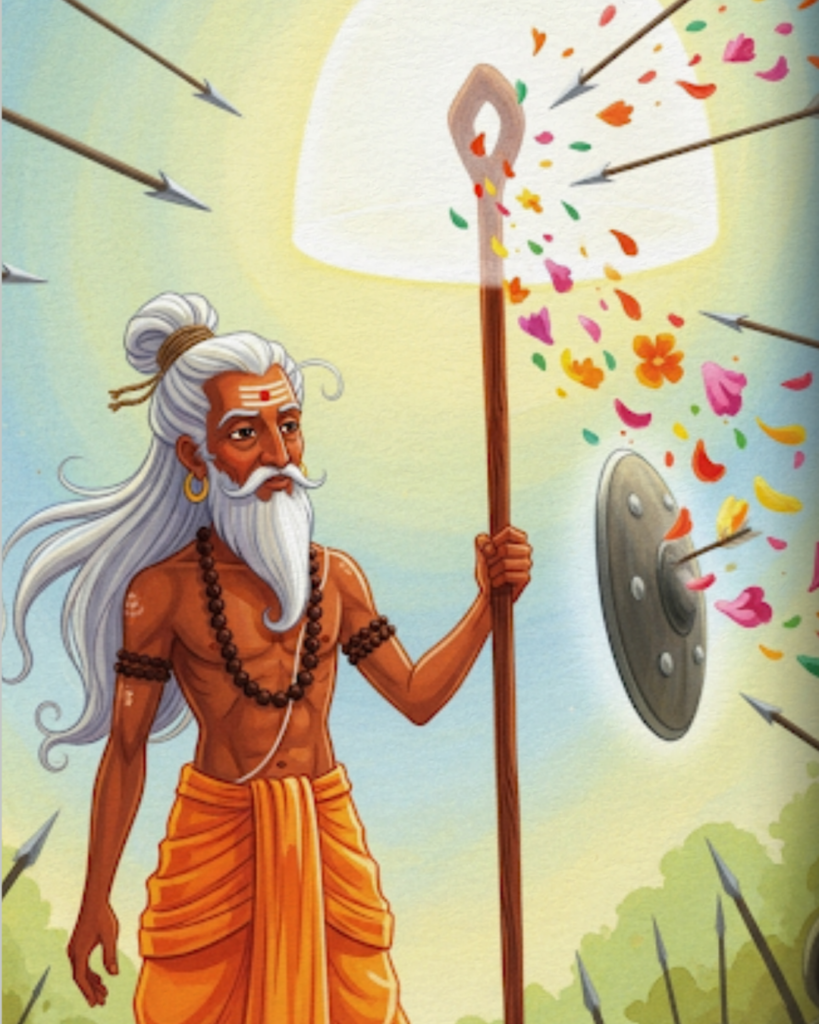
Vishwamitra attempted to seize Kamadhenu using military strength. Soldiers advanced, weapons drawn. But Kamadhenu, sensing danger, invoked her divine power.
From her body emerged warriors, forces, and defenses, each neutralizing the king’s army. Vishwamitra’s soldiers, despite their training and numbers, were overwhelmed.
The message was unmistakable:
spiritual power, rooted in dharma, surpasses brute force driven by ego.
Defeated and humiliated, Vishwamitra retreated not just physically, but internally shaken.
The Birth of Transformation
This defeat marked a turning point in Vishwamitra’s life. For the first time, he realized that royal authority and physical power were inferior to spiritual mastery. What armies could not achieve, a sage’s restraint had effortlessly accomplished.
Consumed by this realization, Vishwamitra renounced his kingdom. He chose the arduous path of penance and self-discipline, determined to attain the spiritual stature of Vashistha.
Thus, Kamadhenu did more than protect her sage she catalyzed Vishwamitra’s transformation from king to rishi.
Symbolism of Kamadhenu
Kamadhenu’s role in this story is deeply symbolic:
- She represents nature’s generosity, which flourishes when respected, not exploited.
- She embodies divine balance, responding only to righteousness.
- She reflects the idea that abundance should serve society and spirituality, not ego or domination.
In contrast, Vishwamitra’s desire to own Kamadhenu reflects humanity’s recurring mistake believing that everything sacred can be controlled through power.
Vashistha vs Vishwamitra: A Cosmic Contrast
The conflict between Vashistha and Vishwamitra is not merely personal. It represents two opposing worldviews:
- Vashistha symbolizes wisdom, patience, and inner strength.
- Vishwamitra initially embodies ambition, ego, and external power.
Yet, the beauty of the story lies in its resolution. Hindu mythology does not condemn Vishwamitra forever. Instead, it allows growth. Through penance and humility, he eventually becomes a Brahmarishi, proving that spiritual evolution is possible for all.
Why This Story Still Matters
In today’s world driven by competition, consumption, and control—the story of Kamadhenu feels especially relevant. It asks timeless questions:
- Is power meant to dominate or to protect?
- Does abundance come from possession or harmony?
- Can humility be stronger than authority?
The tale gently reminds us that true order in the universe is sustained not by force, but by dharma.
Key Takeaways
- Kamadhenu represents divine abundance guided by dharma
- Sage Vashistha embodies spiritual authority and restraint
- Vishwamitra’s defeat leads to inner awakening, not destruction
- True power lies in wisdom, not domination
- Sacred resources must be honored, not possessed
| The Story of Manu – The First Man on Earth In the stillness before the world had fully awakened, Lord Brahma sat in meditation. From his divine thought the heavens stretched wide, rivers found their beds, mountains rose from the waters, and the earth took shape. But though the world was vast and beautiful, it was empty. Plastic Surgery in Ancient India: Evidence from the Sushruta Samhita When people hear the words plastic surgery, they usually think of modern hospitals, advanced instruments, and recent medical breakthroughs. Very few imagine that some of the earliest foundations of plastic surgery were laid thousands of years ago in ancient India. This article explores how plastic surgery developed in ancient India, the role of Rishi Sushruta, and the medical knowledge preserved in the Sushruta Samhita. |