
Summary
The idea of flying machines is often associated with modern science and technology. But ancient Indian texts speak of something far older and far more mysterious called vimanas. These were described as aerial vehicles capable of moving through the sky and sometimes even beyond it. This article explores what vimanas really were, what the word means, how ancient Indian literature described flying machines, and what the controversial text Vaimanika Shastra says about ancient aircraft. Told in a friendly, story-like style, this piece helps separate mythology, symbolism, and historical curiosity while staying grounded in research and reason.
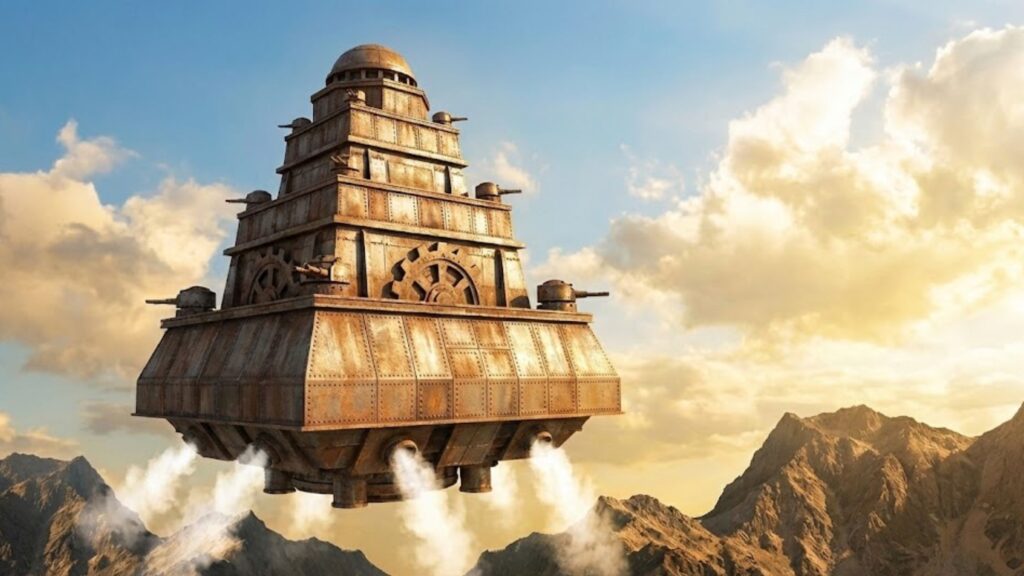
Table of Contents
Understanding the Word Vimana
Before we talk about flying machines, let us begin with the word itself.
The Sanskrit word vimana has more than one meaning. In its earliest usage, it did not automatically mean an aircraft. The word broadly referred to something that was measured out or specially constructed. Over time, its meaning evolved depending on context.
In different ancient Indian texts, vimana can mean:
- A palace or elevated structure
- A divine chariot
- A vehicle of the gods
- A flying object
- A moving structure in the sky
This is important to understand. When ancient texts mention vimanas, they are not always talking about machines in the modern sense. Sometimes the word is symbolic. Sometimes it is poetic. Sometimes it refers to divine imagery. And sometimes it clearly describes something that moves through the air.
Understanding vimanas requires patience and context. We cannot read ancient texts with modern assumptions alone.
The Ancient Indian Imagination of Flight
Human beings have always dreamed of flying. Long before airplanes existed, people imagined rising into the sky, crossing oceans, and moving freely through space.
Ancient India was no different.
Indian thinkers observed birds, clouds, stars, and celestial movements. They imagined the sky as a vast ocean. They believed gods and celestial beings moved freely between worlds.
In this worldview, flight was not impossible. It was natural for divine beings and advanced sages.
When ancient Indian texts describe aerial movement, they reflect a profound human desire to understand and imagine the skies.
Vimanas in Early Sanskrit Literature
The earliest references to vimanas appear in ancient Sanskrit literature. These descriptions vary greatly in detail and intention.
Vimanas as Divine Vehicles
In many texts, vimanas are described as vehicles of gods and celestial beings. These vimanas are often radiant, beautiful, and capable of moving at will.
They are said to travel:
- Through the sky
- Between worlds
- From earth to heaven
- At great speed
These descriptions are clearly mythological and symbolic. They reflect divine power rather than engineering.
Vimanas in Epic Literature
In later epics, vimanas are described in more detailed and sometimes mechanical ways.
Some passages describe vimanas as:
- Having specific shapes
- Producing sound
- Carrying multiple passengers
- Moving in different directions
- Capable of landing and taking off
These descriptions have sparked curiosity and debate for generations.
Were these symbolic metaphors?
Were they imaginative storytelling?
Or were they based on some forgotten technological ideas?
The texts themselves do not give clear answers.
Were Vimanas Ancient Indian Aircraft?
This is where modern interest really begins.
Some people believe vimanas were actual ancient Indian aircraft. Others believe they were symbolic or mythological creations.
Let us look at both perspectives carefully.
The Symbolic Interpretation
Many historians and scholars argue that vimanas were symbolic representations.
In this view:
- Vimanas represent divine authority
- Flight represents spiritual elevation
- Movement through the sky symbolizes transcendence
Ancient texts often use poetic language. A chariot that flies may simply represent power, speed, or divine presence.
This interpretation sees vimanas as literary and spiritual symbols rather than machines.
The Literal Interpretation
Another group believes that some descriptions are too specific to be purely symbolic.
They point out references to:
- Structured designs
- Mechanical components
- Fuel like substances
- Directional control
- Sound and motion
These readers suggest that ancient India may have had some form of advanced knowledge or experimental technology that is now lost.
However, this view is highly debated and not accepted by mainstream archaeology.
Ancient Indian Aircraft in Textual Descriptions
When people talk about ancient Indian aircraft, they usually refer to later Sanskrit texts that describe vimanas in greater detail.
These descriptions include:
- Circular or cylindrical shapes
- Multiple tiers or levels
- Enclosed cabins
- Shining or metallic appearance
- Ability to hover or move vertically
It is important to remember that ancient writers described things using the language and imagery available to them.
A glowing object might be described as golden.
A loud sound might be compared to thunder.
A fast object might be described as moving like the wind.
These descriptions do not automatically mean advanced machines. But they do show imaginative and detailed thinking.
The Curious Case of the Vaimanika Shastra
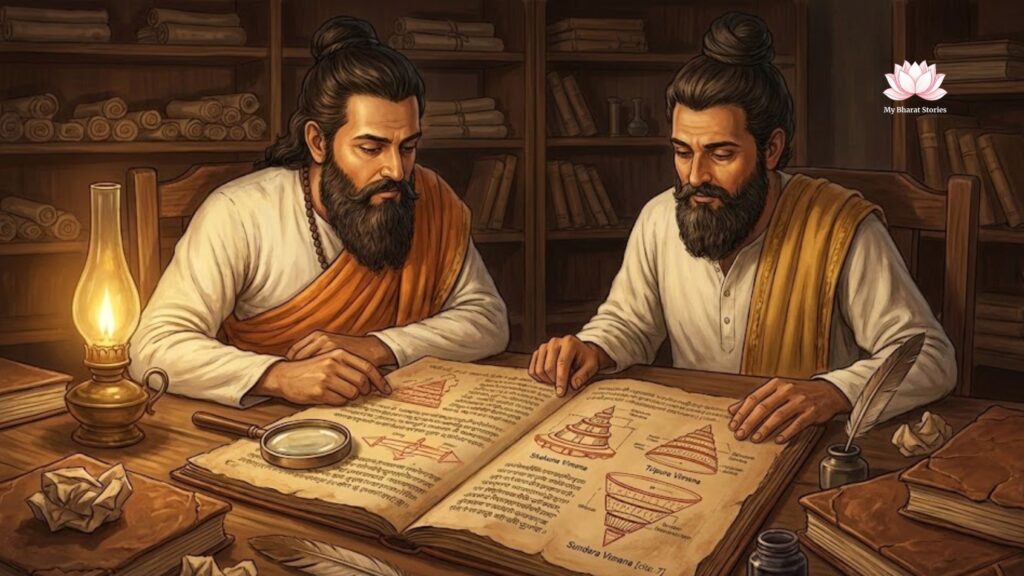
No discussion of vimanas is complete without mentioning the text called Vaimanika Shastra.
This text is often cited as evidence of ancient Indian aviation science.
What Is the Vaimanika Shastra
The Vaimanika Shastra is a Sanskrit text that claims to describe the construction and operation of vimanas. It includes descriptions of:
- Different types of vimanas
- Materials used in construction
- Pilot training
- Flight techniques
- Power sources
- Aerial warfare
At first glance, this sounds astonishing.
But the history of this text is complex.
When Was It Written
Despite claims of ancient origin, research shows that the Vaimanika Shastra was likely composed in the early twentieth century.
It was dictated by a man named Subbaraya Shastry, who said he received the knowledge through psychic or yogic transmission.
The text was later published and presented as ancient knowledge.
Scientific Examination of the Text
Modern scientists and engineers have studied the Vaimanika Shastra carefully.
Their findings were critical.
They concluded that:
- The described aircraft were aerodynamically unstable
- The materials mentioned were impractical
- The designs violated basic laws of physics
- The text showed knowledge consistent with early twentieth century ideas
As a result, mainstream science does not consider the Vaimanika Shastra to be evidence of real ancient aircraft.
However, it remains an important cultural document that reflects modern fascination with ancient knowledge.
Why Vimanas Still Fascinate Us
Even with scientific skepticism, vimanas continue to fascinate people.
Why?
Because they sit at the intersection of:
- Mythology
- Imagination
- History
- Technology
- Human curiosity
They represent our desire to believe that ancient civilizations were deeply advanced. They invite us to question how much knowledge has been lost over time.
They also remind us that ancient people were not simple or naive. They were imaginative, observant, and capable of complex thought.
Vimanas and the Indian Way of Storytelling
Indian storytelling often blends reality and imagination seamlessly.
Mythology in India is not meant to be read like a technical manual. It is meant to communicate values, ideas, and cosmic truths.
In this tradition:
- Flying represents freedom
- Sky represents higher knowledge
- Vehicles represent means of transformation
Vimanas may not be airplanes in the modern sense, but they are vehicles of meaning.
They carry stories, beliefs, and visions of a world where humans and the cosmos are deeply connected.
Separating Pride from Proof
It is natural to feel pride in ancient heritage. Indian civilization is among the oldest continuous cultures in the world.
But true respect for history requires honesty.
There is no solid archaeological evidence that ancient India had airplanes like modern aircraft.
At the same time, there is strong evidence that ancient Indian thinkers were:
- Skilled observers
- Creative engineers of ideas
- Deep philosophers
- Brilliant storytellers
Vimanas should be appreciated within this context.
Vimanas as Cultural Memory
One of the most beautiful ways to understand vimanas is as cultural memory.
They represent:
- Human longing to fly
- Awe for the sky
- Respect for cosmic order
- Imagination shaped by spirituality
Every civilization has flying myths.
Ancient Greece had winged chariots.
Norse myths had flying horses.
Indian texts had vimanas.
These stories tell us more about the human mind than about machines.
Who Used This Technology Before
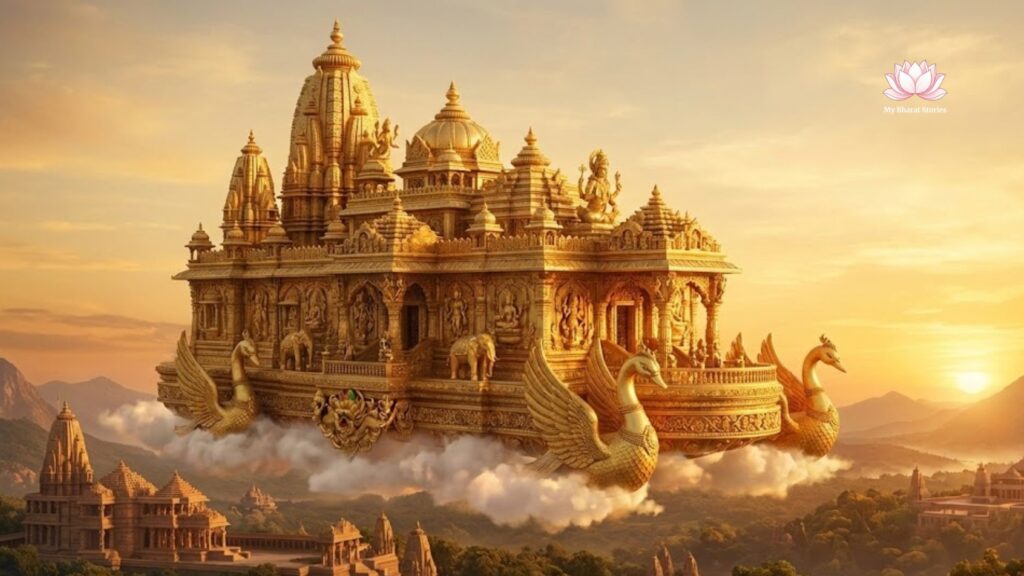
In Indian epic tradition, the most famous figure associated with a vimana is Ravana, the king of Lanka. According to the Ramayana, Ravana possessed the Pushpaka Vimana, a magnificent aerial vehicle originally created by Vishvakarma and later taken by Ravana from Kubera. The Pushpaka Vimana is described as capable of flying through the sky at will, carrying multiple passengers, and traveling vast distances effortlessly. After Ravana’s defeat, this vimana was used by Rama to return to Ayodhya. Other ancient Indian texts and later Puranic traditions also mention celestial beings such as Indra, Kubera, and other devas traveling in vimanas, often described as radiant flying chariots moving between heaven and earth. These accounts consistently present vimanas as divine or royal vehicles rather than mechanical aircraft, suggesting that flight in these stories symbolized power, authority, and divine privilege rather than human-made technology in the modern sense.
Why the Topic of Vimanas Still Matters Today
The discussion around vimanas teaches us several important lessons.
First, it shows how powerful storytelling can be.
Second, it reminds us to read ancient texts with sensitivity and context.
Third, it warns us against forcing modern meanings onto ancient words.
At the same time, it encourages curiosity.
Asking questions about the past is healthy.
Exploring ancient imagination is valuable.
Studying old texts keeps culture alive.
Key Takeaways
- The word vimana has multiple meanings and does not always mean an aircraft
- Ancient Indian texts describe vimanas as divine or celestial vehicles
- Some later texts give more mechanical descriptions, which are often symbolic
- There is no archaeological proof of ancient Indian airplanes
- The Vaimanika Shastra is a modern text, not an ancient engineering manual
- Scientific studies have shown its designs to be impractical
- Vimanas reflect ancient imagination, symbolism, and storytelling traditions
- Understanding vimanas requires separating mythology, symbolism, and modern interpretation
- The fascination with vimanas reveals humanity’s timeless dream of flight
Citations
- Encyclopedia Britannica. Entry on Vimana and Indian Mythology
- Wikipedia. Vimana and Ancient Indian Literature
- Indian Institute of Science Study on Vaimanika Shastra
- History of Sanskrit Literature. Oxford University Press
- Vedic and Epic Symbolism Studies. Indira Gandhi National Centre for the Arts
- Myth and Imagination in Ancient India. World History Encyclopedia
- Scientific Examination of Ancient Aviation Claims. Indian Journal of History of Science