
Summary:
Golden Namchot, celebrated annually on the 25th day of the 10th month of the Tibetan Buddhist calendar, marks the birth, enlightenment, and passing of Je Tsongkhapa, the revered scholar and teacher whose teachings shaped the Gelug school of Tibetan Buddhism. In Ladakh, the festival signals the beginning of the winter festive season. It is a time when homes, monasteries, and neighbourhoods follow a shared rhythm. Butter lamps are lit, prayers are offered, simple meals are prepared, and families gather together. In a land where long nights and cold winds can make life feel isolated, Golden Namchot brings warmth, connection, and continuity. From this day onward, Ladakh enters a period of gentle rituals and shared gatherings that continue until Losar, the Ladakhi New Year.
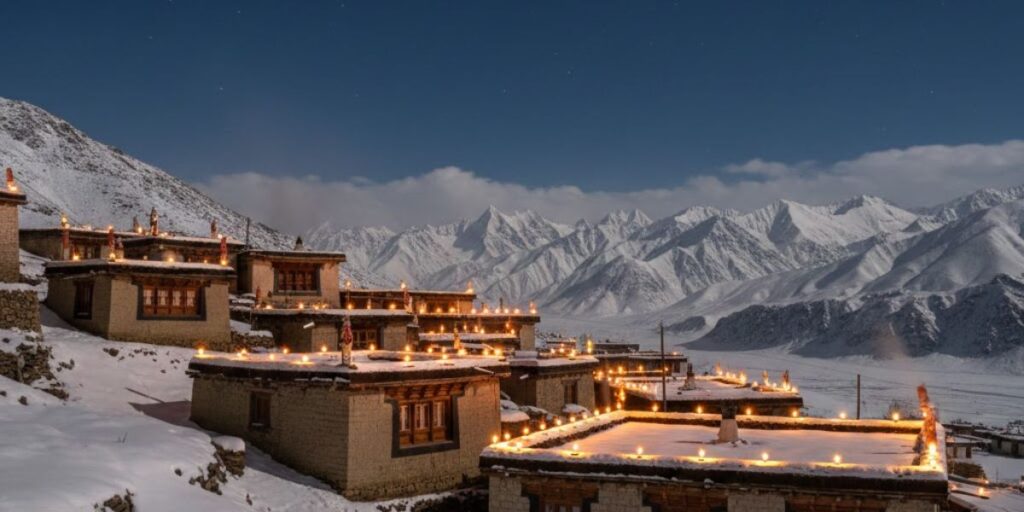
Table of Contents
History of Golden Namchot: The Life Behind the Light
Je Tsongkhapa: A Teacher for All Seasons
The roots of Golden Namchot lie in the life of Je Tsongkhapa. He was born in 1357 AD in Amdo, a region in eastern Tibet. From a young age, he showed a deep interest in learning, discipline, and meditation. His teachers noticed his sharp mind and strong sense of purpose early on. As he grew older, Tsongkhapa travelled widely to study Buddhist texts and teachings. He learned from many teachers and traditions. During this time, Buddhist practice varied greatly across regions. Some practices focused strongly on ritual, while others focused mainly on meditation or study.
Tsongkhapa believed balance was essential. He taught that ethical living, meditation, and learning should support one another. According to him, spiritual growth could not be separated from daily behaviour and moral conduct. This approach brought clarity and structure to Buddhist practice. Over time, his teachings gave rise to the Gelug school of Tibetan Buddhism. This school placed strong emphasis on discipline, study, and gradual progress. Tsongkhapa’s ideas spread across Tibet and later reached Ladakh through monks, traders, and pilgrims who travelled along Himalayan routes. His writings remain influential even today. Works such as Lamrim Chenmo explain the path to spiritual growth in clear steps. These texts show that wisdom is not abstract. It is something shaped through thought, action, and daily choices.
Passing into Nirvana
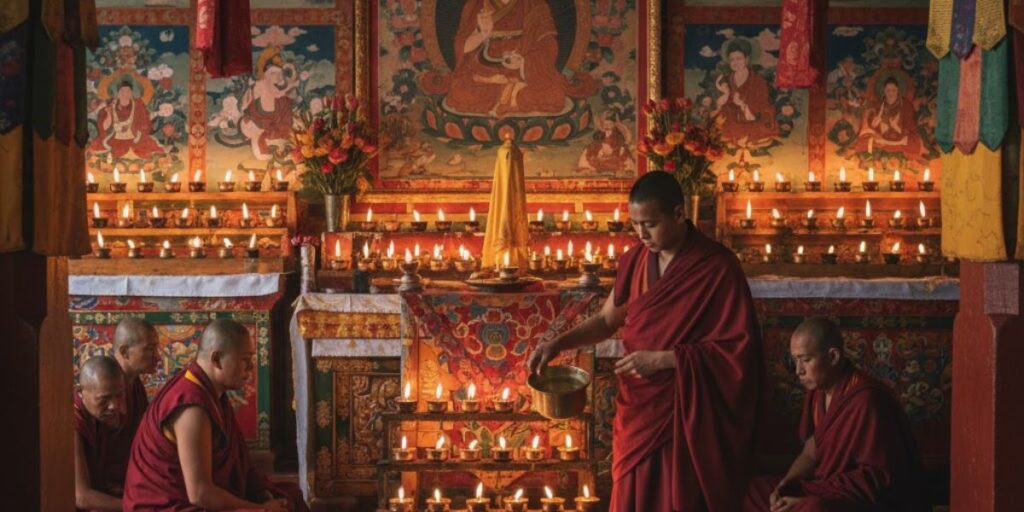
Je Tsongkhapa passed away in 1419 at Ganden Monastery, the centre of his teachings. His followers believe that he attained nirvana, freeing himself from the cycle of birth and rebirth. This moment is remembered through Golden Namchot. The festival does not focus on loss or mourning. Instead, it celebrates his life and lasting influence. It honours his teachings and the clarity he brought to Buddhist thought. Lighting butter lamps became a central ritual of Golden Namchot. The lamp represents knowledge and awareness. Its steady flame symbolises clarity of mind and continuity of guidance. Each lamp becomes a quiet tribute to Tsongkhapa’s values—learning, compassion, discipline, and ethical living.
How the Festival Reached Ladakh
Buddhism reached Ladakh many centuries ago through trade routes linking Tibet, Central Asia, and the Indian subcontinent. Monks, scholars, and traders carried teachings, texts, and rituals across high mountain passes. Over time, monasteries such as Thiksey, Hemis, Spituk, and Lamayuru became spiritual centres. These monasteries were not only places of worship. They were also centres of learning, art, and community life. Golden Namchot slowly became part of Ladakh’s winter calendar. The festival fit naturally into the rhythm of the region. Winter was a time when travel slowed, and people stayed closer to home. The lighting of lamps and shared prayers offered comfort during the months of isolation and cold. Unlike festivals built around spectacle, Golden Namchot grew through participation. Families gathered. Neighbours visited. Prayers were recited together. These repeated acts helped preserve both faith and social bonds through difficult seasons.
Cultural Significance: Light, Rhythm, and Community
Preparing for Winter
Preparation for Golden Namchot begins days in advance. Markets in Leh and nearby villages become slightly busier. People buy butter, ghee, khatak scarves, and ingredients for winter dishes. These items are simple but essential. At home, prayer rooms are cleaned carefully. Lamps are checked and arranged. Kitchens are prepared for shared meals. These tasks are done without rush.
Preparation has a deeper meaning in Ladakh. Winter limits movement and resources. Golden Namchot allows families to align their homes and routines for the months ahead. It is a moment to slow down and prepare both physically and emotionally. The act of cleaning and arranging becomes a form of reflection. It signals readiness—not just for a festival, but for winter life itself.
The Evening of Light
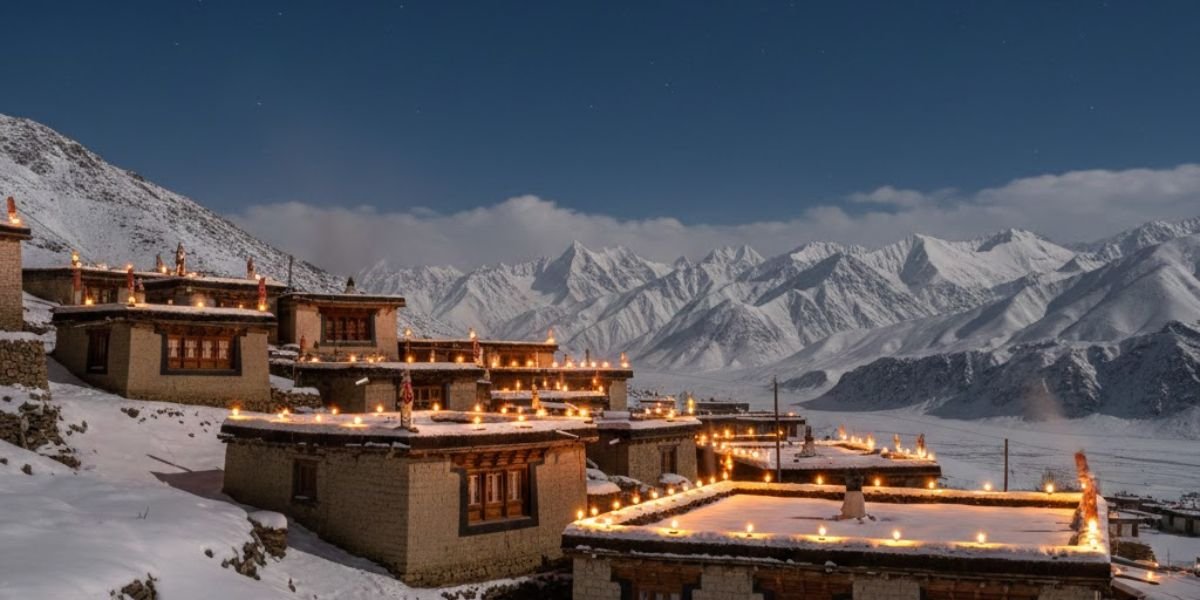
On the evening of Golden Namchot, the change is visible. Monasteries are the first to glow. Rows of butter lamps fill prayer halls, balconies, and rooftops. The warm light contrasts with the cold night air. Soon, homes across villages follow. Lamps are placed on windowsills, courtyards, and altars. The glow spreads quietly, without sound or ceremony. Lighting a lamp is a simple act. Yet it carries intention. It becomes a moment of pause. People reflect on patience, learning, and clarity. Seen from a distance, villages appear like constellations scattered across the mountains. Each light represents presence and shared belief.
Everyday Acts That Strengthen Bonds
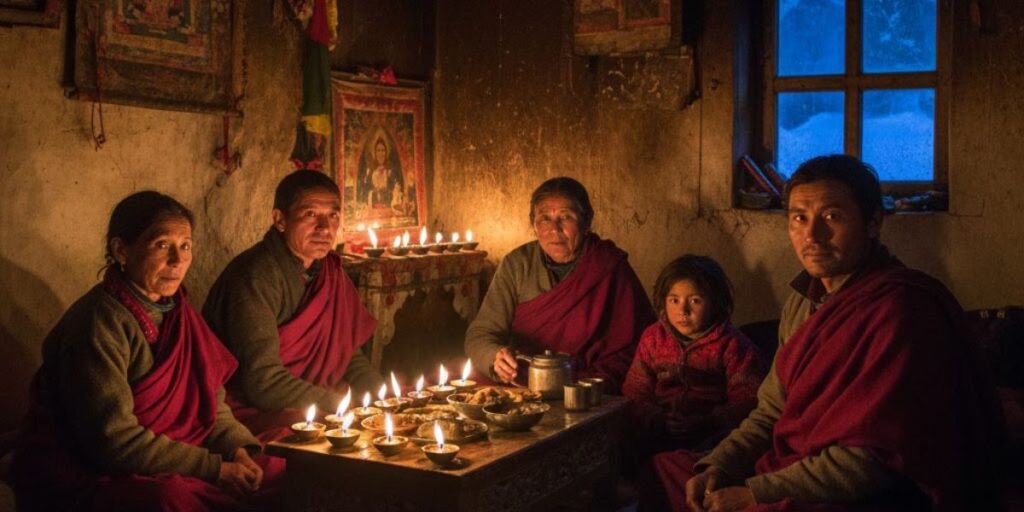
Golden Namchot lives in everyday actions. Families prepare traditional food such as thukpa, momo, and butter tea. These dishes provide warmth and nourishment during winter. Meals are shared slowly. Conversations are unhurried. Neighbours exchange khatak scarves, offering good wishes and respect. Monks and laypeople gather in monasteries to chant prayers and recite teachings. These acts may appear small, but they carry weight. Repetition creates rhythm. Children learn how traditions are kept alive. Elders see their customs continue through younger generations. The festival strengthens bonds not through grand gestures, but through shared time and care.
Opening the Winter Festive Cycle
Golden Namchot marks the start of Ladakh’s winter festive season. After this day, visits between families became more frequent. Meals and prayers are shared across homes and villages. This gentle rhythm continues until Losar, the Ladakhi New Year. Through this sequence, winter becomes less isolating. The cold months are filled with meaning, connection, and shared experience. Festivals do not rush winter away. Instead, they teach people how to live within it.
Symbols of the Festival
Butter lamps are the most visible symbol of Golden Namchot. Their light stands for wisdom, clarity, and hope. The lamp also reflects effort. It must be prepared, lit, and protected from the wind. Offerings placed beside the lamps include water, fruits, grains, and incense. These offerings represent gratitude and generosity. Even ordinary actions become symbolic during the festival. Sweeping courtyards, arranging prayer spaces, and cooking food turn into acts of care. They reflect Tsongkhapa’s teachings that moral living begins with simple, mindful actions.
Golden Namchot in the Present Day
Today, Golden Namchot continues to be observed across Ladakh. The core rituals remain unchanged. Butter lamps are still central. Prayers are still recited. Families still gather indoors to share warmth. Modern life has introduced new comforts. Yet the spirit of the festival remains steady. It continues to be quiet, reflective, and community-focused.
Golden Namchot is also observed in Tibet and Mongolia, especially at Ganden Monastery. However, in Ladakh, the festival feels closely tied to the land and the season. It reflects the pace of mountain life and the need for shared resilience. In a world that often moves too fast, Golden Namchot offers a different rhythm. It reminds people to slow down, reflect, and stay connected. It shows that light does not need to be bright to be meaningful. Sometimes, a single flame is enough.
Key Takeaways
- Golden Namchot is celebrated on the 25th day of the 10th month of the Tibetan Buddhist calendar.
- It honours the life, teachings, and passing of Je Tsongkhapa.
- Butter lamps symbolise wisdom, clarity, and hope.
- The festival strengthens family and community bonds.
- It marks the beginning of Ladakh’s winter festive season, leading to Losar.
Citations
Great Tibet Tour – Information on the history and significance of Galdan Namchot
Ladakh Official Portal (leh.nic.in) – Cultural context of Ladakh and Buddhist festivals
Media India Group – Coverage of Galdan Namchot as a winter festival in Ladakh
Traditional Tibetan Buddhist texts and oral traditions related to Je Tsongkhapa