
Summary
Vasant Panchami is a calm and joyful festival that welcomes spring and celebrates learning. It falls on the fifth day of the lunar month of Magha and is known as a Hindu Spring Festival. On this day, people worship Goddess Saraswati, the goddess of knowledge, music, and arts. Families, students, and teachers pray for wisdom, creativity, and success in studies. The celebration also reflects the beauty of nature and the joy of new beginnings.
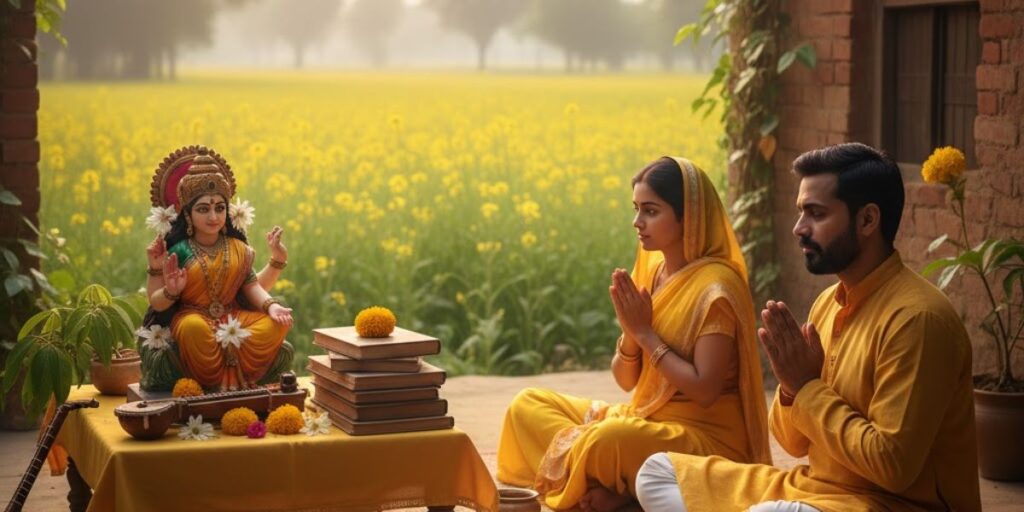
Table of Contents
The Arrival of Spring
As winter slowly ends, the world begins to change. Mornings feel warmer, the sun shines brighter, and tiny buds appear on trees. Fields turn yellow as mustard flowers bloom, and birds return with cheerful songs. People feel the freshness of spring all around.
This festival marks this gentle change in nature. It is quiet and peaceful. There are no loud celebrations or fireworks. People smile, pray, and feel hopeful. It reminds everyone that, like nature, life and learning grow slowly and steadily.
The Meaning of Vasant Panchami
The name of the festival tells its story. Vasant means spring, and Panchami means the fifth day of the lunar month of Magha. This usually falls in January or February, when winter is ending.
The festival celebrates both the new season and knowledge. In Indian culture, learning is highly respected. It is not only about books but also about music, art, and life skills. Vasant Panchami connects nature’s renewal with the growth of human wisdom.
Goddess Saraswati: The Goddess of Learning
At the heart of Vasant Panchami is Goddess Saraswati, the goddess of knowledge, learning, and arts. She is shown wearing white, sitting on a lotus, and holding a veena, a musical instrument.
- White stands for peace and calm.
- The lotus shows growth that stays pure even in difficult conditions.
- The veena shows a balance between knowledge and creativity.
The swan that often accompanies her shows the ability to choose what is right. On this day, people place books, pens, notebooks, musical instruments, and art tools near her idol. This shows respect for learning and creativity.
Saraswati Puja
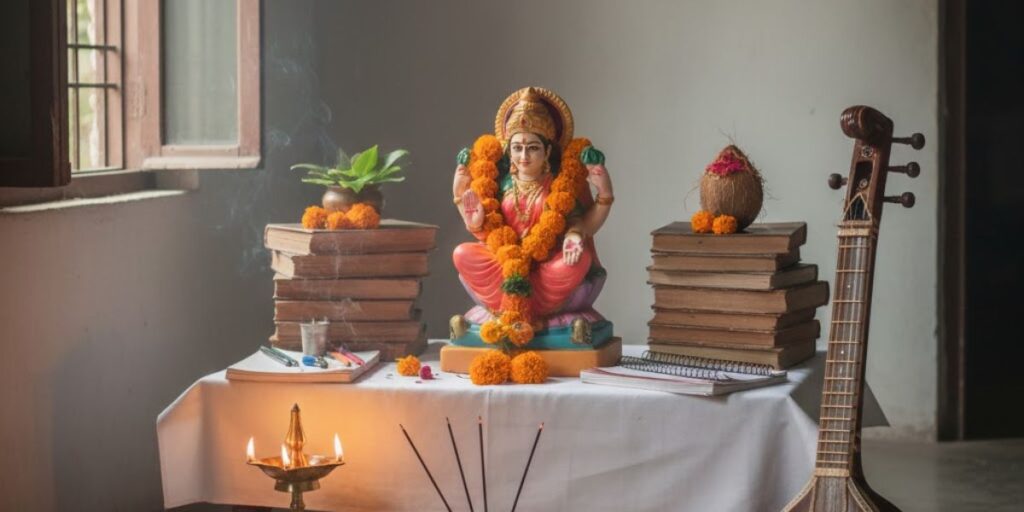
Saraswati Puja is the main ritual of Vasant Panchami. Families clean their homes, set up a clean space for the goddess, and offer flowers, fruit, and lamps. They pray quietly and sing simple devotional songs. Schools and colleges also organise prayers and small programs.
A common tradition is to avoid reading or writing before the puja is completed. It is believed that books and tools should first receive the goddess’s blessings. This teaches children to respect learning and to be patient.
Starting Education on Vasant Panchami
Many families begin teaching young children on this day, a ritual called Vidyarambh. Children may write their first letters or learn simple words under guidance. It is done with joy and blessings, making the first step in learning special.
Schools also organise small programs with prayers, songs, or drawings. Children learn that learning is not just about exams but also about curiosity, creativity, and growth.
The Importance of Yellow
Yellow is the main colour of Vasant Panchami. People wear yellow clothes, make yellow sweets, and decorate homes with yellow flowers. The colour comes from nature, as mustard fields bloom at this time.
Yellow represents hope, energy, and warmth. Seeing yellow everywhere reminds people of spring’s freshness and new beginnings. Families prepare yellow foods like sweet rice, halwa, or ladoos. These are offered to the goddess and shared as prasad.
Vasant Panchami Across India
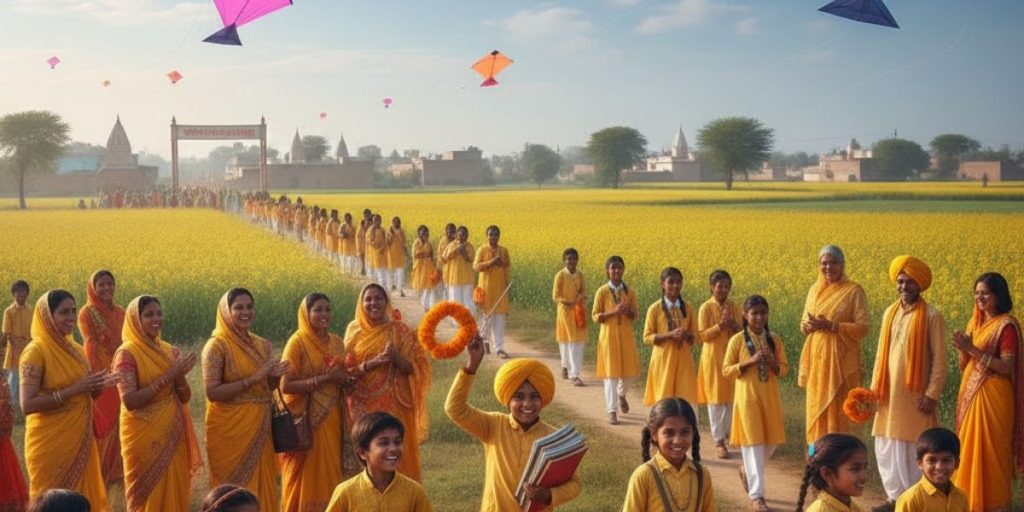
Vasant Panchami is celebrated in different ways across India, but the main idea is the same: learning, knowledge, and spring.
- West Bengal & Odisha: Schools, colleges, and homes celebrate Saraswati Puja. Children decorate idols and offer flowers. Small cultural activities are held.
- Bihar & Jharkhand: Simple puja at home and school. Children often begin learning letters. Families share traditional sweets.
- Uttar Pradesh: People pray at homes and temples. Schools hold small programs. Everyone wears yellow.
- Punjab & Haryana: Yellow clothes, kite flying, and prayers at home and temples.
- Maharashtra: Called Shri Panchami. People begin learning or doing creative work. Families prepare sweets and offer prayers.
- Gujarat: Saraswati Puja is celebrated at home and school. People enjoy the start of spring.
- Assam: Schools hold prayers and cultural programs. Children take part in simple activities.
- Uttarakhand & Hill Regions: People worship Saraswati and local deities. They also celebrate the start of spring in the mountains.
Though the customs vary, the festival always emphasises respect for learning, creativity, and nature.
Traditional Foods and Customs
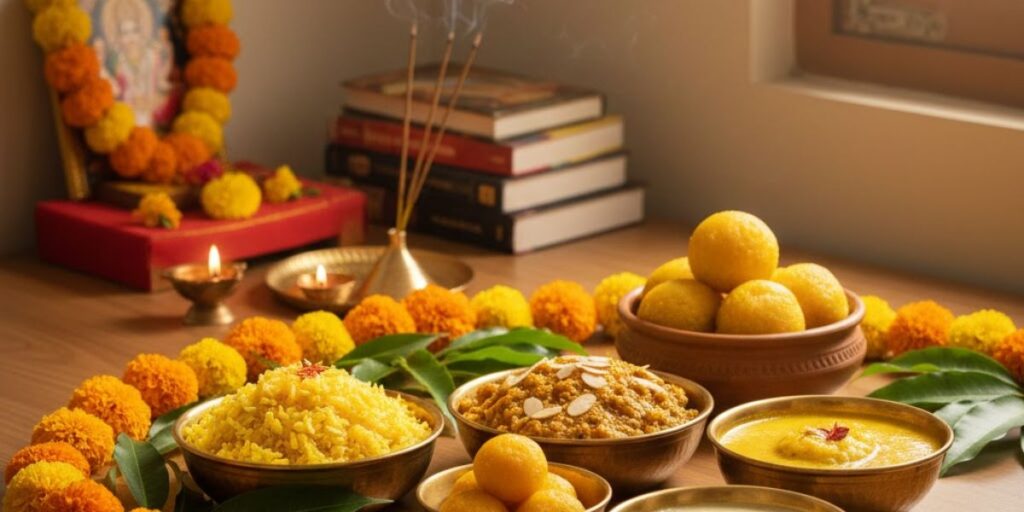
Vasant Panchami also includes small but meaningful traditions:
- Preparing yellow foods like sweet rice, halwa, ladoos, and kheer.
- Decorating homes with fresh flowers, mainly yellow.
- Kite flying in northern India to enjoy clear skies.
- Starting new learning or creative work, like painting, music, or writing.
- Offering books and instruments to the goddess, showing respect.
These customs connect people to nature, education, and family traditions. Children learn to value knowledge and simple joys in life.
Vasant Panchami and Nature
The festival reminds people to enjoy nature. Spring is a time of new life. Flowers bloom, rivers flow calmly, and birds return. By observing these changes, people learn patience. Vasant Panchami teaches that growth, in nature and in life, happens slowly. Respect and care help learning grow strong.
Reflection and Inner Growth
Vasant Panchami encourages calm and thoughtfulness. There is no need for loud or grand celebrations. The festival teaches that life and learning grow slowly, like the season itself. Patience and gentle effort help knowledge and life grow healthily.
Modern Significance
Even today, Vasant Panchami is meaningful.
- Students pray for focus and success.
- Teachers reflect on their role in guiding young minds.
- Families come together for prayers and meals.
- Artists and creative people seek inspiration and blessings.
The festival reminds everyone that learning, creativity, and respect for knowledge are important throughout life. It is also a celebration of new beginnings.
Key Takeaways
- Vasant Panchami celebrates spring and learning.
- It is a Hindu Spring Festival centred on Saraswati Puja.
- Yellow symbolises warmth, hope, and new beginnings.
- Celebrations differ by state but focus on knowledge, culture, and nature.
Citations
- Ministry of Culture, Government of India – Information on Hindu festivals and cultural traditions
- Encyclopaedia Britannica – Overview of Vasant Panchami and Goddess Saraswati
- PujaYagna Blog – General rituals and significance of Vasant Panchami
- Indian cultural and religious texts describing Saraswati Puja and spring festivals
- Regional folklore and educational traditions followed across Indian states